

Powerful Woodpecker
Campephilus pollens
A large woodpecker of Andean cloud forest, closely related to the Crimson-crested and Magellanic Woodpeckers but with distinctive buffy, barred underparts rather than clean black-and-white.
- Feather type
- Large contour feathers with buff-barred underparts
- Colours
- Red head, black back, and buffy barred belly
- Bird size
- Large, ~34 cm
Found a feather like this?
Identify any feather from a photo, free.
Overview
The Powerful Woodpecker inhabits humid montane and cloud forest along the Andes, from Colombia south to Bolivia and Peru, typically at middle to higher elevations. Like its lowland relatives in the genus Campephilus, it shows a bold red head in males, but its underparts have a warmer, buffier tone with dark barring rather than the crisp black-and-white pattern seen in lowland species.
Its association with humid, often mossy montane forest sets it apart ecologically from its lowland relatives, even though the overall body plan and plumage pattern are similar.
Identifying the Feather
Key features:
- Male head and crest feathers are red, with a black patch on the forecrown; females show black on the head with red restricted to the crest
- Back feathers are black with a buffy-white stripe running down the side of the neck
- Underparts show a buffy-yellow wash with dark barring, rather than sharp black-and-white contrast
- Overall build is large and heavy-billed, typical of the genus
Compared to similar species: the buffy tone and barring on the underparts, rather than crisp black-and-white, helps separate this species from lowland Campephilus woodpeckers such as the Crimson-crested Woodpecker, which shows cleaner black-and-white barring.
Plumage & Molt
Males show red on the crown and crest with a black forecrown patch, while females have a black head with red confined to the crest. Underparts in both sexes are washed buffy-yellow with dark barring, a warmer tone than in lowland relatives. Juveniles are duller with less distinct barring.
Habitat & Range
This species is restricted to humid montane and cloud forest along the Andes from Colombia to Bolivia and Peru, generally at middle to higher elevations. It is a non-migratory resident, tied closely to moss-draped, humid forest with large trees.
Behavior & Field Notes
Powerful Woodpeckers forage on mossy trunks and large branches, feeding on ants and wood-boring beetle larvae. They produce loud calls and drum on resonant wood to communicate over the often dense, humid forest canopy. Nest cavities are excavated in large dead trees within cloud forest habitat, and pairs typically maintain and defend a shared territory.
Frequently asked questions
How can I identify a Powerful Woodpecker feather?
Look for a red head or crest feather paired with buffy, dark-barred body feathers rather than crisp black-and-white barring, which points toward this Andean species rather than a lowland relative.
What elevation range is this species associated with?
It occurs mainly in middle to higher elevation Andean cloud forest, so feathers found at higher elevations along the Andes are more consistent with this species than lowland Campephilus woodpeckers.
How does the underside coloring differ from the Crimson-crested Woodpecker?
The Powerful Woodpecker shows a warmer buffy-yellow wash with barring on its underparts, while the Crimson-crested Woodpecker shows cleaner black-and-white barring.
Do both sexes show red on the head?
Males show more extensive red across the crown and crest, while females have a black head with red limited to the crest area.
Powerful Woodpecker guides
In-depth guides for identifying and understanding Powerful Woodpecker.

Other feathers you may enjoy

Ivory-billed Woodpecker
Very large flight feathers with a solid white trailing patch

Great Slaty Woodpecker
Massive, uniformly colored contour feathers

Yellow-tufted Woodpecker
Black body feathers with bright yellow forehead tufts

Magellanic Woodpecker
Very large, glossy contour feathers with a recurved crest

Yellow-bellied Sapsucker
Black-and-white patterned back and facial-stripe feathers
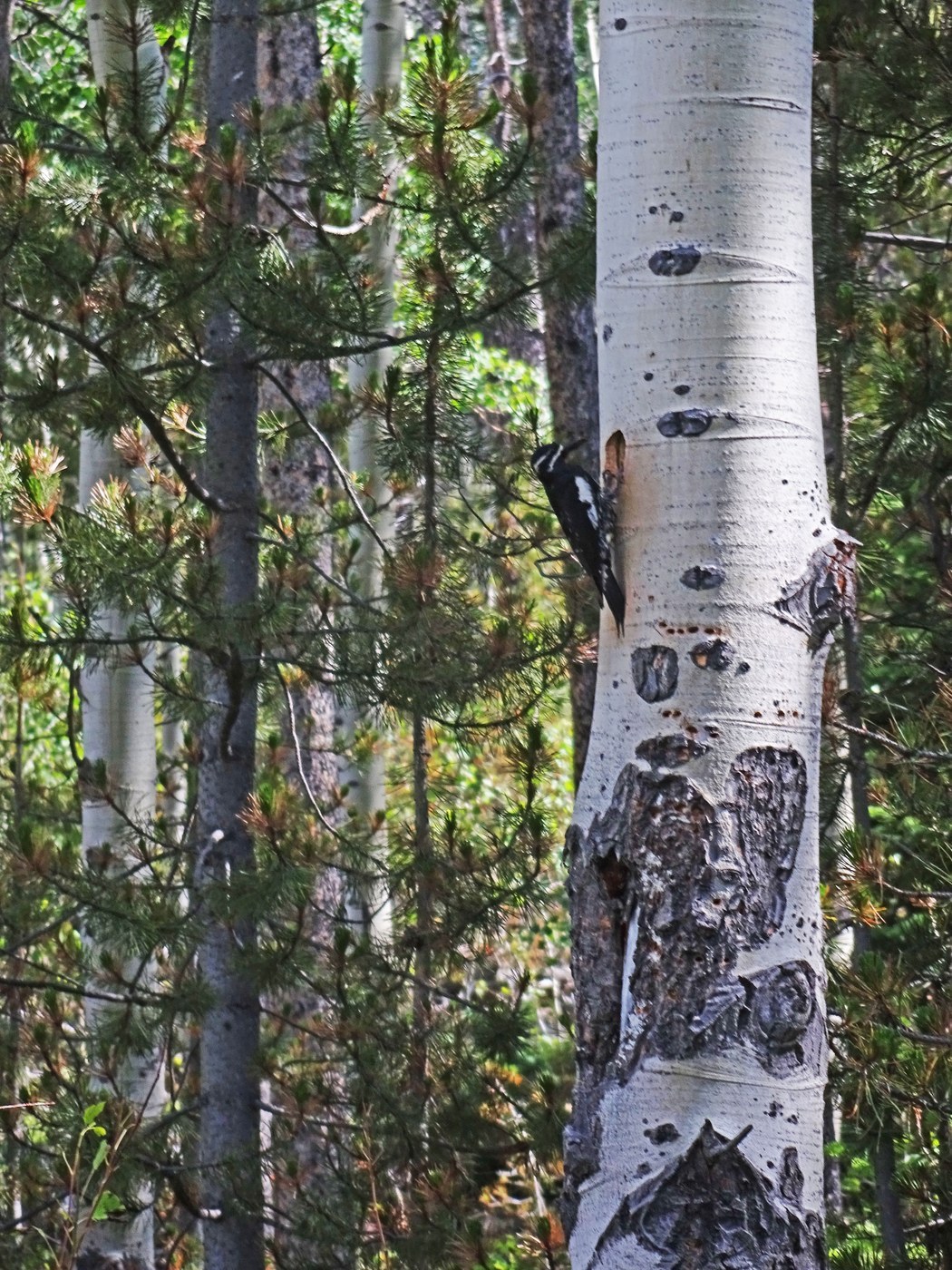
Williamson's Sapsucker
Strongly sexually dimorphic body feathers, glossy black or finely barred brown

Yellow-crowned Woodpecker
Contour and flight feathers

White Woodpecker
Mostly white body feathers with contrasting black wings and back

Red-throated Wryneck
Soft, cryptically mottled contour feathers

White-bellied Woodpecker
Large, glossy black contour and flight feathers

White-backed Woodpecker
Barred back feathers rather than a solid white patch
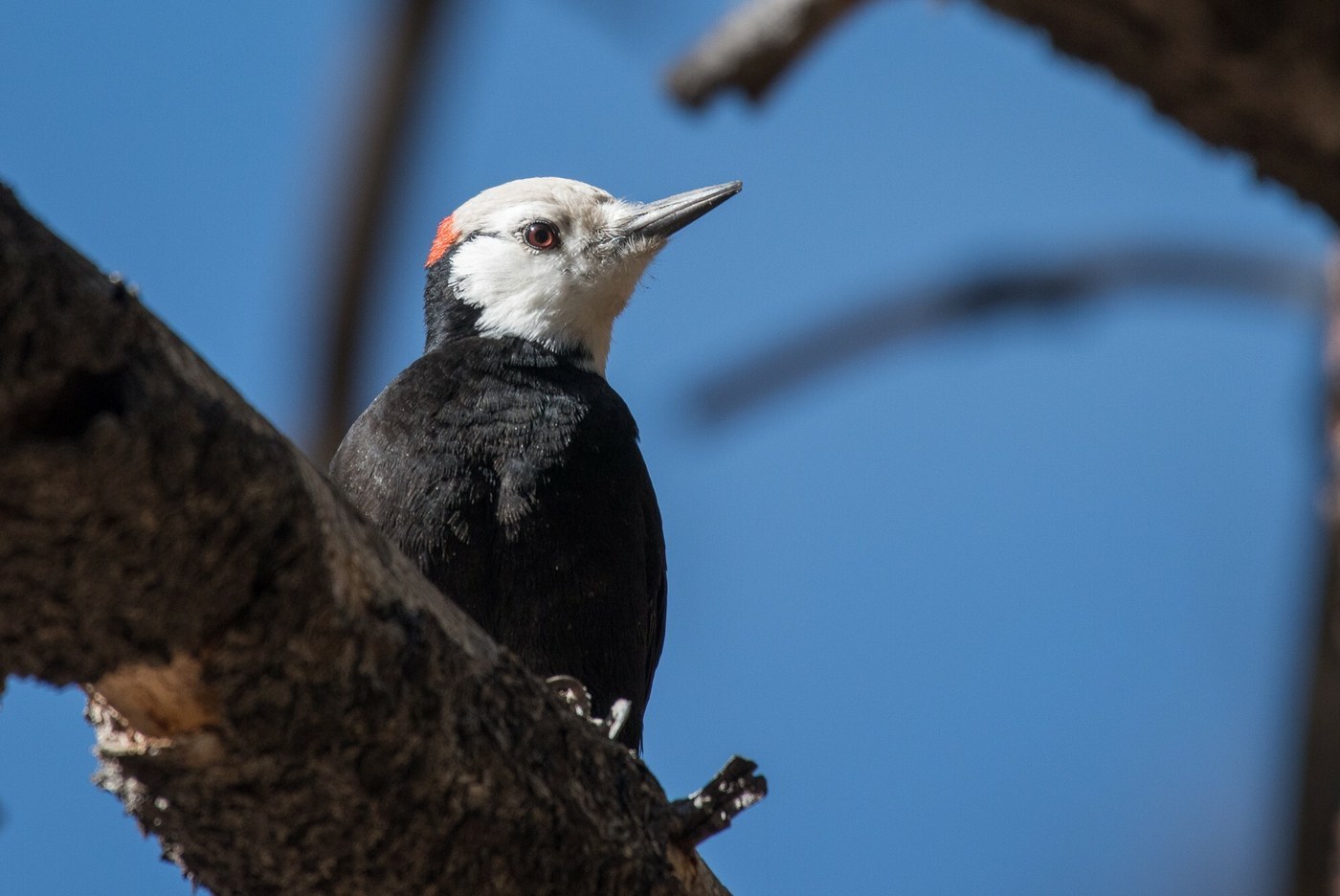
White-headed Woodpecker
Solid black body feathers with an entirely white head