

Red-billed Pigeon
Patagioenas flavirostris
A large, dark pigeon of Texas and Central American woodlands, named for its bicolored bill and identified by its rich maroon-purple head and breast.
- Feather type
- Contour feathers, dark maroon-purple head and breast
- Colours
- Deep maroon-purple head and underparts with a slate-gray back, and a distinctive red-and-yellow bill
- Bird size
- Large pigeon, ~33-36 cm
Found a feather like this?
Identify any feather from a photo, free.
Overview
The Red-billed Pigeon ranges from the lower Rio Grande Valley of Texas south through Mexico into Central America. It is a large, heavy-bodied pigeon with a deep maroon-purple wash across the head, neck, and breast, contrasting with a slate-gray back and wings. Its bill is notably bicolored, reddish at the base and pale yellowish toward the tip, a feature that gives the species its name.
Identifying the Feather
- Head and breast feathers: rich, dark maroon-purple, often appearing almost blackish in shade but glowing purplish in good light
- Back and wing covert feathers: contrasting slate-gray, providing a two-toned look with the darker head and breast
- Tail feathers: dark gray-black, broad and unbanded
- Overall size: notably large and heavy-bodied compared to most Patagioenas pigeons
- Compare with the Scaly-naped Pigeon and Pale-vented Pigeon, both of which lack the strong maroon-purple head-and-breast wash and show different bill coloring
Plumage & Molt
Sexes look similar, though males may appear slightly richer in color, particularly during the breeding season. Juveniles are duller overall with less contrast between the head and back, and their bill coloring is less vivid until maturity. Adults molt completely once per year.
Habitat & Range
This species occurs from the southernmost tip of Texas through much of Mexico into Central America, favoring riparian woodland, forest edge, and brushy habitats, often near water. Northern populations show some seasonal movement, with birds largely absent from the northernmost part of the range in winter, while more southerly populations tend to be resident.
Behavior & Field Notes
Red-billed Pigeons feed on seeds and fruit in the forest canopy and are often heard more than seen, giving a deep, far-carrying series of cooing notes from a concealed perch. Nests are simple stick platforms built in trees. It tends to be a somewhat shy species, often remaining hidden within dense foliage despite its large size.
Frequently asked questions
What is the key feather feature that identifies this species?
The rich maroon-purple wash across the head and breast, contrasting with a slate-gray back, is the most reliable feather-based identification clue.
Is the bill color useful alongside the feather pattern?
Yes, the bicolored red-and-yellow bill supports identification, though bill color is not a feather feature itself.
How do juvenile feathers differ from adults?
Juveniles show less contrast between the head, breast, and back, with duller overall coloring until they reach maturity.
How can I tell this species from the Pale-vented Pigeon?
The Red-billed Pigeon shows a stronger maroon-purple head-and-breast wash and a more contrasting slate-gray back, while the Pale-vented Pigeon has a paler vent and different head tones.
Red-billed Pigeon guides
In-depth guides for identifying and understanding Red-billed Pigeon.

Other feathers you may enjoy

Victoria Crowned Pigeon
Large lace-like fan crest plumes over dense body contour feathers

Plain Pigeon
Contour feathers, plain and uniformly toned, with a white wing patch

Zenaida Dove
Contour and flight feathers, faint iridescent sheen on neck

Pink Pigeon
Soft contour feathers with graduated tail

Nicobar Pigeon
Long, hackle-like elongated neck feathers with iridescent sheen
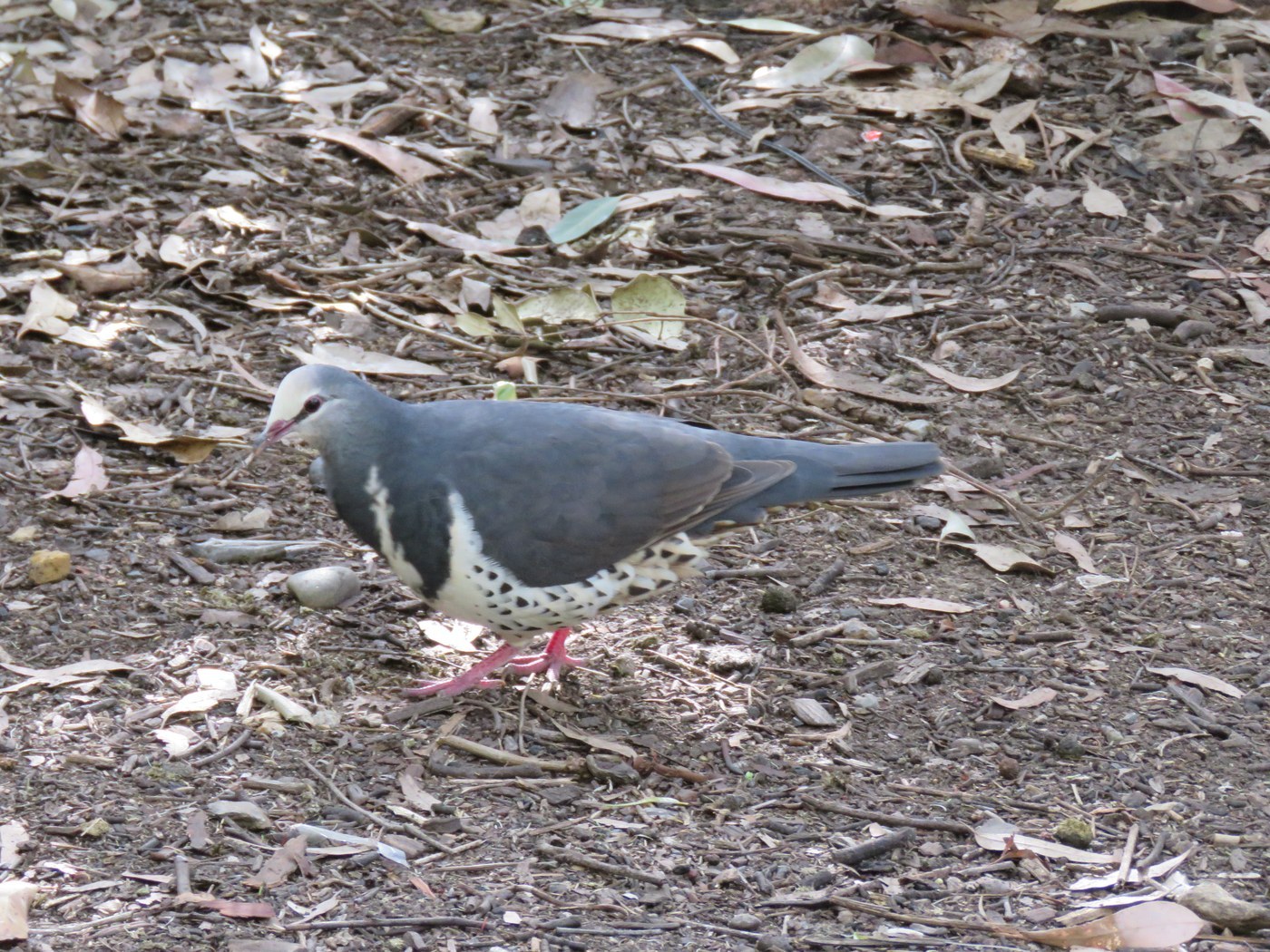
Wonga Pigeon
Dense, soft body contour feathers over a stocky frame

Squatter Pigeon
Dense, cryptic body contour feathers with a bold facial pattern

White-winged Dove
Broad, sturdy flight feathers with a bold white wing stripe

Western Crowned Pigeon
Rounded fan crest plumes over dense soft body feathers

Snow Pigeon
Dense insulating body contour feathers with a bold white rump and belly patch

Zebra Dove
Contour feathers with bold, extensive black-and-white barring

Scaly-naped Pigeon
Contour feathers with iridescent scaled nape pattern