

Red-cockaded Woodpecker
Leuconotopicus borealis
A southeastern pine specialist woodpecker best known for its large white cheek patch and its habit of excavating cavities only in living pine trees.
- Feather type
- Black-and-white barred back feathers, large white cheek patch
- Colours
- Black-and-white barred back, large white cheek, tiny red cockade streak on male
- Bird size
- Sparrow-to-robin-sized, ~21 cm
Found a feather like this?
Identify any feather from a photo, free.
Overview
The Red-cockaded Woodpecker is closely tied to mature, open pine forest of the southeastern United States, especially longleaf pine ecosystems maintained by periodic fire. Its most reliable field mark is a bold white cheek patch bordered by black, which stands out much more than the tiny red "cockade" streak that gives the species its name.
Unusually among woodpeckers, it excavates its nest cavity in living pine trees rather than dead wood, a slow process that can take a year or more and produces trees prized as habitat by many other species.
Identifying the Feather
- Back: black-and-white barred, similar to several other small woodpeckers
- Face: large, conspicuous white cheek patch bordered by black cap and nape
- Crown: black in both sexes; males show a nearly invisible thin red streak (the "cockade") along the upper edge of the cheek patch, usually only visible at very close range or when the bird is agitated
- Underparts: white with black spotting on the flanks
- Vs. Downy/Hairy Woodpecker: the large solid white cheek patch bordered by black is the key difference, since Downy and Hairy show a more striped facial pattern with white extending along the back rather than a solid cheek block
Plumage & Molt
Males show the tiny red cockade streak near the white cheek patch, which is absent in females; otherwise the sexes look alike. Juveniles lack the red streak and can show a small red crown patch instead, lost after the first molt. It has a single annual molt following the breeding season.
Habitat & Range
Restricted to mature, open pine forest, particularly longleaf pine, in the southeastern United States, historically ranging from Texas to Virginia and Florida. It is a non-migratory, cooperative-breeding species that depends on fire-maintained open pine stands and is considered a species of conservation concern due to historic habitat loss.
Behavior & Field Notes
Forages on pine trunks and branches for insects, gleaning bark surfaces of mature pines. It lives in small family groups and excavates nest and roost cavities exclusively in living pine trees, often those weakened by a fungal heart-rot, drilling small resin wells around the cavity entrance that cause sap to flow and may deter predators. Calls include sharp, raspy chattering notes exchanged within the family group.
Frequently asked questions
What is the best way to identify Red-cockaded Woodpecker feathers or field marks?
Look for the large solid white cheek patch bordered by a black cap and nape, combined with a black-and-white barred back; the tiny red cockade streak on males is usually too small to see easily.
Why does this species nest in living pine trees?
It is one of the few woodpeckers to excavate cavities in living pines rather than dead wood, often choosing trees softened by internal fungal decay, a process that can take many months.
What are the resin wells around its nest holes?
The birds drill small holes around the cavity entrance that cause pine resin to flow, coating the trunk in sticky sap thought to help deter climbing predators.
Does the Red-cockaded Woodpecker live in family groups?
Yes, it is a cooperative breeder, often living in small family groups that help raise young and maintain cavity trees.
Red-cockaded Woodpecker guides
In-depth guides for identifying and understanding Red-cockaded Woodpecker.

Other feathers you may enjoy

Ivory-billed Woodpecker
Very large flight feathers with a solid white trailing patch

Great Slaty Woodpecker
Massive, uniformly colored contour feathers

Yellow-tufted Woodpecker
Black body feathers with bright yellow forehead tufts

Magellanic Woodpecker
Very large, glossy contour feathers with a recurved crest

Yellow-bellied Sapsucker
Black-and-white patterned back and facial-stripe feathers
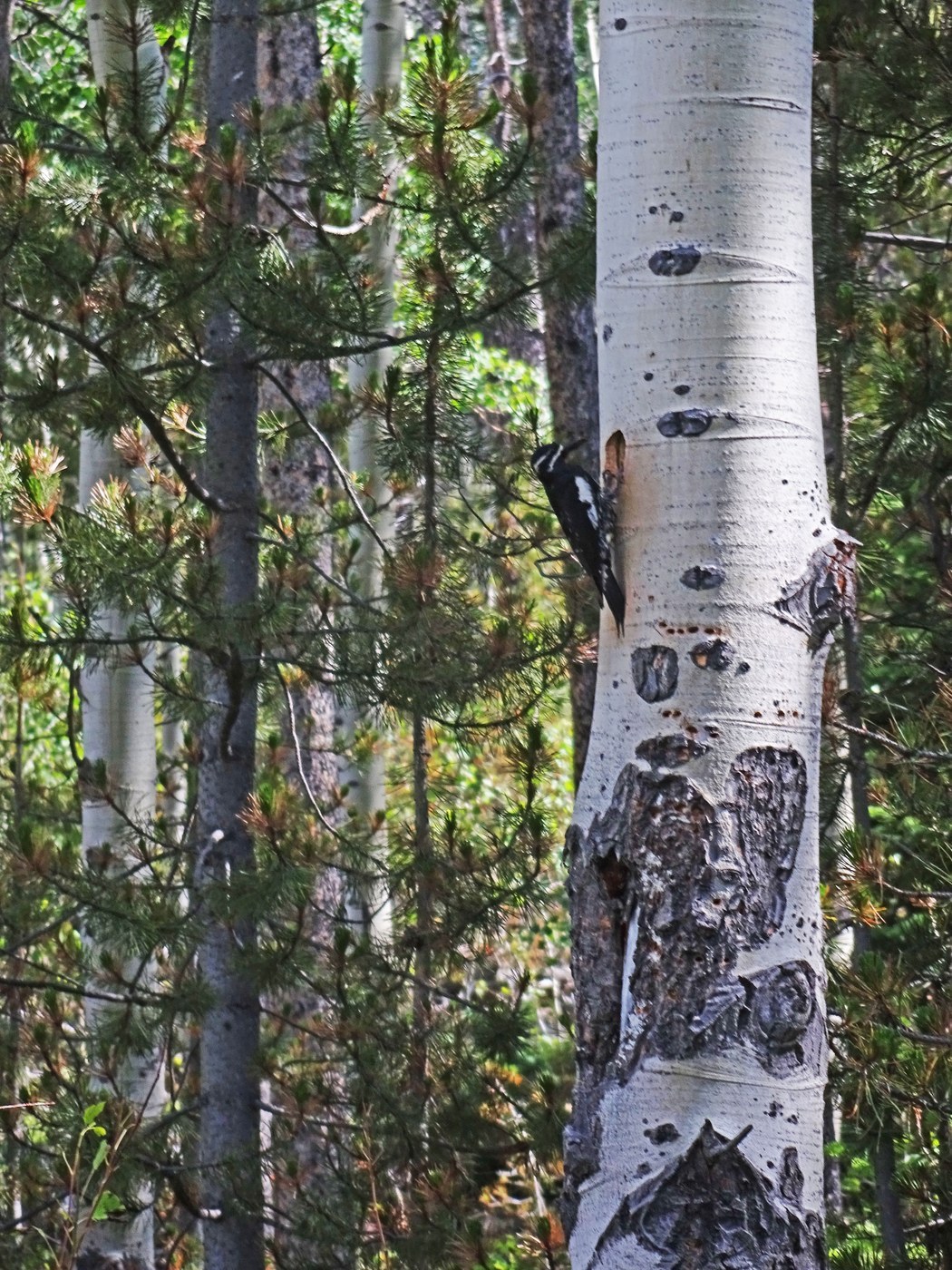
Williamson's Sapsucker
Strongly sexually dimorphic body feathers, glossy black or finely barred brown

Yellow-crowned Woodpecker
Contour and flight feathers

White Woodpecker
Mostly white body feathers with contrasting black wings and back

Red-throated Wryneck
Soft, cryptically mottled contour feathers

White-bellied Woodpecker
Large, glossy black contour and flight feathers

White-backed Woodpecker
Barred back feathers rather than a solid white patch
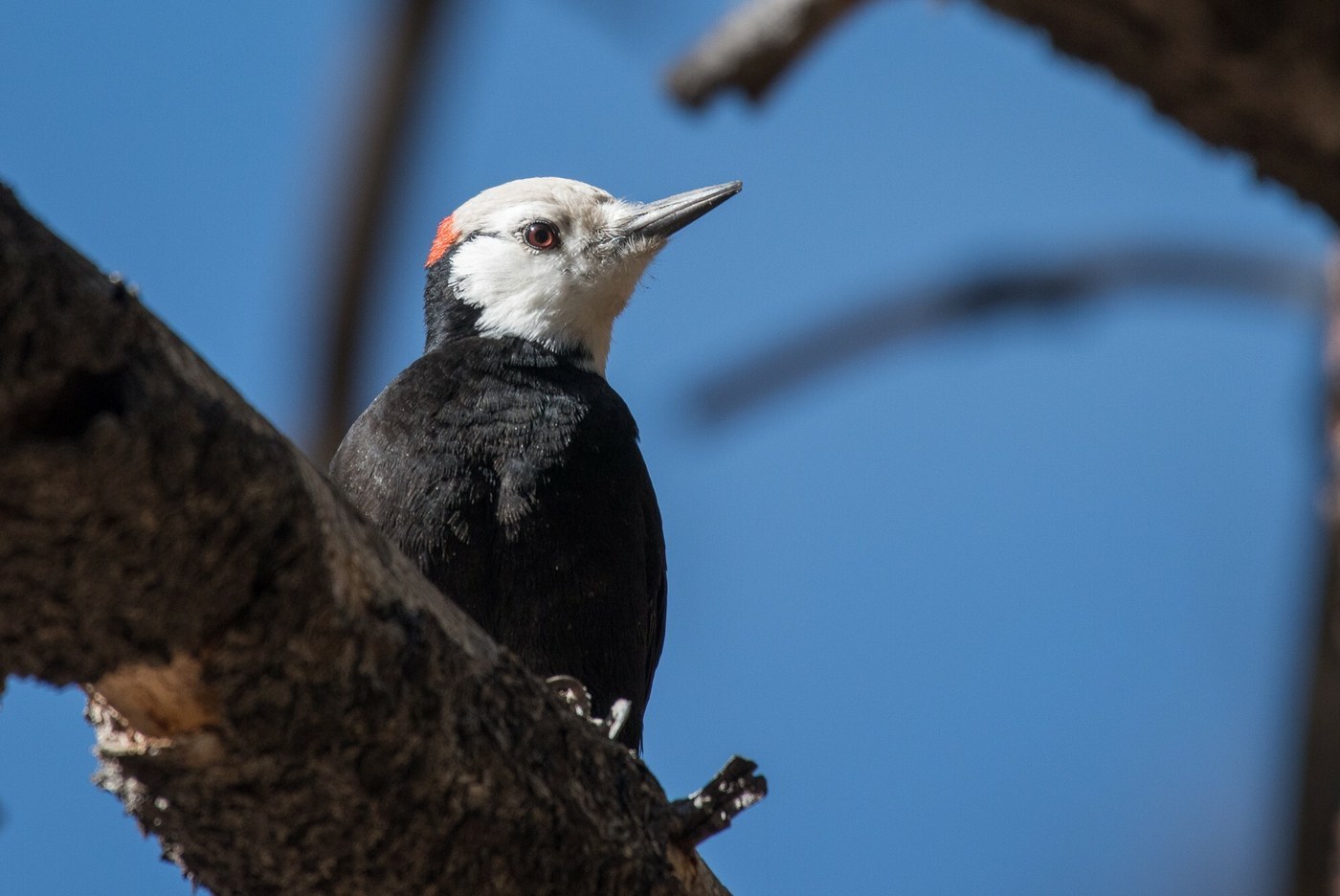
White-headed Woodpecker
Solid black body feathers with an entirely white head