

Rock Pigeon
Columba livia
A stocky, familiar city bird whose feather color is famously variable, though wild-type individuals retain a blue-gray body with two dark wingbars and an iridescent green-purple neck.
- Feather type
- Highly variable body contour feathers; wild-type birds show two dark wingbars and iridescent green-purple neck feathers
- Colours
- Extremely variable from blue-gray (wild-type) to white, black, red, or pied patterns due to domestication; iridescent neck sheen
- Bird size
- Medium-large, stocky, ~30-35 cm
Found a feather like this?
Identify any feather from a photo, free.
Overview
The Rock Pigeon is among the most familiar birds in the world, common in cities, farmland, and around bridges and buildings across nearly every continent. It descends from wild cliff-dwelling pigeons of Europe, North Africa, and Asia, and has been domesticated and selectively bred for thousands of years, producing enormous variation in feral populations.
Wild-type individuals show a fairly consistent blue-gray body with two black wingbars and an iridescent green-and-purple sheen on the neck, but feral urban populations show an enormous range of colors and patterns, from all-white to all-black, rust-red, and pied combinations.
Because of this variability, feather identification relies more on structure and the iridescent neck sheen (when present) than on overall body color, which can differ dramatically between individuals.
Identifying the Feather
Size and Shape
Stocky, rounded contour feathers and broad, rounded wing feathers typical of a fast, powerful flier.
Color and Pattern
- Wild-type body feathers are blue-gray with two bold black bars across the folded wing.
- Neck and upper breast feathers often show an iridescent green-to-purple sheen, especially in good light.
- A white rump patch is often visible at the base of the back in flight.
- Feral populations vary enormously, including solid white, black, checkered, and rust-red individuals, unlike the more consistent patterning of wild doves.
Comparisons
No other common dove or pigeon shows this degree of color variability; a plain-gray or oddly colored (e.g., pure white, checkered, or rust-colored) pigeon-sized feather with an iridescent neck sheen is a strong indicator of Rock Pigeon rather than Mourning Dove or Eurasian Collared-Dove, both of which are much more consistent in coloring.
Plumage & Molt
Descended from the wild Rock Dove of coastal cliffs, feral Rock Pigeons show tremendous plumage variation due to centuries of domestication and interbreeding, including blue-bar (wild-type), checkered, red, black, pied, and white forms. Sexes look similar, though males may show slightly more neck iridescence. Juveniles are duller with less iridescence.
Habitat & Range
Rock Pigeons are found worldwide in urban and agricultural areas, having spread far beyond their native range in Europe, North Africa, and western Asia. They are non-migratory residents wherever established, nesting on building ledges, bridges, and other structures that mimic their ancestral cliff habitat.
Behavior & Field Notes
Rock Pigeons walk with a characteristic head-bobbing gait and perform cooing courtship displays. They forage on grain, seeds, and food scraps, often in large flocks in urban plazas and parks. They nest on ledges and produce a nutrient-rich "crop milk" to feed their young. A pigeon-sized feather with an iridescent neck sheen or unusually variable coloring found in an urban setting is a good match for this species.
Frequently asked questions
Why does Rock Pigeon feather color vary so much?
Centuries of domestication and interbreeding among feral populations have produced enormous plumage variation, unlike the more uniform coloring of most wild dove species.
What does a wild-type Rock Pigeon feather look like?
Blue-gray body feathers with two black wingbars and an iridescent green-purple sheen on the neck.
How can I tell a Rock Pigeon feather from a Mourning Dove feather?
Rock Pigeon feathers are stockier and often show iridescent neck sheen or unusual coloring, while Mourning Dove feathers are consistently soft tan-gray with a pointed, white-edged tail.
Where are Rock Pigeon feathers most commonly found?
In urban and suburban areas, especially near bridges, building ledges, and plazas where pigeons roost and forage in numbers.
Rock Pigeon guides
In-depth guides for identifying and understanding Rock Pigeon.

Rock Pigeon identified by the community
Real feathers identified with Feather Identifier.


Other feathers you may enjoy

Victoria Crowned Pigeon
Large lace-like fan crest plumes over dense body contour feathers

Plain Pigeon
Contour feathers, plain and uniformly toned, with a white wing patch

Zenaida Dove
Contour and flight feathers, faint iridescent sheen on neck

Pink Pigeon
Soft contour feathers with graduated tail

Nicobar Pigeon
Long, hackle-like elongated neck feathers with iridescent sheen
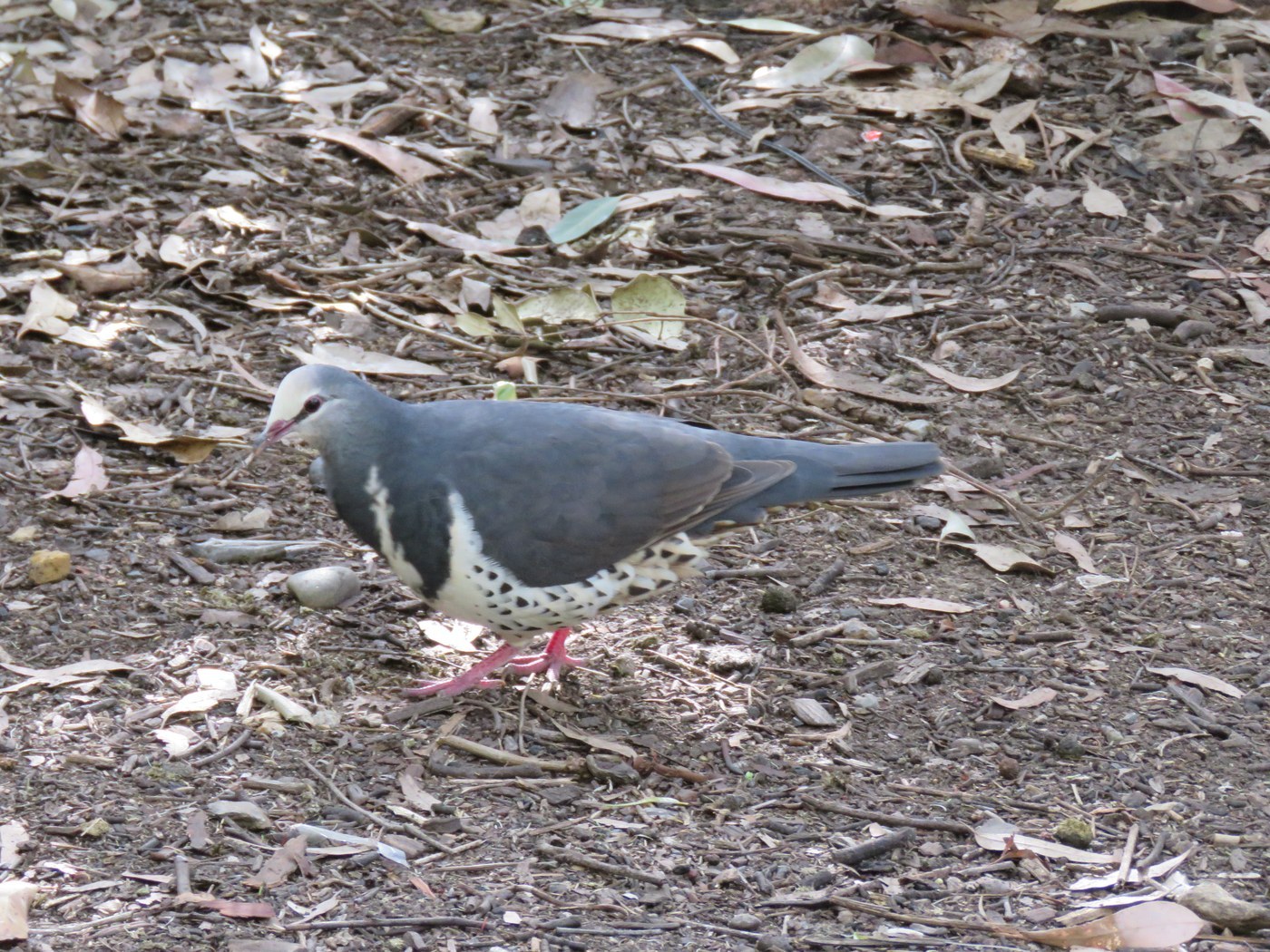
Wonga Pigeon
Dense, soft body contour feathers over a stocky frame

Squatter Pigeon
Dense, cryptic body contour feathers with a bold facial pattern

White-winged Dove
Broad, sturdy flight feathers with a bold white wing stripe

Western Crowned Pigeon
Rounded fan crest plumes over dense soft body feathers

Snow Pigeon
Dense insulating body contour feathers with a bold white rump and belly patch

Zebra Dove
Contour feathers with bold, extensive black-and-white barring

Scaly-naped Pigeon
Contour feathers with iridescent scaled nape pattern