
Sand Martin
Riparia riparia
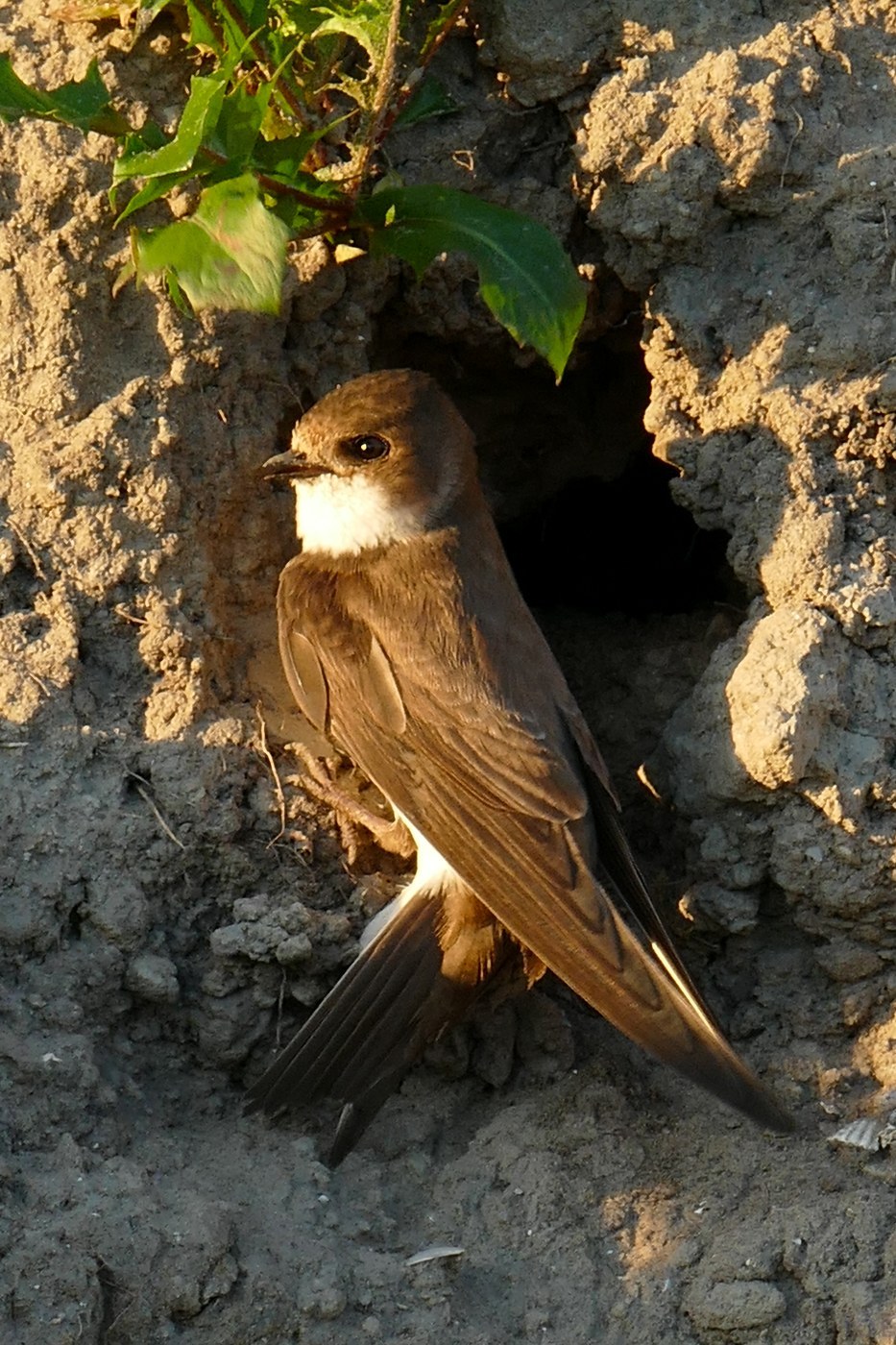
The Sand Martin is the smallest European swallow-relative, with plain sandy-brown upperpart feathers, white underparts, and a distinctive brown breast band.
- Feather type
- Short forked tail feathers; long pointed flight feathers for aerial feeding
- Colours
- Sandy brown upperparts, white underparts with a distinct brown breast band
- Bird size
- Small, ~12 cm (smallest European hirundine)
Found a feather like this?
Identify any feather from a photo, free.
Overview
The Sand Martin, known as the Bank Swallow in North America, is a small aerial songbird that nests in burrows dug into sandy riverbanks, quarry faces, or coastal cliffs.
Its plumage is understated compared to its relatives: plain sandy brown above and white below, broken by a neat brown breast band.
Colonies can number dozens to hundreds of burrows, so shed feathers are often found in loose concentrations near active nest banks.
Identifying the Feather
Size & Shape
- The smallest hirundine feathers in Europe, matching its small body size.
- Flight feathers are long and pointed for aerial feeding; the tail is short and only shallowly forked.
Color & Pattern
- Upperpart feathers: plain sandy or earthy brown, without gloss or iridescence.
- Underparts are white, crossed by a distinct brown breast band - a key diagnostic feature.
- No white rump patch (unlike House Martin) and no long tail streamers (unlike Swallow).
Similar Species
- Separated from House Martin by its brown (not glossy blue-black) upperparts and lack of a white rump; separated from Swallow by smaller size, plain brown back, and the breast band.
Plumage & Molt
Overall Plumage
Plain sandy brown above, white below, with a distinct brown breast band across the upper chest.
Sex & Age Differences
Sexes look alike. Juveniles show buff fringes to the upperpart feathers, giving a slightly scaly look, before their first molt.
Molt
Molts mainly on the African wintering grounds after the breeding season.
Habitat & Range
Habitat
Sandy or soft-soil riverbanks, quarries, and sea cliffs suitable for excavating nest burrows; forages over adjacent water and open ground.
Range
Breeds across Europe, Asia, and North America (as Bank Swallow); European populations winter in sub-Saharan Africa.
Movements
Fully migratory, present in breeding colonies only from spring to late summer.
Behavior & Field Notes
Behavior
Highly colonial, nesting in dense burrow colonies and foraging in loose flocks low over water and fields.
Diet
Feeds on flying insects caught on the wing, often low over rivers and lakes.
Nesting
Excavates a tunnel nest burrow in a vertical sandy bank, often in large colonies.
Voice
A dry, buzzy twittering call, harsher than House Martin's.
Field Notes
Feathers found near sandy riverbanks or quarry faces with active burrow colonies, showing plain brown upperparts and a breast band, are typical of Sand Martin.
Frequently asked questions
What distinguishes a Sand Martin feather from a House Martin feather?
Sand Martin upperparts are plain sandy brown, not glossy blue-black, and it lacks the white rump patch of House Martin.
What is the breast band on a Sand Martin?
A distinct brown band across the otherwise white chest, a key diagnostic feature of this species.
Where are Sand Martin feathers typically found?
Near sandy riverbanks, quarries, or cliffs where the species digs nest burrows in colonies.
Is the Sand Martin the same bird as the Bank Swallow?
Yes, it is the same species, called Bank Swallow in North America.
Sand Martin guides
In-depth guides for identifying and understanding Sand Martin.
Other feathers you may enjoy

Yellow-breasted Bunting
Contour and flight feathers, chestnut-and-yellow breeding pattern

Sedge Wren
Tiny streaked crown and back feathers

Yellow-winged Cacique
Glossy black body feathers, yellow wing patch, shaggy crest

Yellow Warbler
Small contour and flight feathers

Yellow-throated Warbler
Small contour and flight feathers

Yellow-throated Vireo
Bright yellow throat and spectacle feathers; olive-green back feathers; two white wing-bar feathers

Yellow-rumped Warbler
Small contour and flight feathers

Yellow-hooded Blackbird
Contrasting hood and body feathers

Yellow-headed Blackbird
Glossy black body plumage with a bright yellow head and breast

Yellow-eyed Junco
Contour and flight feathers

Yellow-fronted Canary
Small, smooth body plumage

Yellow-breasted Greenfinch
Compact, smooth body plumage