
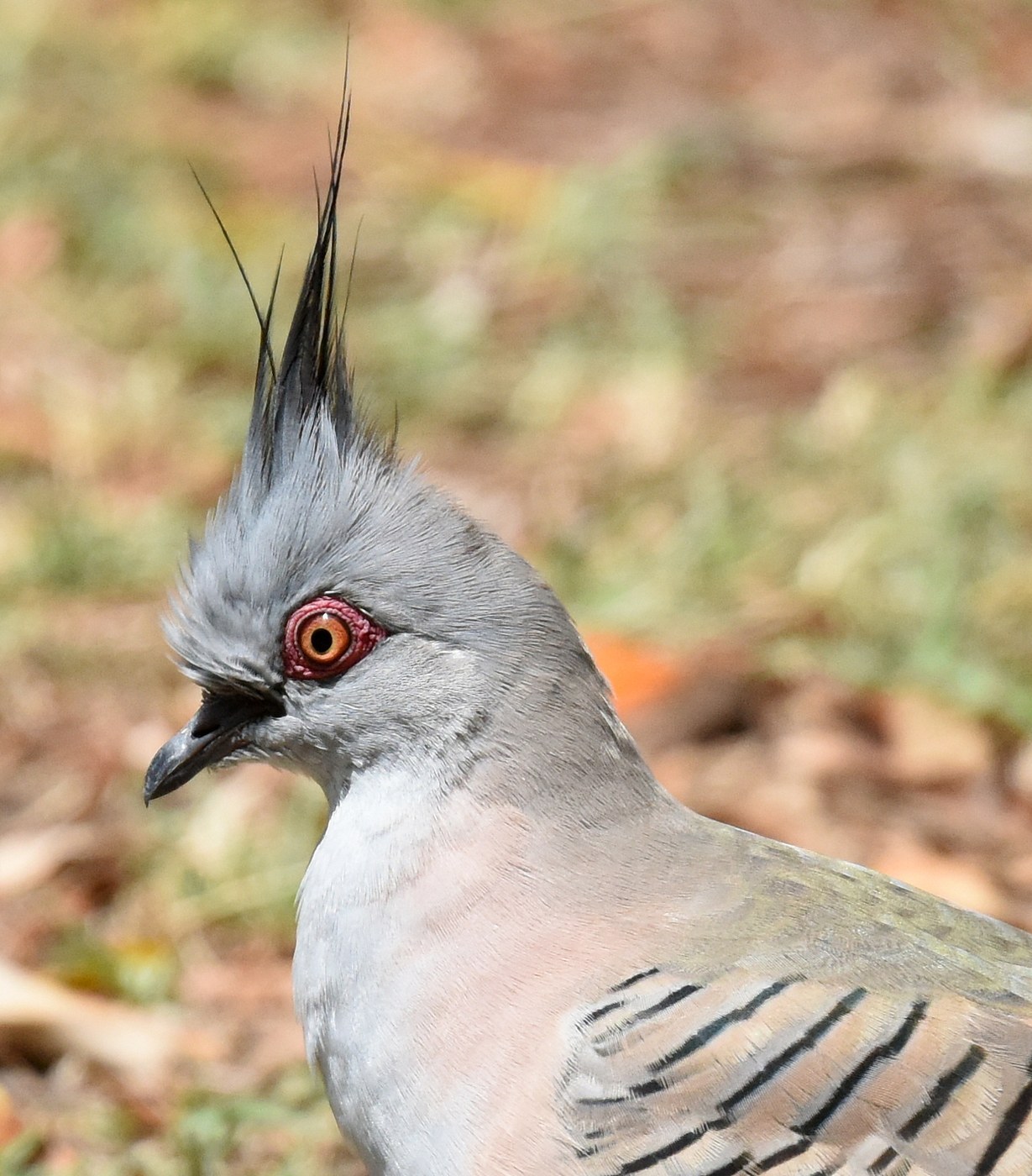
Topknot Pigeon
Lopholaimus antarcticus
Australia's largest fruit-eating pigeon, instantly recognizable by its unusual double crest-a grey forward-curling tuft paired with a rufous-chestnut crest behind it.
- Feather type
- Contour feathers with double-crested head plumes
- Colours
- Grey body with a grey forward crest and rufous rear crest
- Bird size
- Large pigeon, ~40-44 cm
Found a feather like this?
Identify any feather from a photo, free.
Overview
The Topknot Pigeon is a large, canopy-dwelling pigeon of eastern Australian rainforests, notable for being the largest fruit-pigeon species on the continent. Its most striking feature is an unusual two-part crest on the head, a combination not seen in most other pigeon species, making it easy to identify even in flight or at a distance.
Identifying the Feather
The body is predominantly grey, with darker flight feathers and a pale grey belly. The head bears a distinctive double crest: a forward-curling grey tuft above the forehead and a longer, more erect rufous-chestnut crest behind it on the crown. The tail is fairly long and dark. Compare with the White-headed Pigeon, which shares Australian rainforest habitat but has a plain white head and lacks any crest, making the Topknot Pigeon's head plumes the clearest distinguishing feature.
Plumage & Molt
Sexes are broadly similar, both showing the double crest, though the rufous portion may be slightly less vivid in females. Juveniles have a much reduced or partial crest, developing the full double-crest pattern as they mature through successive molts. No strong seasonal plumage variation is documented.
Habitat & Range
Found along the rainforests of eastern Australia, from northern Queensland south into New South Wales, favoring the upper canopy of subtropical and tropical rainforest. It is nomadic to some degree, moving between regions in response to the fruiting cycles of rainforest trees.
Behavior & Field Notes
Feeds on fruit taken directly from canopy trees, often traveling in flocks that follow fruiting patterns across the landscape. Its call is a low, guttural note, generally quieter than its conspicuous appearance might suggest. Nests are flimsy stick platforms built in tall trees. Its nomadic, fruit-following habits mean flock numbers at any one site can vary considerably through the year.
Frequently asked questions
What is the standout feature of the Topknot Pigeon?
Its unusual double crest, combining a forward grey tuft with a rufous-chestnut crest behind it on the crown.
How big is this pigeon?
It is Australia's largest fruit-pigeon, reaching around 40 to 44 cm in length.
Where does it live?
In rainforest canopy along the east coast of Australia, from Queensland into New South Wales.
How does it differ from the White-headed Pigeon?
The White-headed Pigeon has a plain white head with no crest, unlike the Topknot Pigeon's distinctive double crest.
Topknot Pigeon guides
In-depth guides for identifying and understanding Topknot Pigeon.
Other feathers you may enjoy

Victoria Crowned Pigeon
Large lace-like fan crest plumes over dense body contour feathers

Plain Pigeon
Contour feathers, plain and uniformly toned, with a white wing patch

Zenaida Dove
Contour and flight feathers, faint iridescent sheen on neck

Pink Pigeon
Soft contour feathers with graduated tail

Nicobar Pigeon
Long, hackle-like elongated neck feathers with iridescent sheen
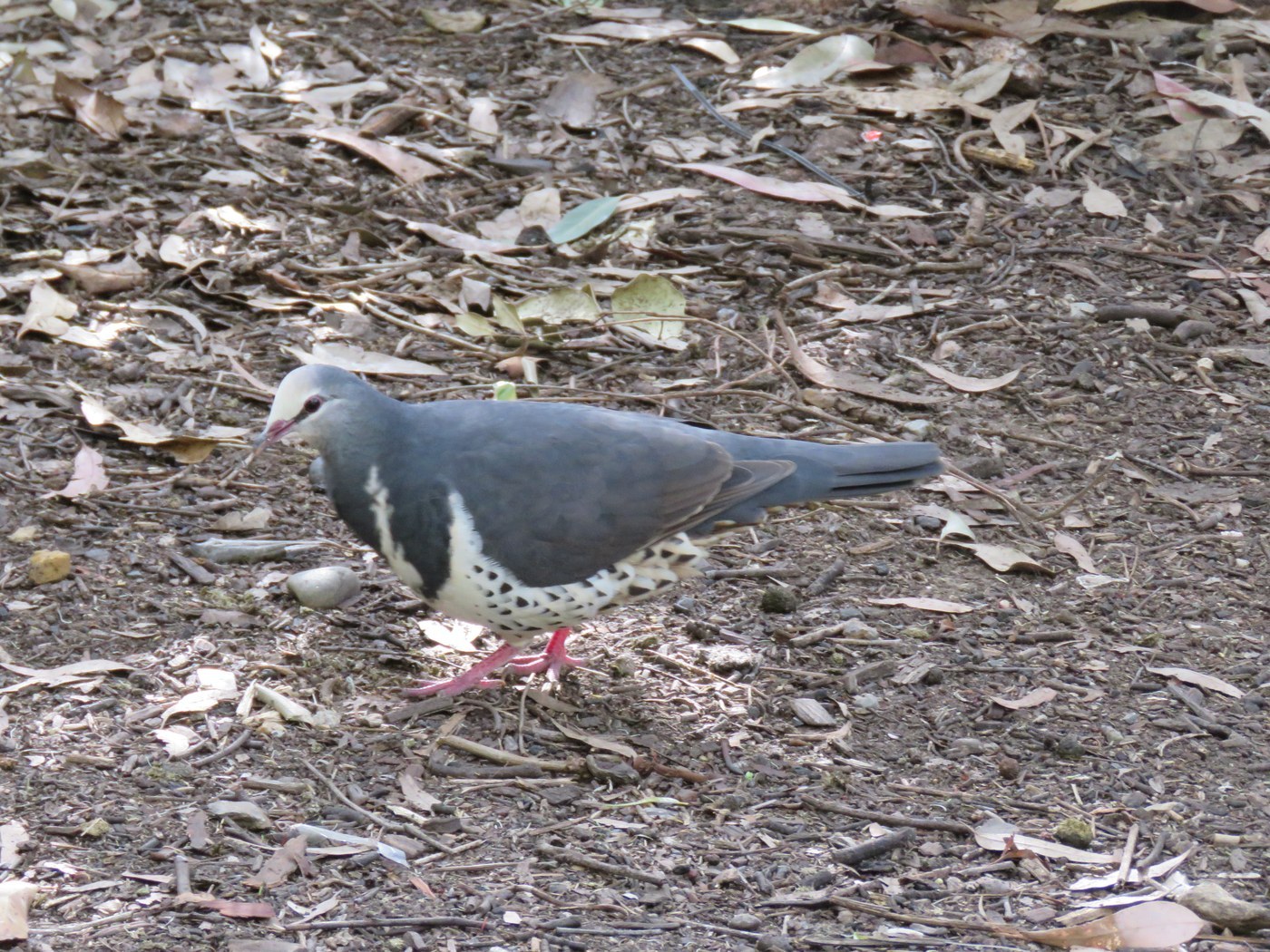
Wonga Pigeon
Dense, soft body contour feathers over a stocky frame

Squatter Pigeon
Dense, cryptic body contour feathers with a bold facial pattern

White-winged Dove
Broad, sturdy flight feathers with a bold white wing stripe

Western Crowned Pigeon
Rounded fan crest plumes over dense soft body feathers

Snow Pigeon
Dense insulating body contour feathers with a bold white rump and belly patch

Zebra Dove
Contour feathers with bold, extensive black-and-white barring

Scaly-naped Pigeon
Contour feathers with iridescent scaled nape pattern