
Virginia's Warbler
Leiothlypis virginiae
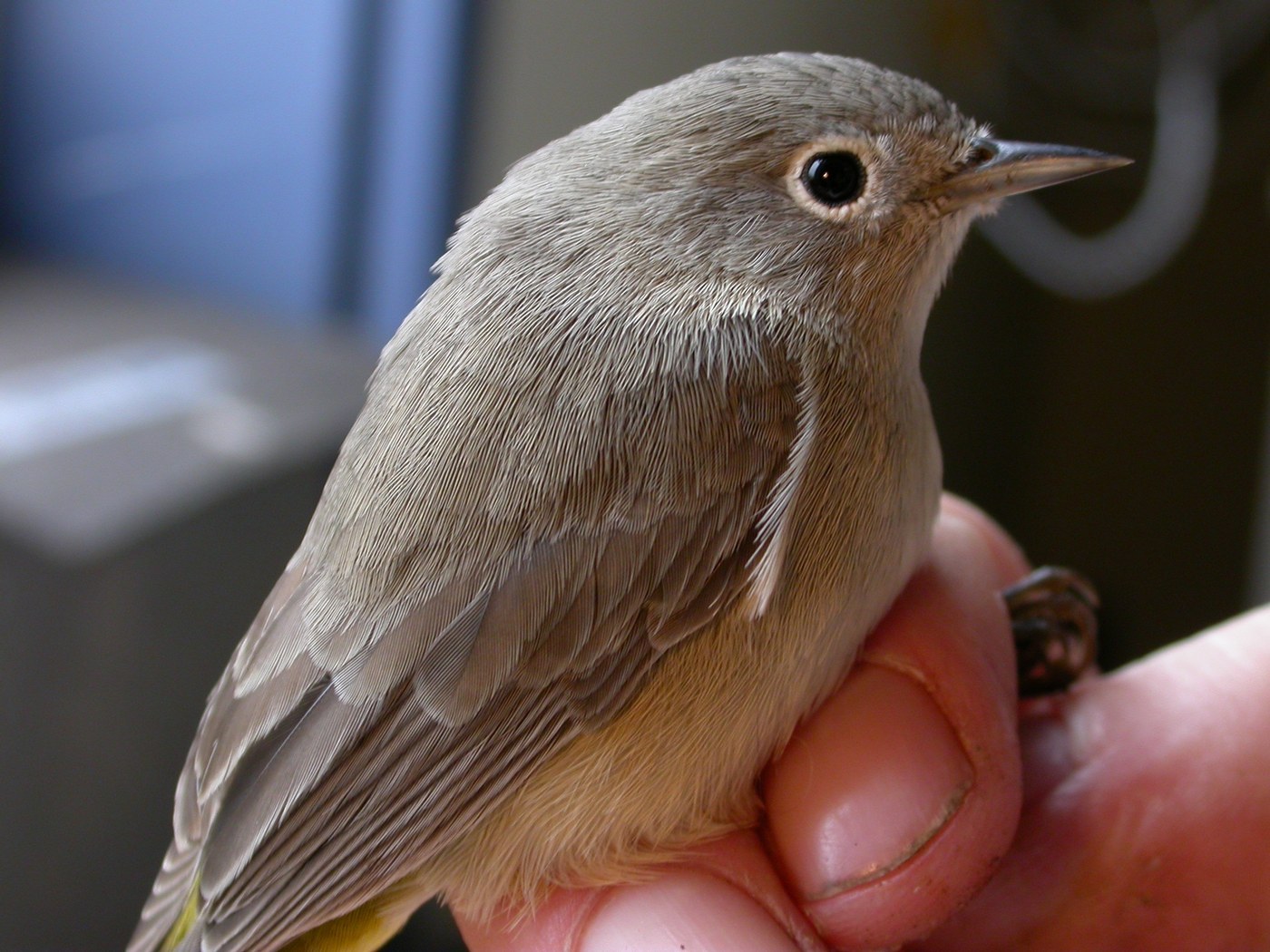
A gray-bodied warbler of dry interior western scrublands, marked by a bright yellow rump and breast patch, a white eye-ring, and a concealed chestnut crown patch.
- Feather type
- Small, soft contour feathers; gray body, yellow rump and breast patches
- Colours
- Gray overall, yellow breast patch, yellow rump, chestnut crown patch (concealed), white eye-ring
- Bird size
- Kinglet-sized, ~12 cm
Found a feather like this?
Identify any feather from a photo, free.
Overview
Overview
Virginia's Warbler is a plainly gray-bodied warbler with contrasting yellow highlights, breeding in dry montane scrub and pinyon-juniper woodlands across the interior western United States. Its combination of an overall gray body, a small but bright yellow breast patch, and a yellow rump, together with a bold white eye-ring, distinguishes it from other gray warblers of its region.
This species is fairly local and can be inconspicuous, foraging low and staying within dense scrub, but its distinctive combination of features makes it identifiable once seen well, and its restricted range makes it a target species for birders visiting the interior Southwest.
Identifying the Feather
Feather Identification
- Body color: Body feathers, including the head, back, and wings, are overall gray, without the greenish tones typical of many related warblers.
- Breast patch: A small but bright yellow patch is present on the center of the breast, standing out against the surrounding gray.
- Rump: A separate, often more extensive yellow patch is present on the rump, conspicuous in flight or when the wings are held slightly open.
- Eye-ring: A bold, complete white eye-ring stands out against the gray face.
- Crown patch: A small chestnut crown patch is present in adults but usually concealed by overlying gray feathers, visible mainly at close range.
- Wings: Wings are plain gray without wing bars.
Plumage & Molt
Plumage Details
Adult males typically show the brightest yellow breast and rump patches along with the most developed, though still often concealed, chestnut crown patch. Females and immatures show duller, paler, or more restricted yellow patches on the breast and rump, and the crown patch is reduced or lacking, particularly in young birds.
A complete molt occurs on the breeding grounds in late summer, and plumage remains fairly stable through the year, with the concealed crown patch remaining hidden much of the time regardless of season.
Habitat & Range
Habitat & Range
Virginia's Warblers breed in dry montane scrub, pinyon-juniper woodland, and similar semi-arid shrub habitats across parts of the interior western United States, including the Great Basin and southern Rocky Mountain regions, generally at moderate elevations.
This species is a medium-distance migrant, wintering primarily in the highlands of western Mexico, typically in habitats with a similar dry scrub or woodland structure to its breeding range.
Behavior & Field Notes
Behavior & Field Notes
This warbler forages low in dense shrubs, gleaning insects from foliage and occasionally flicking its tail while moving through cover, generally staying inconspicuous within its arid scrub habitat. It can be more often heard than seen due to its habit of staying within dense low vegetation.
The nest is built on the ground, typically well hidden at the base of a shrub or under overhanging vegetation within its dry scrub habitat. The song is a series of similar, ringing notes, comparable in overall structure to other Leiothlypis warblers such as the Nashville Warbler, and voice is often key to detecting this species within its scrubby, sometimes visually challenging habitat.
Frequently asked questions
What is the best way to identify a Virginia's Warbler by its feathers?
Look for an overall gray body combined with a small yellow breast patch, a yellow rump, and a bold white eye-ring, a combination unique to this species within its range.
Is the chestnut crown patch usually visible?
No, it is typically concealed by overlying gray feathers and only visible at close range or when the crown feathers are disturbed.
Does this species have wing bars?
No, its wings are plain gray without wing bars.
What habitat should I search for this species?
Dry montane scrub and pinyon-juniper woodland at moderate elevations across the interior western United States.
Virginia's Warbler guides
In-depth guides for identifying and understanding Virginia's Warbler.
Other feathers you may enjoy

Yellow-breasted Bunting
Contour and flight feathers, chestnut-and-yellow breeding pattern

Sedge Wren
Tiny streaked crown and back feathers

Yellow-winged Cacique
Glossy black body feathers, yellow wing patch, shaggy crest

Yellow Warbler
Small contour and flight feathers

Yellow-throated Warbler
Small contour and flight feathers

Yellow-throated Vireo
Bright yellow throat and spectacle feathers; olive-green back feathers; two white wing-bar feathers

Yellow-rumped Warbler
Small contour and flight feathers

Yellow-hooded Blackbird
Contrasting hood and body feathers

Yellow-headed Blackbird
Glossy black body plumage with a bright yellow head and breast

Yellow-eyed Junco
Contour and flight feathers

Yellow-fronted Canary
Small, smooth body plumage

Yellow-breasted Greenfinch
Compact, smooth body plumage