
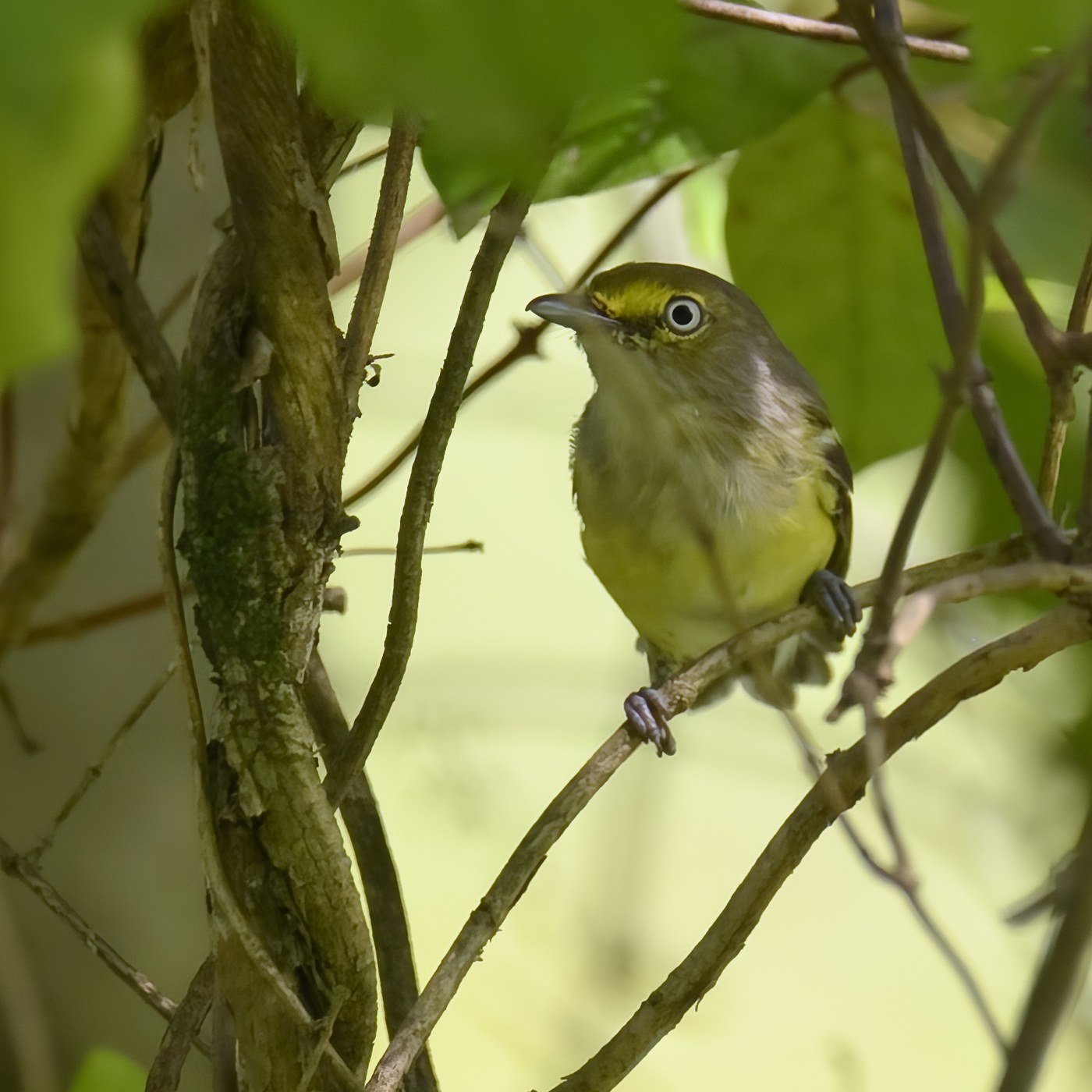
White-eyed Vireo
Vireo griseus
The White-eyed Vireo is a small, feisty vireo of dense thickets, marked by yellow spectacles and yellow-washed wing bars, with adults showing a distinctive pale iris.
- Feather type
- Yellow spectacle feathers; yellow wing-bar feathers; olive-gray back feathers
- Colours
- Olive-gray upperparts, yellow spectacles, yellowish flanks, yellow-tinged wing bars, white throat
- Bird size
- Sparrow-sized, ~12-13 cm
Found a feather like this?
Identify any feather from a photo, free.
Overview
Overview
The White-eyed Vireo inhabits dense shrubby thickets and brushy edge habitat across the southeastern and eastern United States, often staying low and hidden while delivering a sharp, scolding song. Its name refers to the pale, whitish iris found in adults, a feature visible on the living bird rather than in feather color.
Its feathers show more yellow than many other vireos, with yellow spectacles and yellow-tinged wing bars standing out against olive-gray upperparts.
Identifying the Feather
Recognizing the Feathers
- Back feathers: olive-gray, unstreaked
- Face feathers: yellow spectacles formed by a yellow eyering and lores
- Throat feathers: white, contrasting with the yellow-washed underparts
- Flank feathers: yellowish
- Wing feathers: dark with two wing bars washed in yellow
The yellow spectacles combined with yellow-tinged wing bars (rather than plain white ones) and a white throat set against yellowish flanks help distinguish this species from other vireos.
Plumage & Molt
Plumage
Sexes look alike, both showing olive-gray upperparts, yellow spectacles, a white throat, yellowish flanks, and yellow-tinged wing bars. Adults have a pale, whitish iris, while immatures show a darker eye that lightens with age. There is no strong seasonal plumage change, with a single complete molt after breeding.
Habitat & Range
Habitat & Range
This vireo breeds in dense shrubby thickets, brushy field edges, and overgrown clearings across the southeastern and eastern United States. It winters in the Gulf coast region, Mexico, and parts of Central America and the Caribbean.
Behavior & Field Notes
Behavior & Field Notes
White-eyed Vireos forage low and actively within dense cover, gleaning insects from foliage while frequently scolding intruders with a sharp, distinctive song. Nests are cup-shaped and suspended low in dense shrubs. Its song is a short, emphatic series of notes, often rendered as a quick, scolding phrase.
Frequently asked questions
What are the key feather features of a White-eyed Vireo?
Yellow spectacles, yellow-washed wing bars, and yellowish flanks contrasted against a white throat and olive-gray back.
Does the name refer to feather color?
No, the name refers to the pale, whitish iris found in adults, a soft-tissue feature rather than something reflected in the feathers.
What habitat does this species favor?
Dense shrubby thickets and brushy edge habitat, where it stays low and well hidden.
How vocal is this species?
It is quite vocal, delivering a sharp, emphatic, scolding song frequently from within dense cover.
White-eyed Vireo guides
In-depth guides for identifying and understanding White-eyed Vireo.

Other feathers you may enjoy

Yellow-breasted Bunting
Contour and flight feathers, chestnut-and-yellow breeding pattern
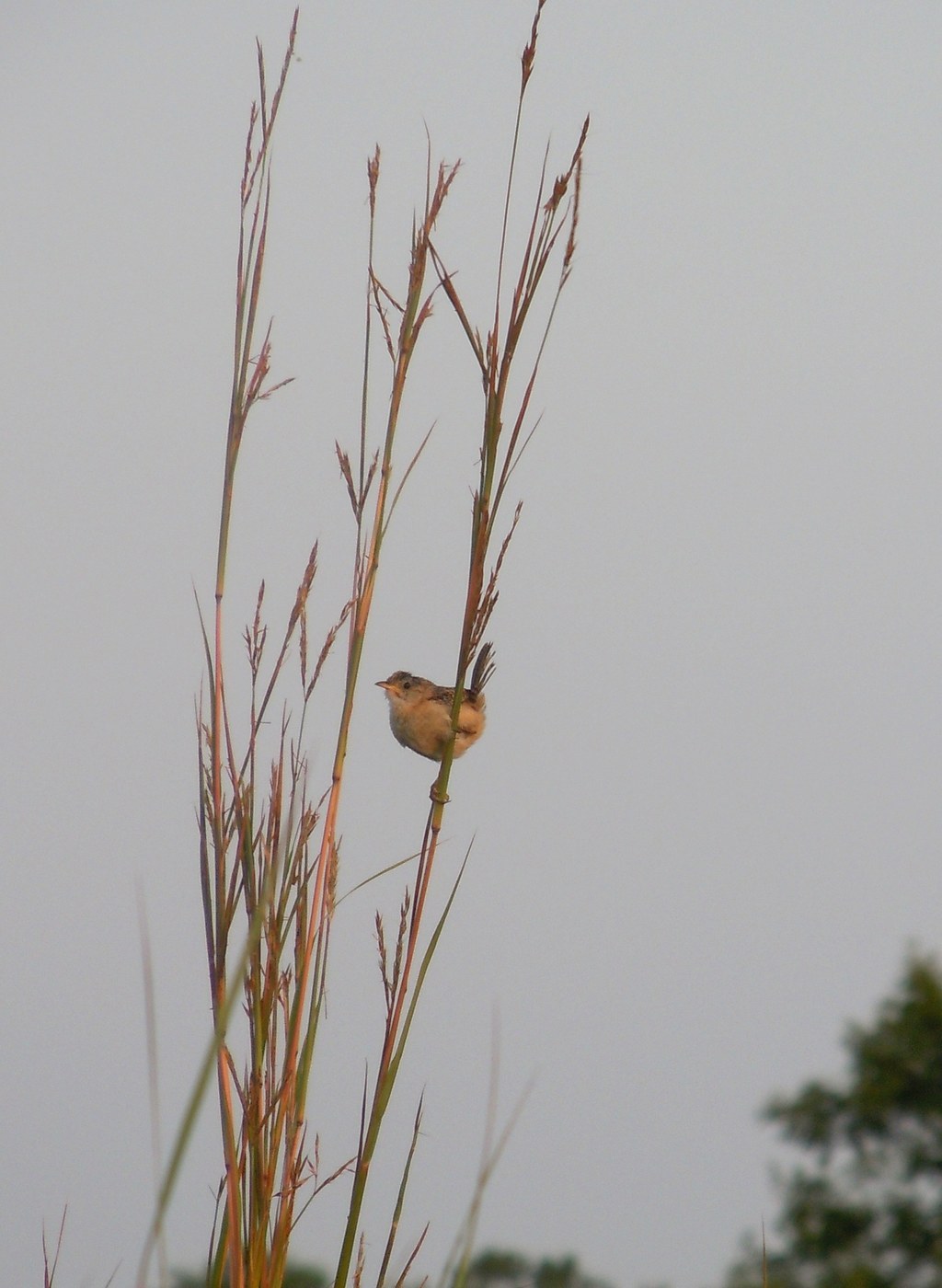
Sedge Wren
Tiny streaked crown and back feathers

Yellow-winged Cacique
Glossy black body feathers, yellow wing patch, shaggy crest

Yellow Warbler
Small contour and flight feathers
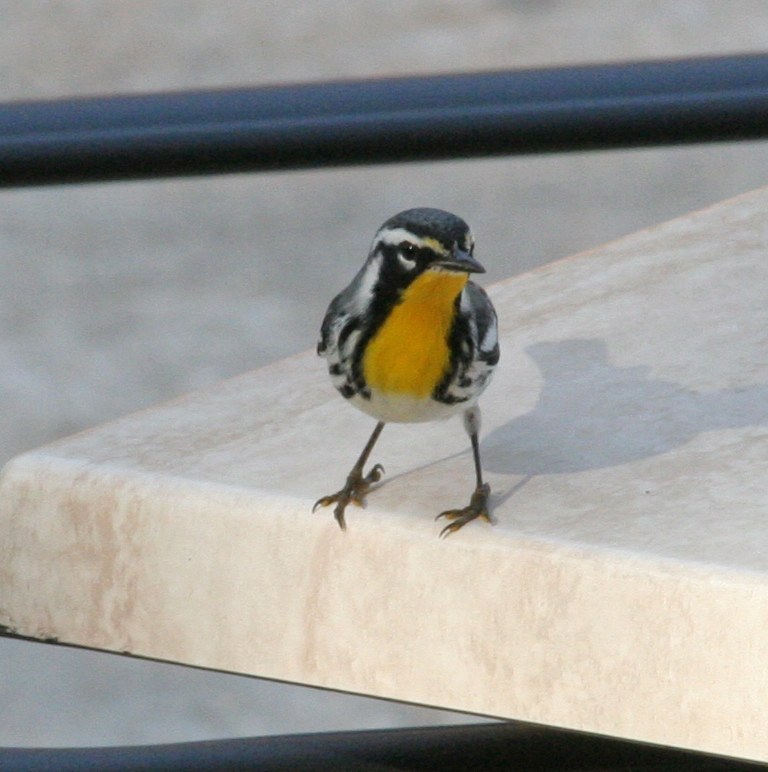
Yellow-throated Warbler
Small contour and flight feathers
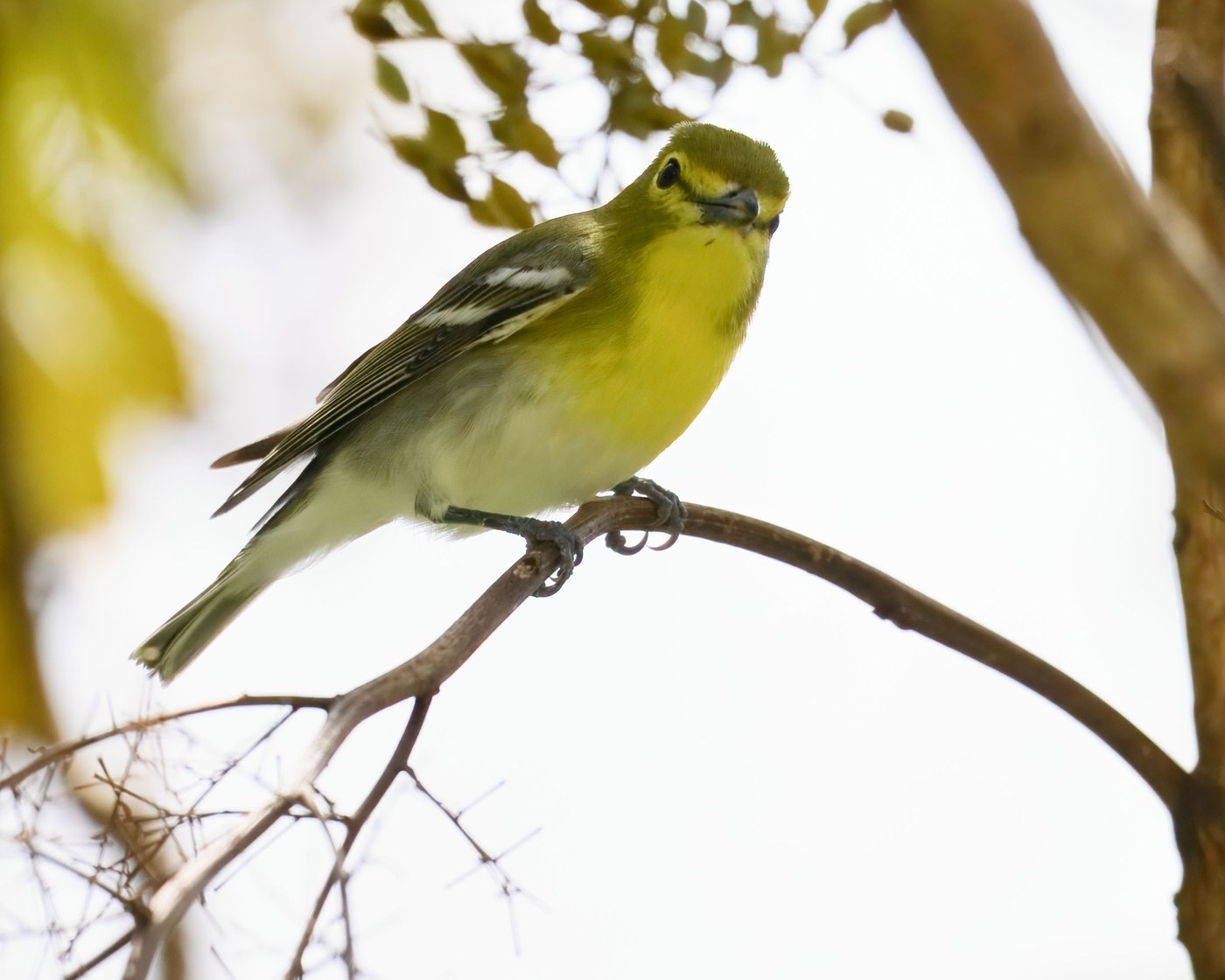
Yellow-throated Vireo
Bright yellow throat and spectacle feathers; olive-green back feathers; two white wing-bar feathers

Yellow-rumped Warbler
Small contour and flight feathers
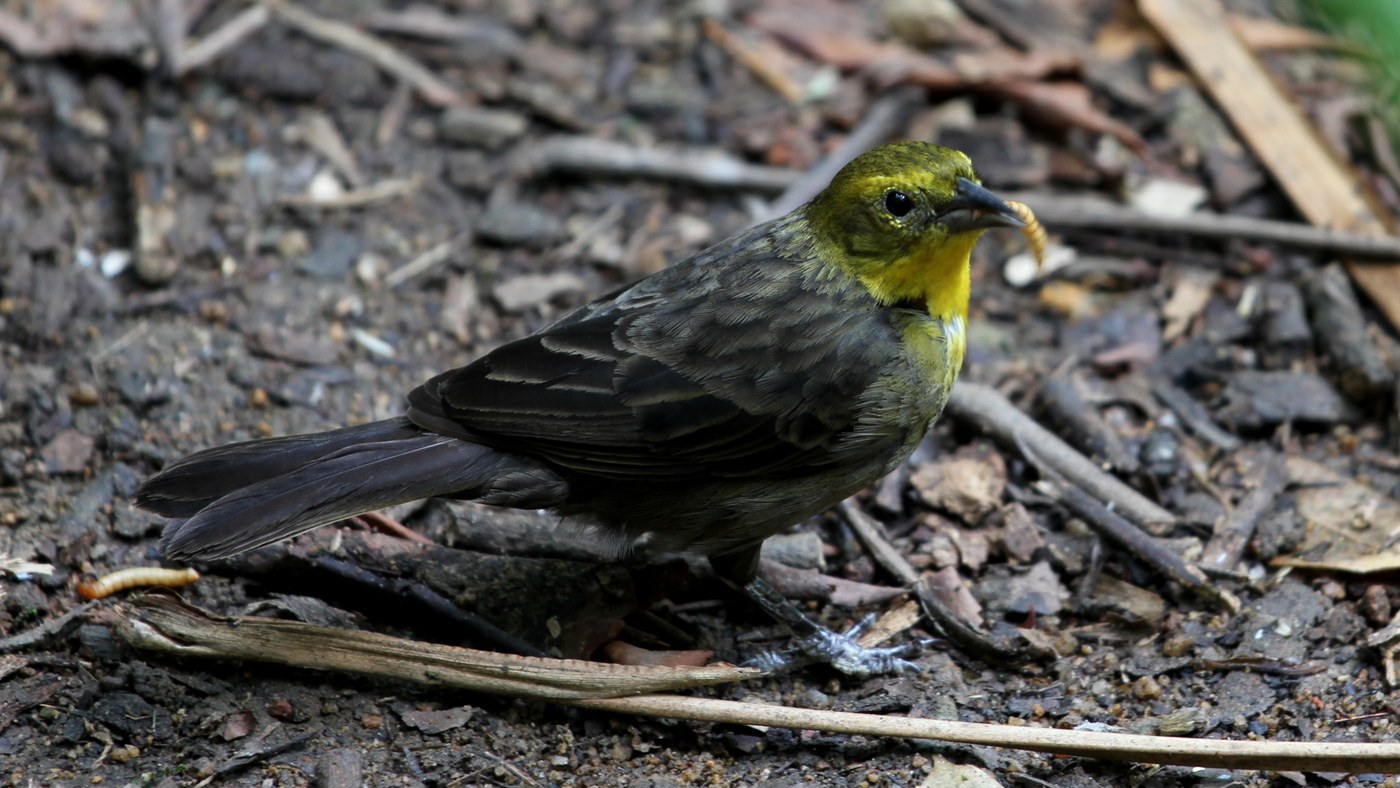
Yellow-hooded Blackbird
Contrasting hood and body feathers
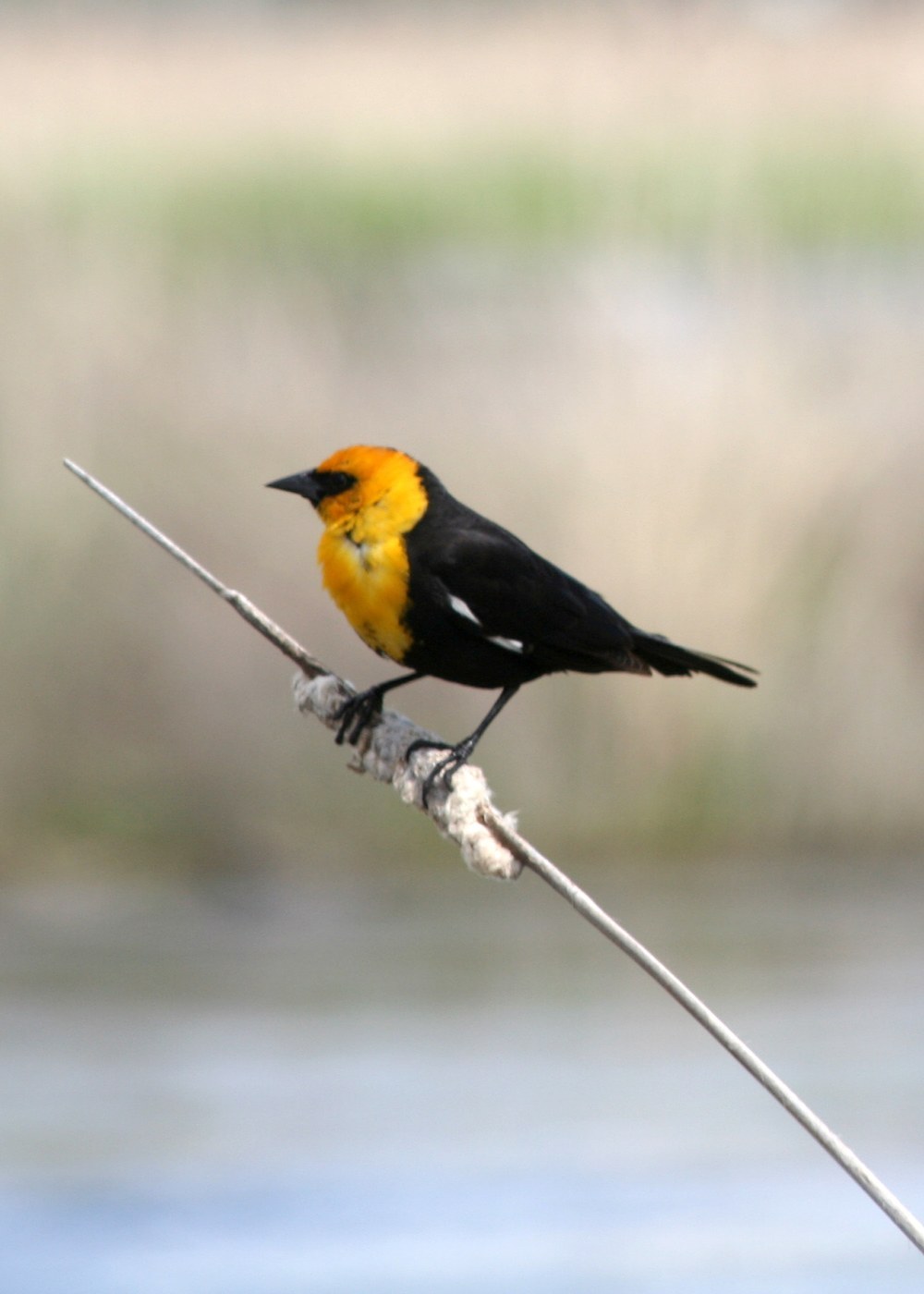
Yellow-headed Blackbird
Glossy black body plumage with a bright yellow head and breast

Yellow-eyed Junco
Contour and flight feathers

Yellow-fronted Canary
Small, smooth body plumage

Yellow-breasted Greenfinch
Compact, smooth body plumage