
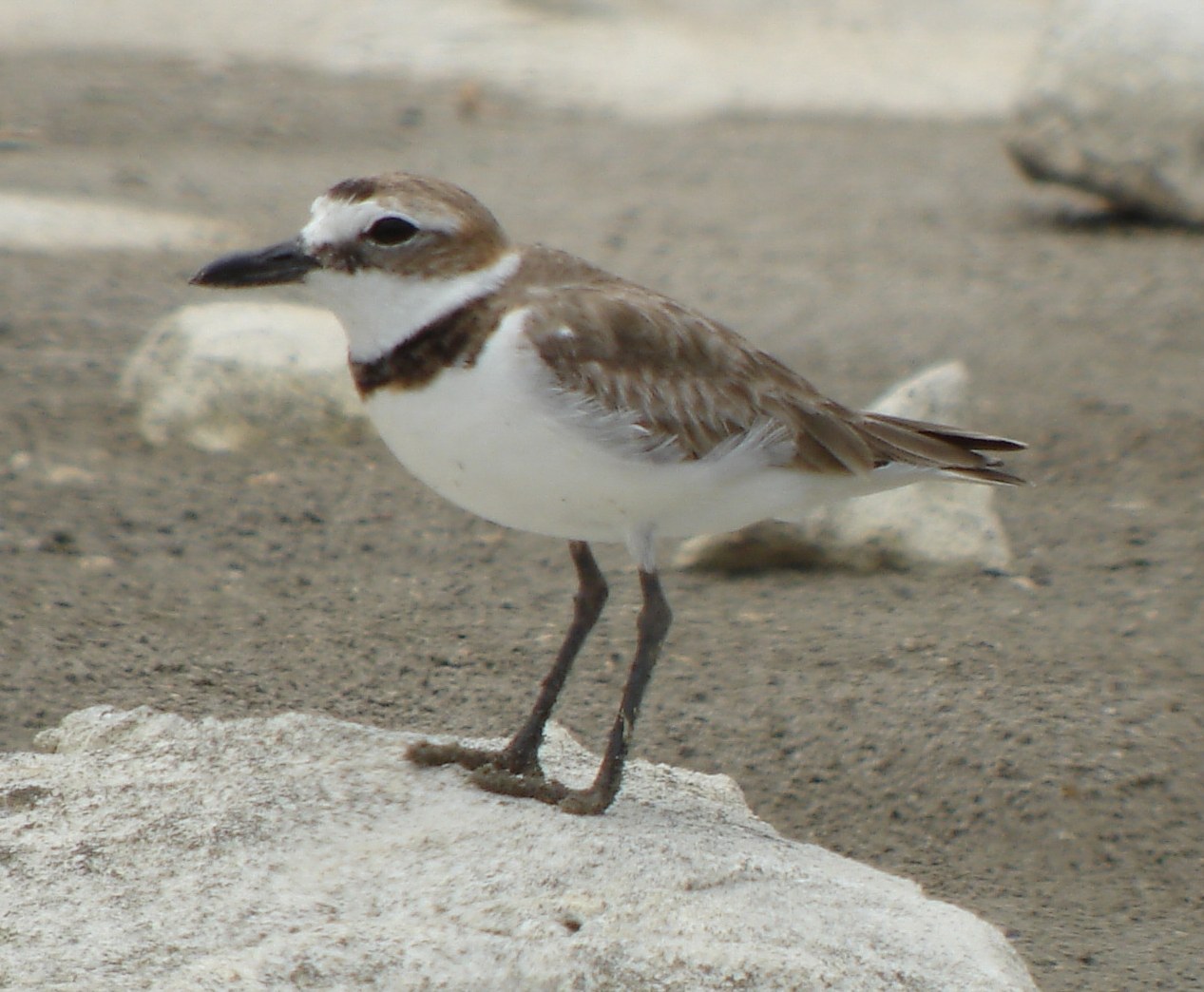
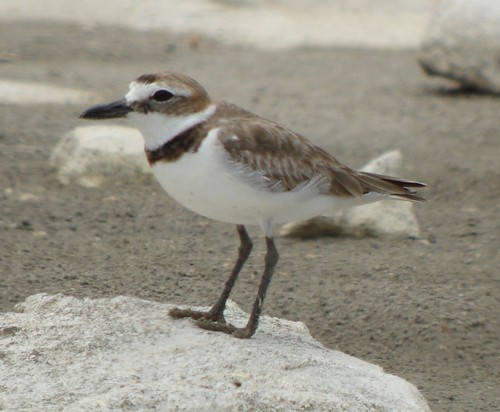
Wilson's Plover
Charadrius wilsonia
A stocky coastal plover best known for its thick, heavy black bill, distinctly larger than that of similarly patterned ringed plovers.
- Feather type
- Compact, sturdy body feathers and moderately broad flight feathers
- Colours
- Brown upperparts, white underparts, and a single broad black breast band
- Bird size
- Medium-small plover, ~17-20 cm
Found a feather like this?
Identify any feather from a photo, free.
Overview
Wilson's Plover is a medium-small shorebird found along sandy and muddy coastlines of the Americas, most readily distinguished from similar single-banded plovers by its unusually thick, heavy black bill, an adaptation suited to taking larger prey such as crabs. Its overall body plumage of brown above and white below with a single black breast band resembles several other Charadrius plovers, making bill structure the most useful field mark on the living bird.
While bill shape is not preserved in a shed feather, this species' generally stockier build and single, often broad and bold breast band help distinguish it from the more slender proportions of Semipalmated or Piping Plover. It favors coastal beaches, tidal flats, and the drier edges of salt marshes rather than interior habitats.
A sturdy, brown-and-white plover feather with a bold, complete black breast band found along a sandy or muddy coastline is a reasonable indicator of this species, especially in regions where its heavy-billed silhouette has also been observed.
Identifying the Feather
Shape and Size
Body feathers are somewhat sturdier and the bird's overall build stockier than smaller ringed plovers, though feather size still falls within the small-to-medium plover range.
Color and Pattern
- Upperparts are plain brown, similar in tone to other ringed plovers.
- Underparts are white, crossed by a single, often notably broad and bold black breast band.
- A dark mask crosses the face, and the forehead shows a pale patch bordered by black.
- Flight feathers show a moderate white wing stripe, less prominent than in some relatives.
Shaft and Vane
Shafts are pale on underpart feathers and brown on upperpart feathers, without strong contrast.
Distinguishing from Similar Species
Wilson's Plover cannot be reliably separated from Semipalmated or Common Ringed Plover by feather color alone, since all show a single black breast band on brown-and-white plumage; the most reliable distinguishing feature in the field is the notably thick, heavy black bill, which is not visible on a shed body feather, making range and habitat (sandy coastal beaches and tidal flats) useful supporting clues.
Plumage & Molt
Adults show brown upperparts, white underparts, a single broad black breast band, and a thick, heavy black bill unlike the more slender bills of similar plovers. Sexes are similar, with males sometimes showing a slightly bolder band. Juveniles show a duller, narrower band and paler overall tone. Molt occurs mainly after breeding, with body feathers refreshed ahead of the next nesting season.
Habitat & Range
Wilson's Plover breeds along sandy and muddy coastlines from the southeastern and Gulf coasts of the United States through Central America and the Caribbean into parts of South America. It favors open beaches, tidal flats, and the drier fringes of salt marshes rather than interior wetlands. Northern populations show some migratory movement to more southerly wintering areas, while populations closer to the tropics are largely resident.
Behavior & Field Notes
This species forages on tidal flats and beaches, using its thick bill to take fiddler crabs and other invertebrates that may be too large or hard-shelled for more slender-billed plovers to handle easily. It typically forages alone or in loose association with other shorebirds. Its call is a sharp, short whistled note. Nests are shallow scrapes on open sand or shell-strewn beach above the tide line. For feather finders, a sturdy brown-and-white feather with a bold, complete black breast band found along a sandy or muddy coastline, particularly where a heavy-billed plover has been observed foraging on crabs, points toward this species.
Frequently asked questions
What is the best way to identify a Wilson's Plover?
Its unusually thick, heavy black bill is the most reliable field mark, though this structural feature is not visible on a shed feather alone.
Can I tell this species apart from Semipalmated Plover by feather color?
Not reliably; both show brown upperparts, white underparts, and a single black breast band, so bill shape, habitat, and range are more useful distinguishing clues.
What does Wilson's Plover eat?
It takes fiddler crabs and other invertebrates from tidal flats and beaches, aided by its unusually thick bill.
Where does Wilson's Plover live?
Along sandy and muddy coastlines from the southeastern and Gulf coasts of the United States through Central America, the Caribbean, and into parts of South America.
Wilson's Plover guides
In-depth guides for identifying and understanding Wilson's Plover.
Other feathers you may enjoy
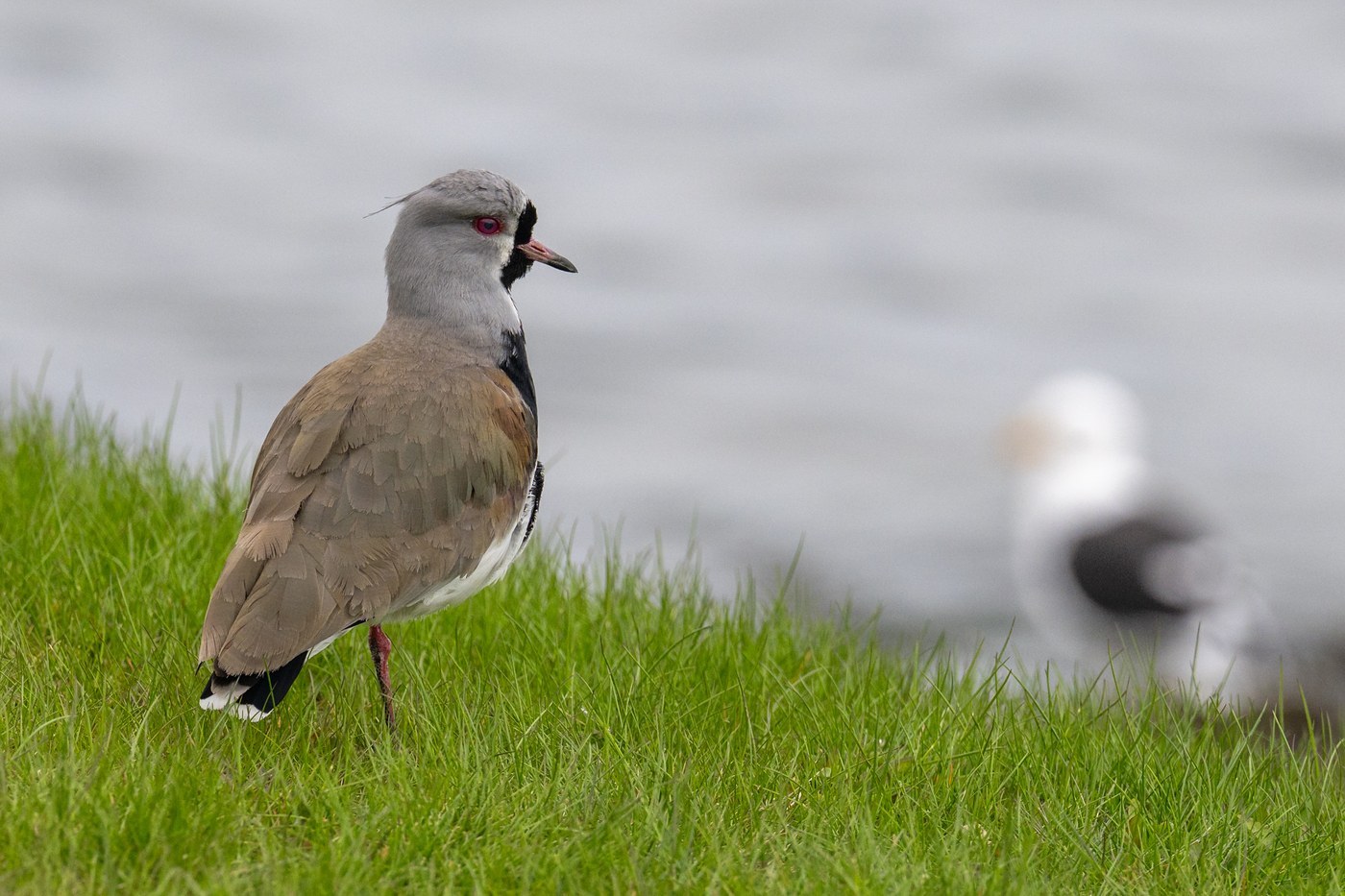
Southern Lapwing
Body, flight, and tail feathers

Jack Snipe
Body and flight feathers

Far Eastern Curlew
Body, flight, and tail feathers

Terek Sandpiper
Body and flight feathers

Wilson's Phalarope
Body and flight feathers
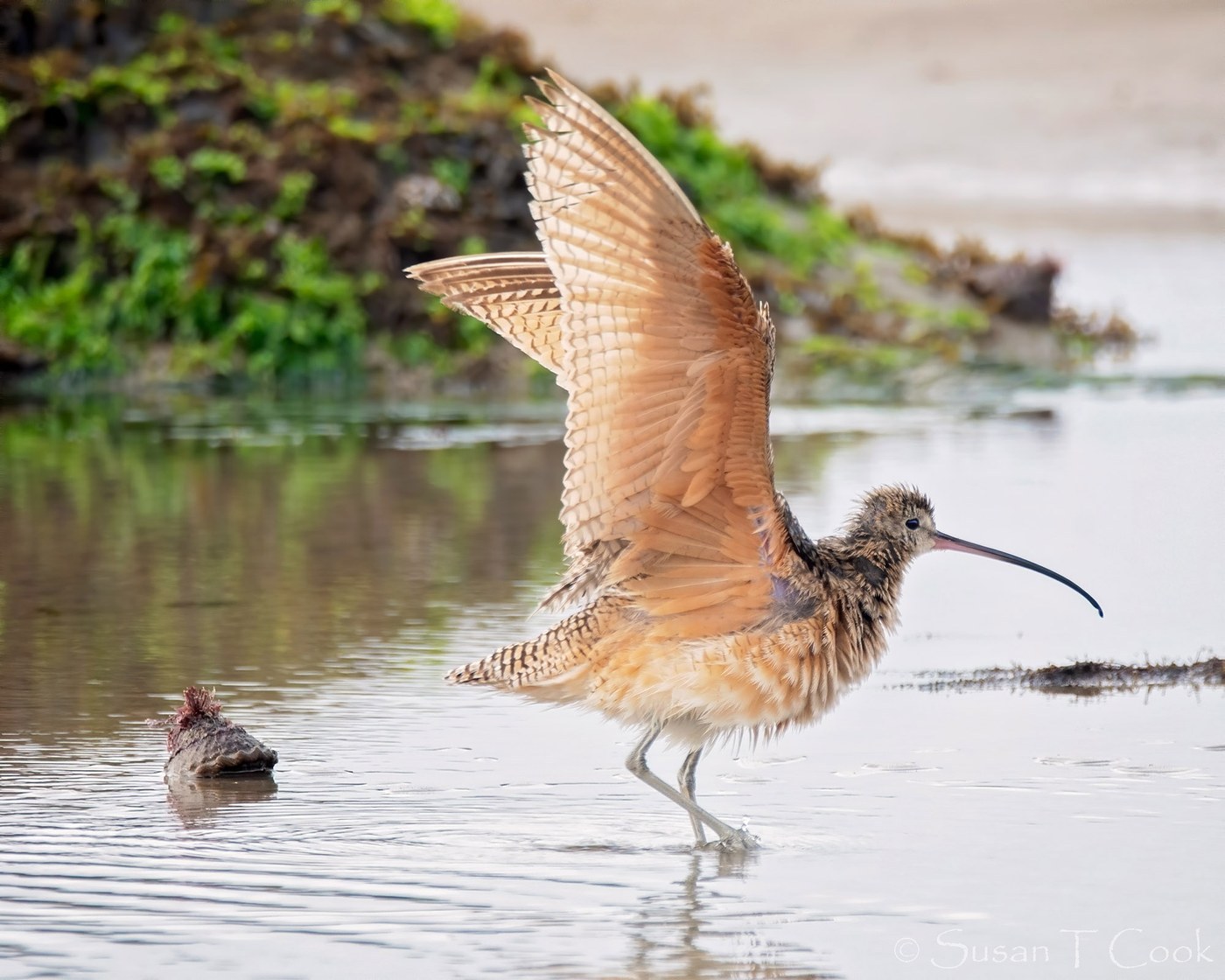
Long-billed Curlew
Body, flight, and tail feathers

Upland Sandpiper
Body, flight, and tail feathers

Red Phalarope
Body and flight feathers

Eurasian Dotterel
Body feathers
Masked Lapwing
Body, flight, and tail feathers
Eurasian Curlew
Body, flight, and tail feathers
Solitary Sandpiper
Contour and flight feathers