
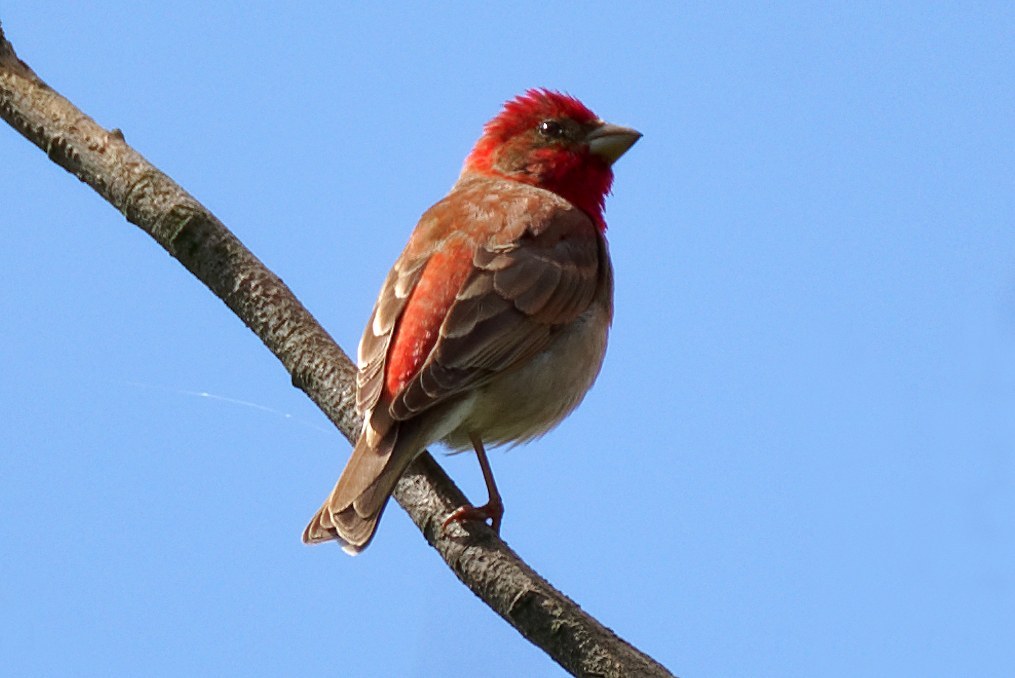
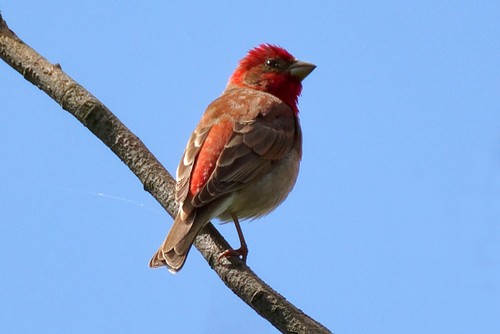
Common Rosefinch
Carpodacus erythrinus
A finch in which breeding males show a rosy-red head, breast, and rump, while females and immatures are plain streaked brown, sparrow-like birds.
- Feather type
- Soft, rounded body plumage
- Colours
- Rosy-red head, breast, and rump (male); streaked brown (female/immature)
- Bird size
- Small-medium finch, ~14-15 cm
Found a feather like this?
Identify any feather from a photo, free.
Overview
Overview
The Common Rosefinch breeds across a broad swath of Europe and Asia, favoring scrub, woodland edges, and riverine thickets. Adult males are unmistakable in breeding plumage, showing a rosy-red wash over the head, breast, and rump that contrasts with brown wings, while females and immature birds are far plainer, appearing as streaked brown, sparrow-like finches.
This strong difference between the sexes means that much of the population encountered outside the breeding season, especially first-year birds, can be identified largely by structure and bill shape rather than color.
Identifying the Feather
Feather Identification
- Adult male body feathers: rosy-red on the head, throat, breast, and rump, with brown wings and back.
- Female/immature body feathers: plain streaked brown overall, resembling a sparrow or bunting more than a colorful finch.
- Bill: stout and conical, a useful clue for identifying the drab female/immature plumage.
- Wing feathers: brown with faint pale wing bars in all plumages.
- Distinguishing from similar species: the plain brown female/immature plumage can be confused with various streaked finches and buntings; bill shape and structure are key aids.
Plumage & Molt
Plumage Details
Adult males in breeding plumage show a rosy-red head, throat, breast, and rump against brownish wings and back. Females and immature birds of both sexes lack any red tone, instead showing a streaked olive-brown plumage overall, a pattern that can persist through a bird's first full year. Males may take more than one year to acquire their full rosy-red adult plumage, passing through a female-like intermediate stage.
Habitat & Range
Habitat & Range
Common Rosefinches breed in scrub, woodland edges, riverine thickets, and shrubby habitats across much of Europe and Asia, wintering in South Asia. They are long-distance migrants, with the entire population moving between separate breeding and wintering grounds each year.
Behavior & Field Notes
Behavior & Field Notes
This species feeds on seeds and plant material gathered from shrubs and the ground, often foraging inconspicuously within dense cover. Its song is a distinctive, simple whistled phrase. Nests are built low in dense shrubs. Because males may take a year or more to acquire full red plumage, many individuals encountered in the field are the plainer brown type, making bill shape and behavior important identification tools alongside plumage.
Frequently asked questions
What color is an adult male Common Rosefinch?
Adult males show a rosy-red head, throat, breast, and rump contrasting with brown wings and back.
Why do many Common Rosefinches look plain brown?
Females and immature birds, including young males that have not yet matured, lack red plumage and instead show streaked brown coloring similar to a sparrow.
How long does it take a male to get full red plumage?
Males can take more than a year to acquire their complete rosy-red adult plumage, passing through an intermediate female-like stage.
Is this species migratory?
Yes, it is a long-distance migrant, breeding across Europe and Asia and wintering in South Asia.
Common Rosefinch guides
In-depth guides for identifying and understanding Common Rosefinch.
Other feathers you may enjoy

Yellow-breasted Bunting
Contour and flight feathers, chestnut-and-yellow breeding pattern
Sedge Wren
Tiny streaked crown and back feathers

Yellow-winged Cacique
Glossy black body feathers, yellow wing patch, shaggy crest

Yellow Warbler
Small contour and flight feathers
Yellow-throated Warbler
Small contour and flight feathers
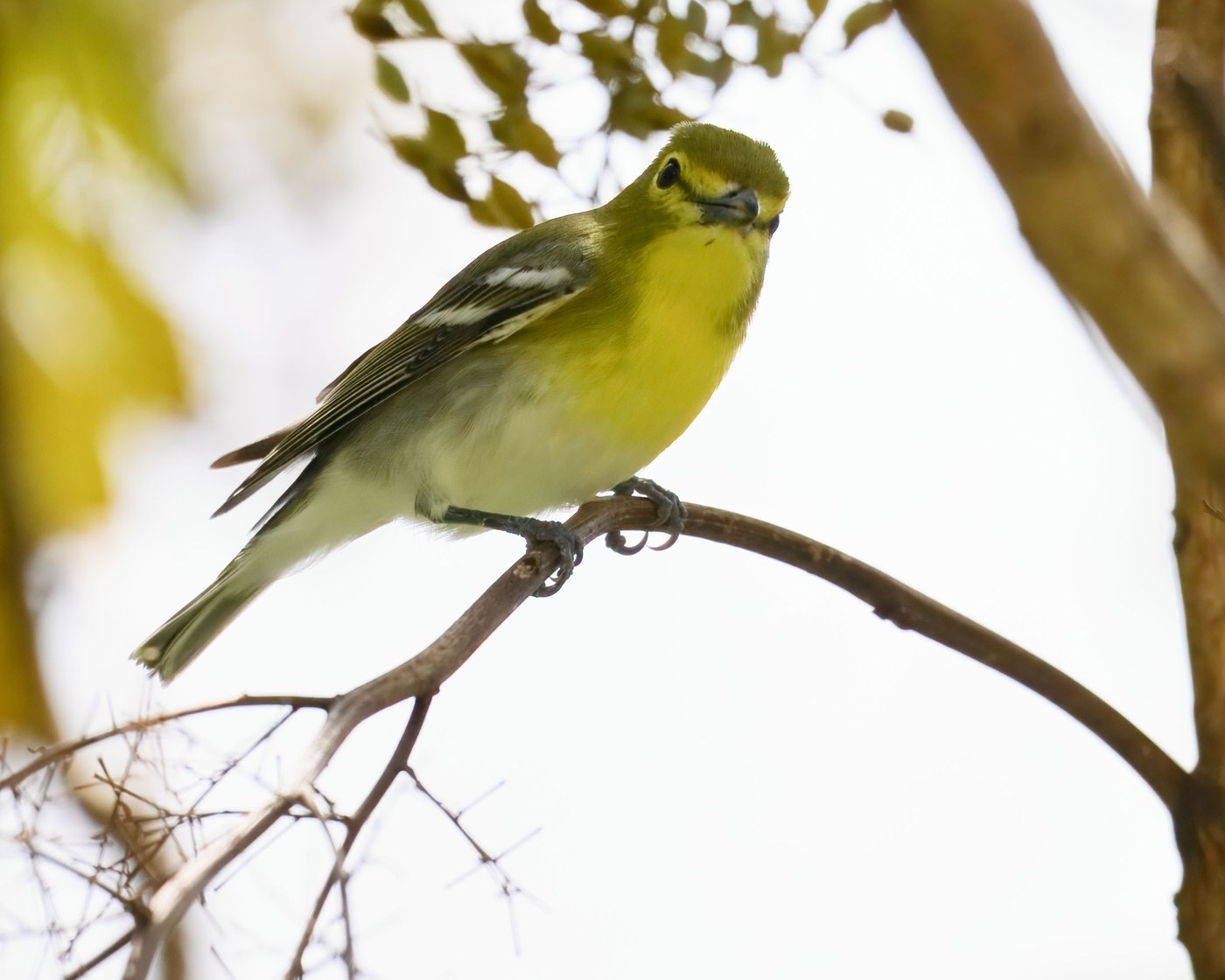
Yellow-throated Vireo
Bright yellow throat and spectacle feathers; olive-green back feathers; two white wing-bar feathers

Yellow-rumped Warbler
Small contour and flight feathers
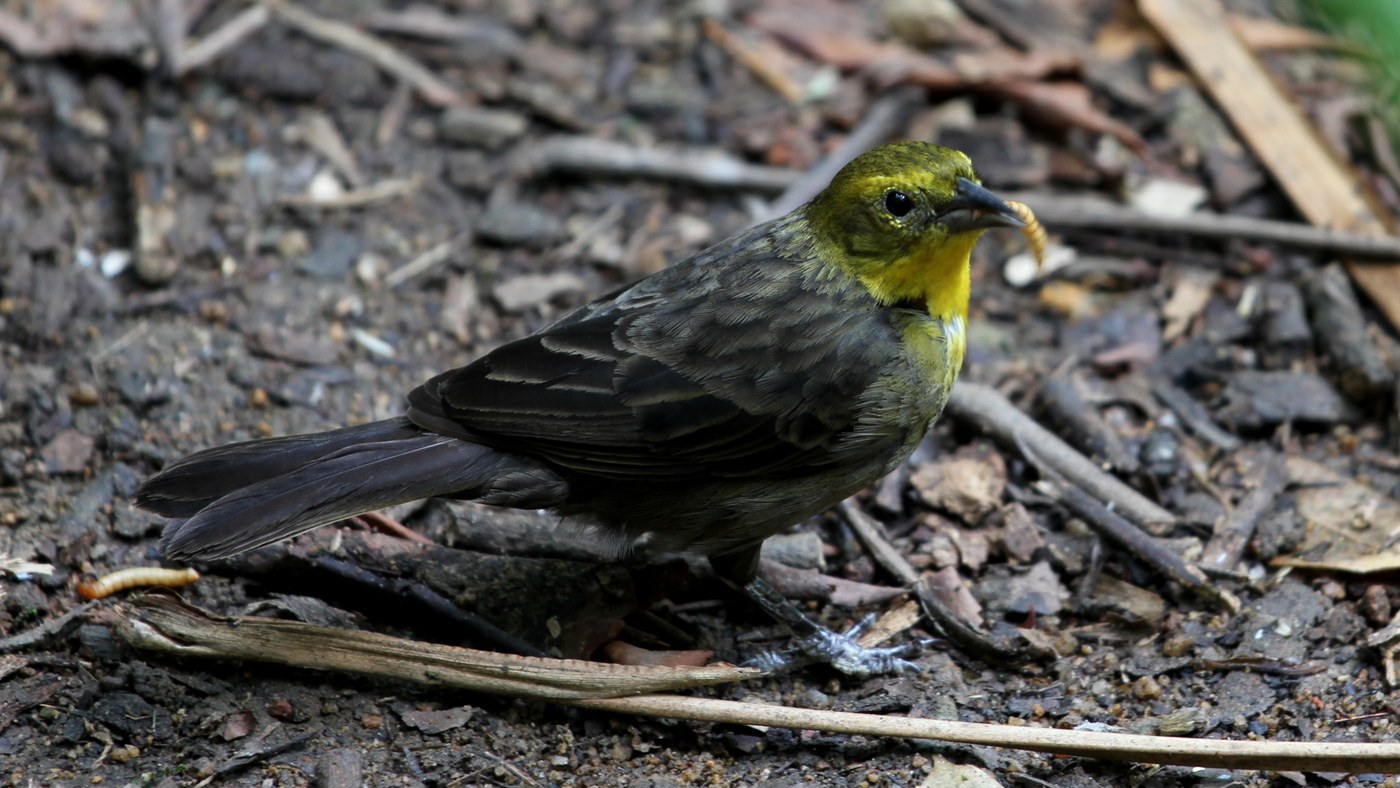
Yellow-hooded Blackbird
Contrasting hood and body feathers
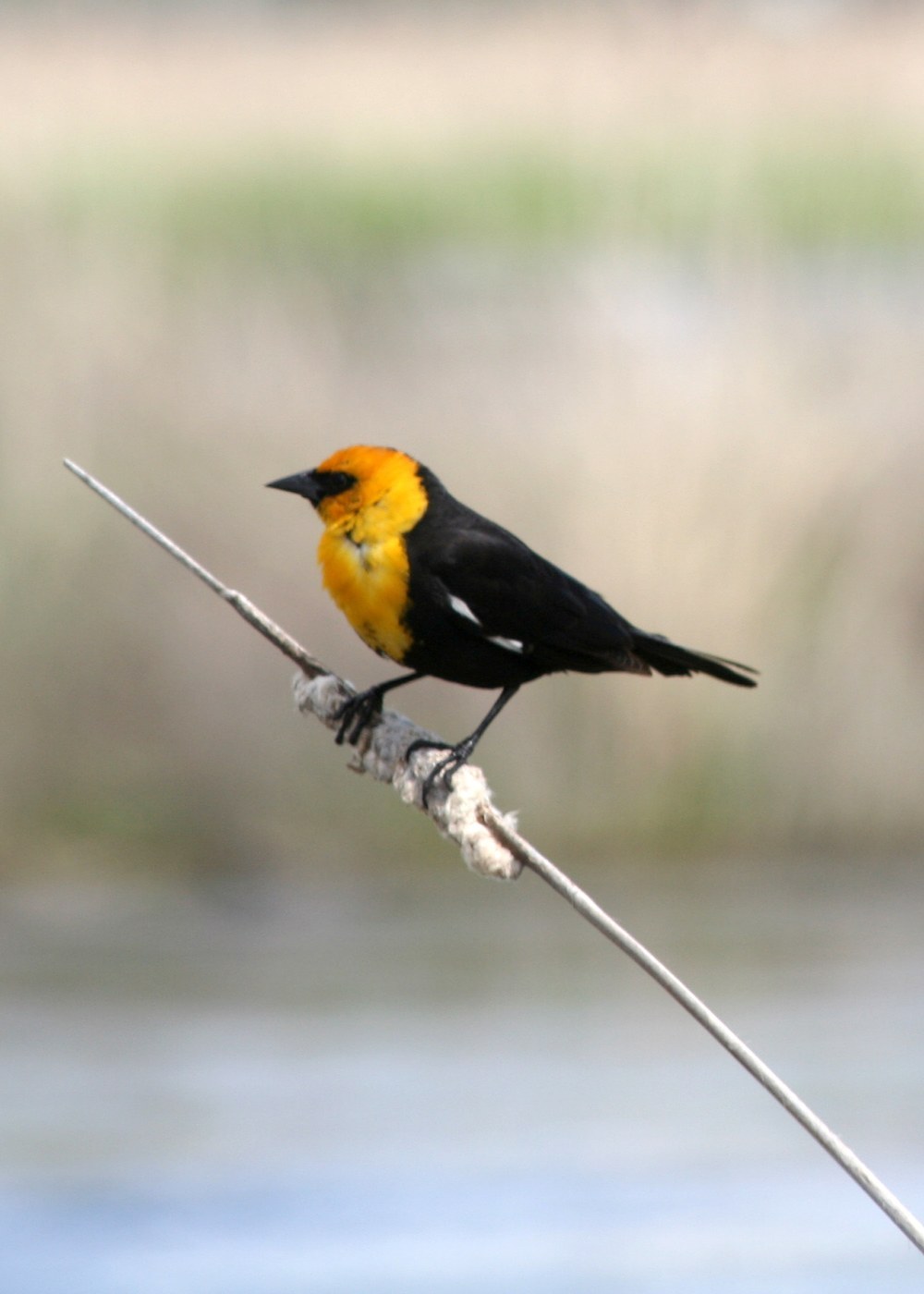
Yellow-headed Blackbird
Glossy black body plumage with a bright yellow head and breast

Yellow-eyed Junco
Contour and flight feathers

Yellow-fronted Canary
Small, smooth body plumage

Yellow-breasted Greenfinch
Compact, smooth body plumage