
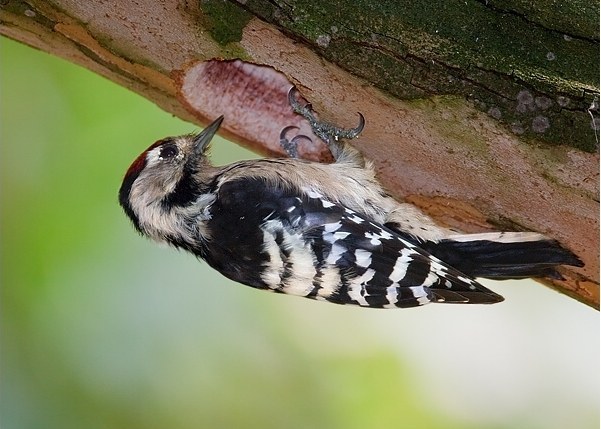
Lesser Spotted Woodpecker
Dryobates minor
The Lesser Spotted Woodpecker is Europe's smallest woodpecker, its black-and-white barred back and small size distinguishing its feathers from the much larger, bolder-patched Great Spotted Woodpecker.
- Feather type
- Stiff, pointed tail feathers for climbing support; finely barred flight feathers; small compact body feathers
- Colours
- Black-and-white barred back (no large white shoulder patch), red crown (male), whitish underparts
- Bird size
- Small, sparrow-sized, ~14-15 cm (smallest European woodpecker)
Found a feather like this?
Identify any feather from a photo, free.
Overview
The Lesser Spotted Woodpecker is a small, unobtrusive woodland bird, considerably smaller than its close relative the Great Spotted Woodpecker and far less frequently seen.
Its feathers show a finer black-and-white barred pattern across the back rather than the bold solid shoulder patches of larger woodpeckers.
Because it favors the upper canopy of mature trees and is scarce in much of its range, feathers are a less common find than those of Great Spotted Woodpecker.
Identifying the Feather
Size & Shape
- Feathers are notably small, matching its status as the smallest European woodpecker; tail feathers are still stiff and pointed for climbing support, but proportionally shorter than the larger woodpecker species.
Color & Pattern
- Back feathers: black-and-white barred in horizontal bands, not solid black with large white patches as in Great Spotted Woodpecker.
- Males show a red crown patch; females have a plain whitish-buff crown.
- Underparts are whitish with light dark streaking on the flanks, and there is no red undertail patch, unlike Great Spotted Woodpecker.
Similar Species
- Smaller size, barred (not blotched) back pattern, and absence of a red undertail patch distinguish this species from Great Spotted Woodpecker.
Plumage & Molt
Overall Plumage
Finely barred black-and-white back, whitish underparts with light flank streaking, and a red crown patch in males only.
Sex & Age Differences
Males show a red crown; females have a plain pale crown. Juveniles resemble adults but with duller, less crisp barring before their first molt.
Molt
One complete molt after breeding in late summer.
Habitat & Range
Habitat
Mature deciduous woodland, riverside trees, orchards, and parkland with old or dead timber, favoring the upper canopy.
Range
Breeds across most of Europe and temperate Asia, generally at lower densities than Great Spotted Woodpecker.
Movements
Resident, with little to no seasonal movement.
Behavior & Field Notes
Behavior
Forages high in the canopy on thin branches, less often seen on trunks than larger woodpeckers, and drums a longer, quieter roll.
Diet
Feeds mainly on small wood-boring insects and other invertebrates found in bark and dead wood.
Nesting
Excavates a small nest hole, often in a dead branch high in a tree.
Voice
A thin, high-pitched call and a long, even drumming roll, quieter and longer than Great Spotted Woodpecker's.
Field Notes
A small, finely barred black-and-white feather without a red undertail patch, found in mature deciduous woodland, suggests Lesser Spotted rather than Great Spotted Woodpecker.
Frequently asked questions
How can I tell a Lesser Spotted Woodpecker feather from a Great Spotted Woodpecker feather?
Lesser Spotted is much smaller with a finely barred (not solid-patched) back and no red undertail patch.
What crown color indicates a male Lesser Spotted Woodpecker?
A red crown patch; females have a plain pale crown instead.
Where does this species typically forage?
High in the canopy on thin branches, more than on trunks like larger woodpeckers.
Is the Lesser Spotted Woodpecker common?
It is generally scarcer and more localized than the Great Spotted Woodpecker across its range.
Lesser Spotted Woodpecker guides
In-depth guides for identifying and understanding Lesser Spotted Woodpecker.
Other feathers you may enjoy

Ivory-billed Woodpecker
Very large flight feathers with a solid white trailing patch

Great Slaty Woodpecker
Massive, uniformly colored contour feathers

Yellow-tufted Woodpecker
Black body feathers with bright yellow forehead tufts

Magellanic Woodpecker
Very large, glossy contour feathers with a recurved crest

Yellow-bellied Sapsucker
Black-and-white patterned back and facial-stripe feathers
Williamson's Sapsucker
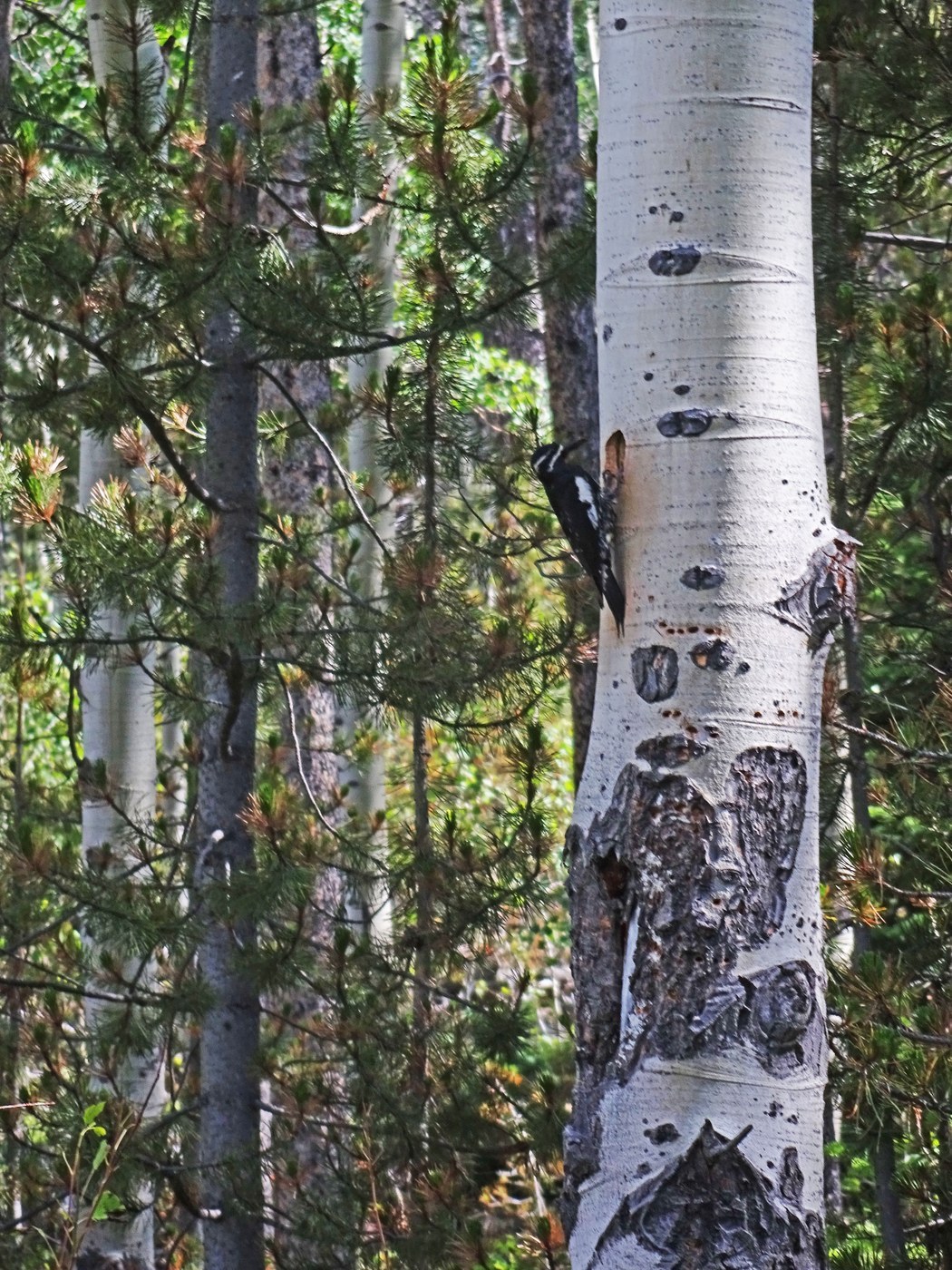
Strongly sexually dimorphic body feathers, glossy black or finely barred brown

Yellow-crowned Woodpecker
Contour and flight feathers

White Woodpecker
Mostly white body feathers with contrasting black wings and back

Red-throated Wryneck
Soft, cryptically mottled contour feathers

White-bellied Woodpecker
Large, glossy black contour and flight feathers

White-backed Woodpecker
Barred back feathers rather than a solid white patch
White-headed Woodpecker
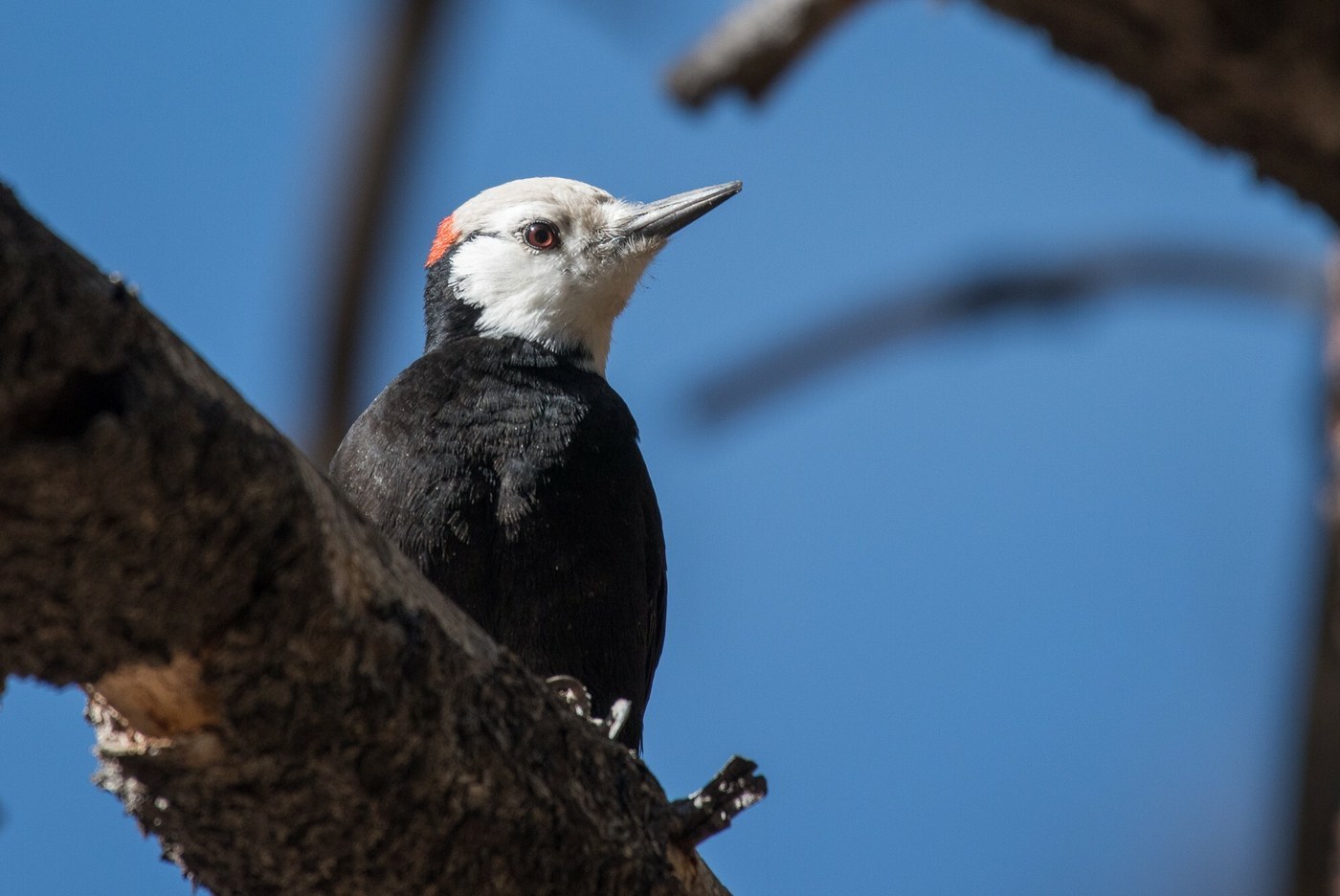
Solid black body feathers with an entirely white head