

Northern Saw-whet Owl
Aegolius acadicus
One of the smallest owls in North America, with soft reddish-brown, white-streaked plumage, no ear tufts, and a distinctive whitish facial disc bordered by a dark rim.
- Feather type
- Tiny soft-fringed flight feathers; streaked reddish-brown body feathers
- Colours
- Reddish-brown streaked with white, framed by a whitish facial disc
- Bird size
- Very small, ~18-21 cm
Found a feather like this?
Identify any feather from a photo, free.
Overview
The Northern Saw-whet Owl is a tiny, secretive owl of North American conifer and mixed forests, named for a call once likened to the sound of a saw being sharpened ("whetted") on a stone. Despite its small size, it undertakes regular migratory movements each year.
It has a rounded head with no ear tufts, large yellow eyes, and a whitish facial disc bordered by a dark rim, contrasting with its reddish-brown, white-streaked body plumage.
Because of its small size and secretive, nocturnal habits, it is rarely seen despite being fairly common, and its feathers are correspondingly diminutive compared to most other North American owls.
Identifying the Feather
Recognizing the feathers
- Body feathers are reddish-brown with bold white streaking on the underparts and white spotting on the upperparts.
- Facial disc feathers are whitish, forming a pale disc with a distinct dark rim - a key identifying feature.
- Flight feathers are quite small and soft-fringed, reflecting this owl's diminutive size.
- No ear-tuft feathers are present.
Similar species
- Smaller overall size and reddish-brown streaked pattern separate it from Boreal Owl, which is more spotted than streaked and has a darker-bordered facial disc; both lack ear tufts, unlike Screech-Owls.
Plumage & Molt
Plumage
Adults are reddish-brown above with white spotting, and white below with bold reddish-brown streaking, plus a whitish facial disc rimmed in dark brown. Sexes look alike.
Juveniles show a strikingly different plumage: rich chocolate-brown body with a bold buffy-orange facial disc, quite unlike the streaked adult pattern, before molting into adult plumage in their first fall.
Molt occurs mainly in late summer and fall.
Habitat & Range
Habitat & range
Found across much of North America, from southern Canada through the northern and mountainous United States, in dense coniferous or mixed forest, often near forest edges or dense thickets used for daytime roosting.
Many populations are migratory, moving south in fall and returning north in spring, though some populations at moderate latitudes are largely resident.
Behavior & Field Notes
Behavior & field notes
A nocturnal hunter of small mammals, especially mice, caught from low perches within dense cover.
Its call is a repetitive, monotonous series of whistled notes, quite different from the hoots of larger owls, and is the primary way this secretive species is detected.
A small reddish-brown, white-streaked feather, or a distinctly plain chocolate-brown juvenile feather, found in dense conifer forest, is consistent with this species.
Frequently asked questions
How does a juvenile Saw-whet Owl feather differ from an adult's?
Juveniles show a plain rich chocolate-brown plumage with a bold buffy facial disc, very different from the streaked reddish-brown adult pattern.
How can I tell this species' feathers from a Boreal Owl's?
Saw-whet Owl feathers are more streaked and reddish-brown, while Boreal Owl feathers tend to show more spotting on a darker ground.
Does this tiny owl migrate?
Yes, many populations undertake regular seasonal migrations despite the bird's small size.
Does it have ear tufts?
No, it has a rounded head without ear tufts.
Northern Saw-whet Owl guides
In-depth guides for identifying and understanding Northern Saw-whet Owl.

Northern Saw-whet Owl identified by the community
Real feathers identified with Feather Identifier.


Other feathers you may enjoy

Tawny Owl
Wing (flight) and body (contour) feathers
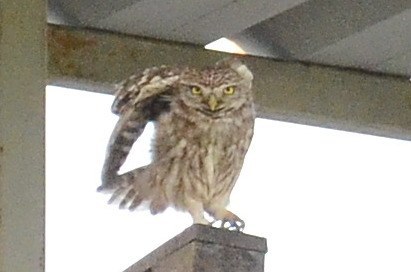
Little Owl
Wing and body feathers

Balsas Screech-Owl
Small ear-tuft feathers; soft, finely vermiculated body feathers

Blakiston's Fish Owl
Massive flight feathers with looser structure; shaggy body plumage; prominent ear-tuft feathers

Barn Owl
Wing and facial-disc feathers
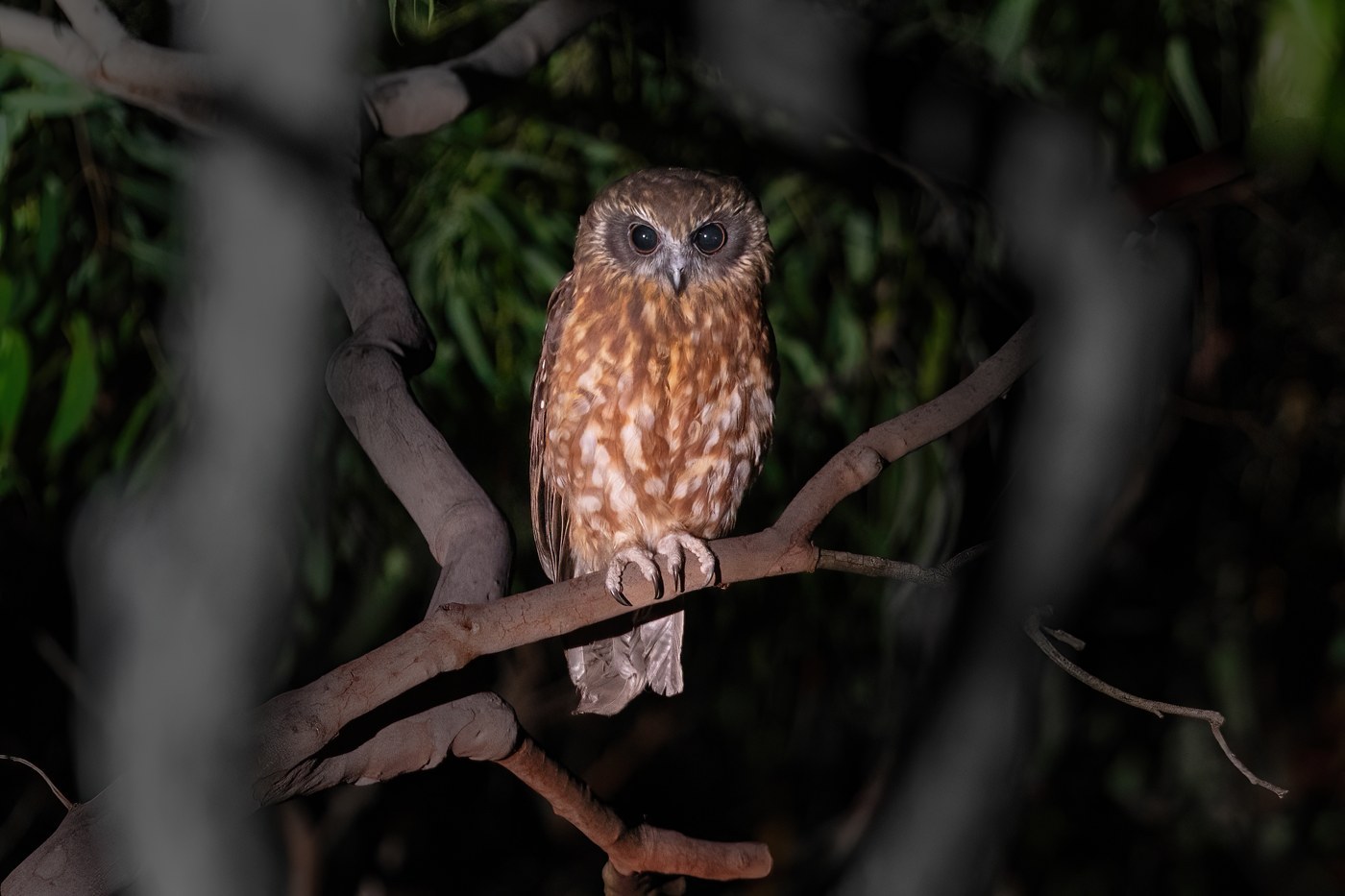
Southern Boobook
Rounded flight feathers; banded tail; spotted body plumage

Sooty Owl
Broad soft-edged flight feathers; heart-shaped facial disc feathers; finely speckled body plumage

Short-eared Owl
Broad soft-fringed flight feathers; streaked body feathers; tiny, rarely visible ear tufts

Stygian Owl
Dark, mottled flight and body feathers with long, closely-set ear tufts
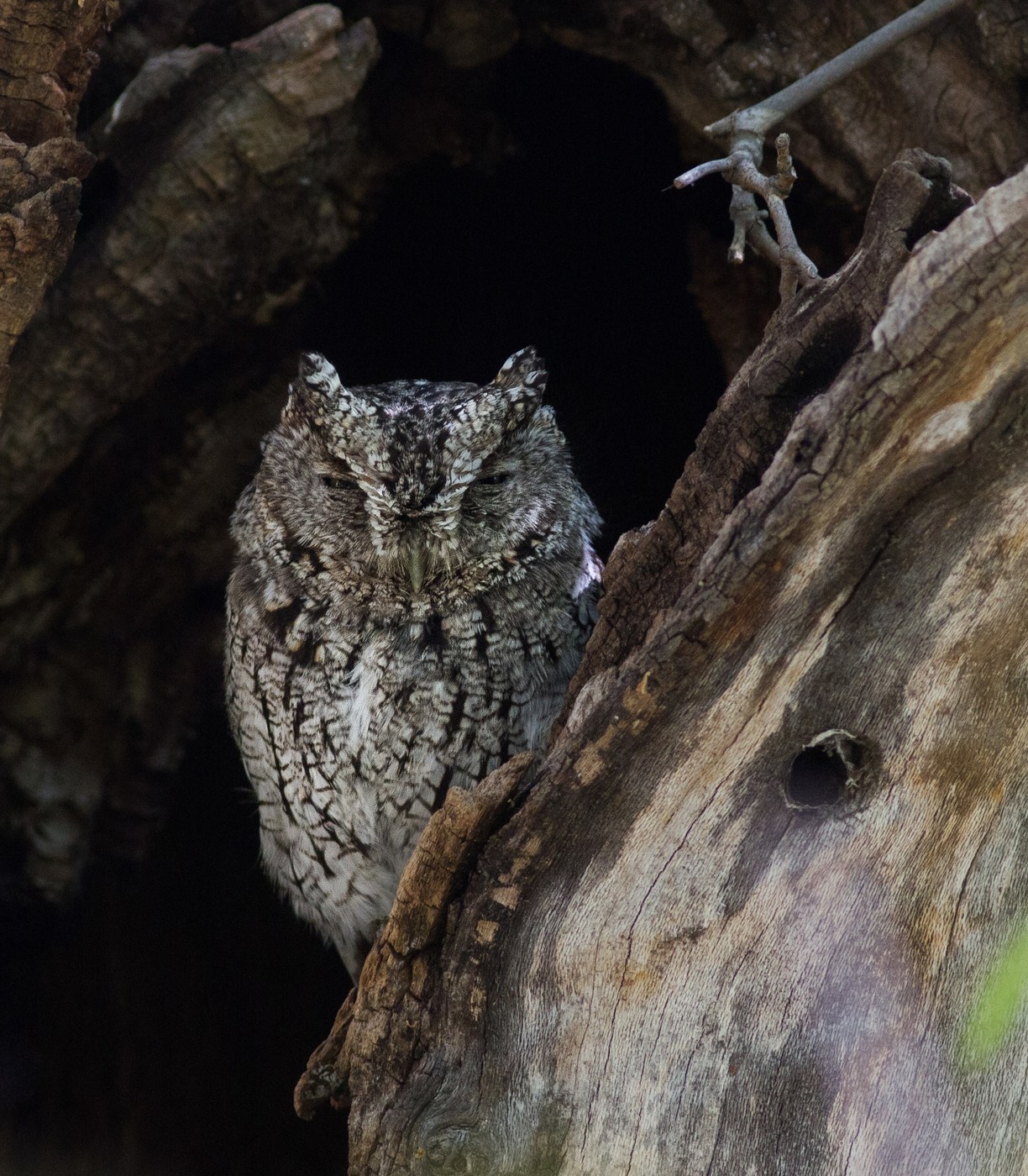
Whiskered Screech-Owl
Small soft-fringed flight feathers; finely mottled body feathers; short ear tufts
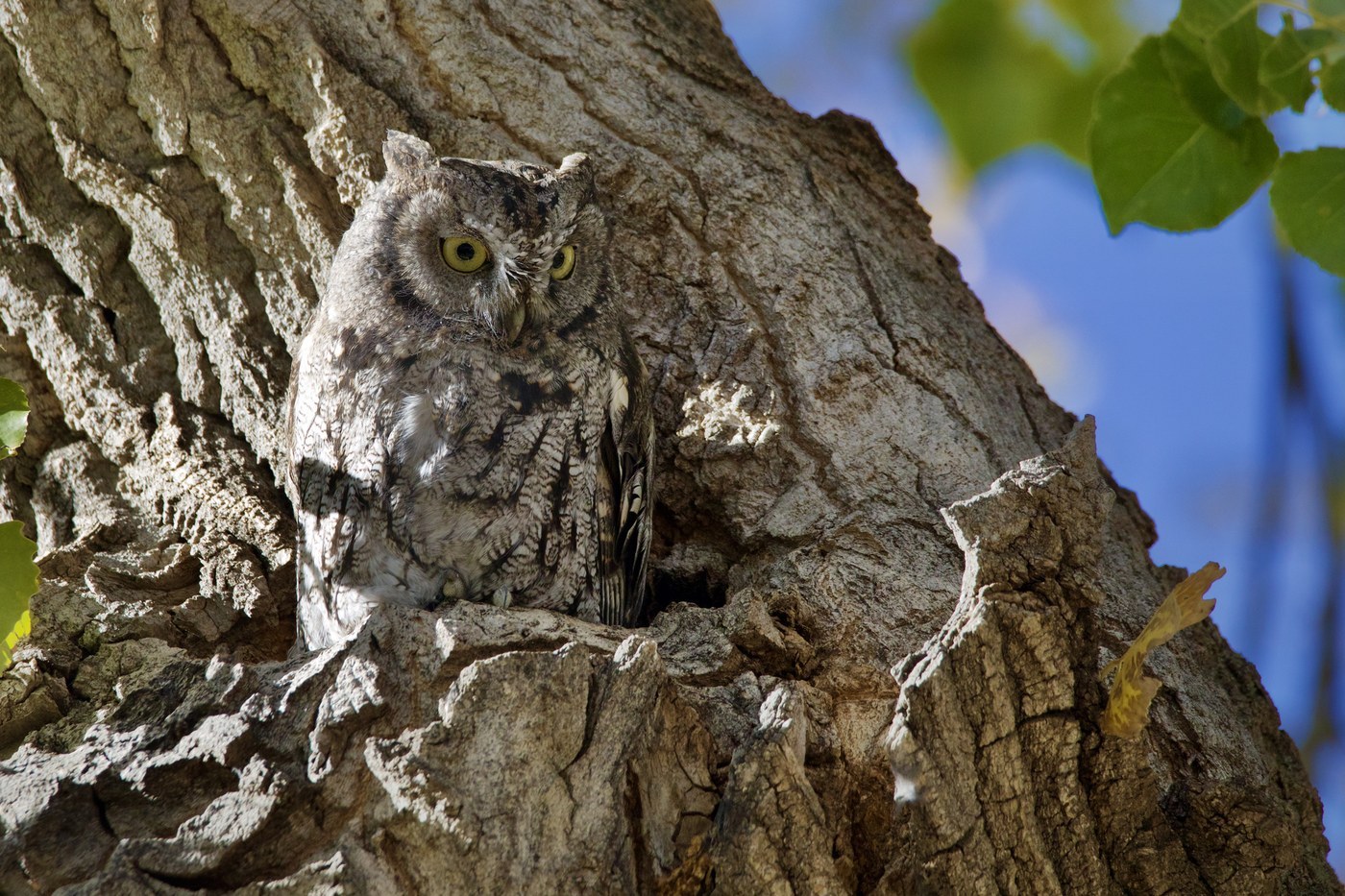
Western Screech-Owl
Small soft-fringed flight feathers; cryptic mottled/streaked body feathers; short ear tufts

White-faced Scops Owl
Small to medium flight feathers with a distinctive whitish facial disc and long ear-tuft plumes