
Ural Owl
Strix uralensis
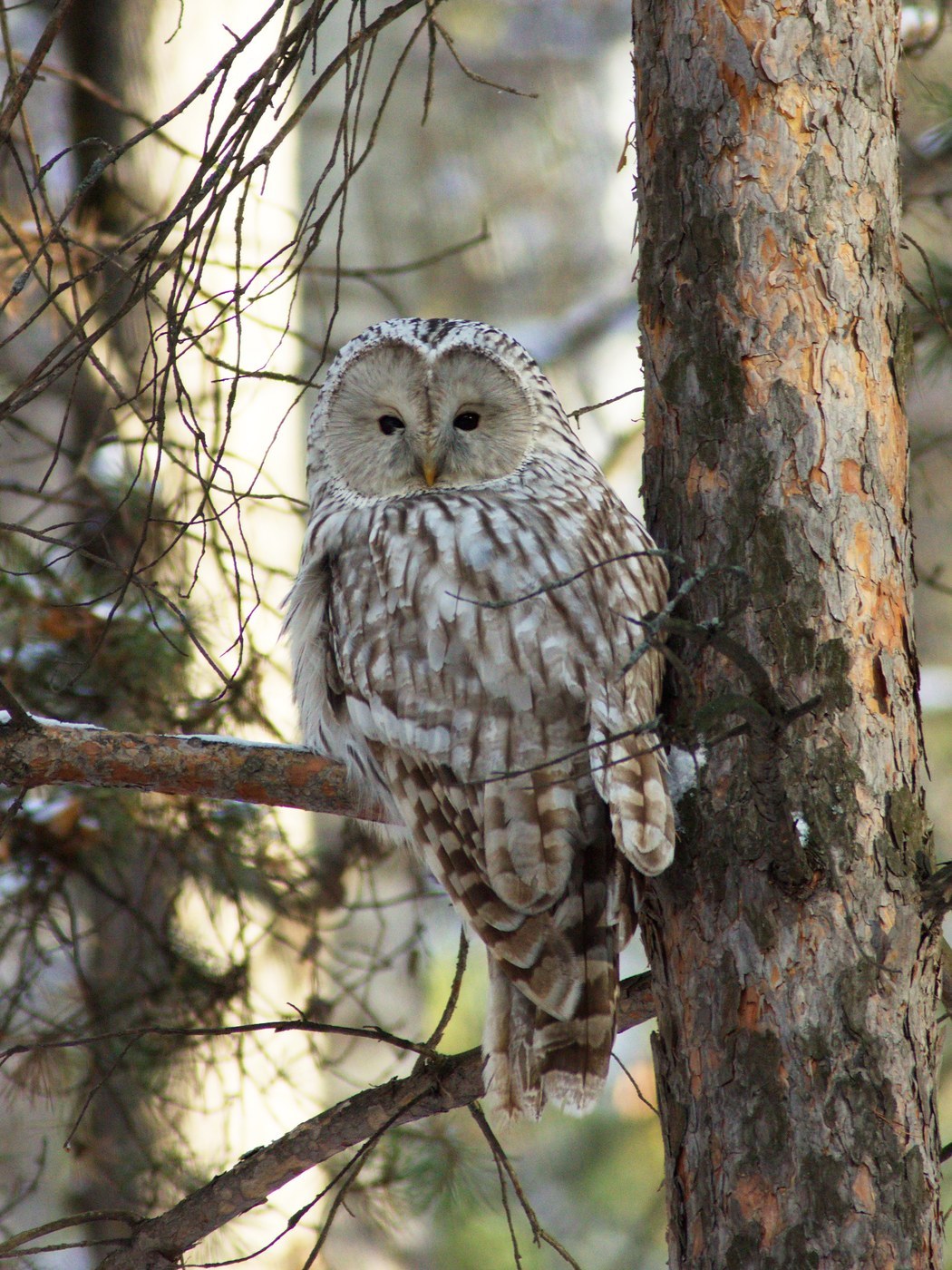
A large, pale grey-brown owl of Eurasian forests, known for its notably long tail and streaked (rather than barred) plumage, and for its fierce defense of nests.
- Feather type
- Long soft-fringed flight and tail feathers; streaked body feathers
- Colours
- Pale grey-brown with dark streaking rather than barring
- Bird size
- Large, ~50-62 cm
Found a feather like this?
Identify any feather from a photo, free.
Overview
The Ural Owl is a large forest owl found across a broad swath of Europe and Asia, from Scandinavia through central Europe and across Siberia to Japan. It closely resembles other large grey owls but is set apart by its unusually long tail.
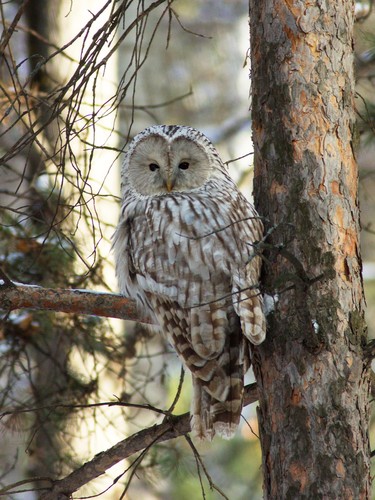
Its plumage is pale grey-brown overall, marked by dark streaking on the underparts rather than the barring seen in some relatives, and its round head lacks ear tufts.
It is well known among European birders for its aggressive nest defense, sometimes striking intruders that approach too closely during the breeding season.
Identifying the Feather
Recognizing the feathers
- Body feathers are pale grey-brown marked with bold, mostly vertical dark streaking rather than crosswise barring.
- Tail feathers are notably long relative to body size, a key distinguishing feature of this species among large Strix owls.
- Flight feathers are broad with soft fringed edges typical of forest owls, for quiet flight.
- Facial disc feathers are plain pale grey, unmarked, framing dark eyes.
Similar species
- The notably long tail and streaked (not barred) underparts separate this species from the Great Grey Owl, which is more uniformly mottled, and from the barred-and-streaked pattern of the American Barred Owl, a different but similarly patterned relative found on a different continent.
Plumage & Molt
Plumage
Adults are pale grey-brown overall with bold dark streaking on the underparts and a plain pale facial disc. Sexes look alike, females larger.
Juveniles are downier and more diffusely marked before acquiring the streaked adult plumage.
Molt occurs gradually through summer, with flight feathers replaced in sequence.
Habitat & Range
Habitat & range
Distributed across a broad band of Eurasia, from Scandinavia and central Europe eastward through Russia to the Russian Far East and Japan, in mature mixed and boreal forest.
It is largely non-migratory, holding stable territories year-round.
Behavior & Field Notes
Behavior & field notes
Hunts small mammals and birds from forest perches, often at dusk and through the night.
It is notably aggressive in defense of its nest, and is one of the few owls documented to strike humans who approach too closely during breeding season.
A long, pale grey-brown feather with bold vertical streaking, found in mature mixed or boreal forest across Europe or Asia, is a strong indicator of this species.
Frequently asked questions
What is the key feather clue for the Ural Owl?
Its notably long tail feathers combined with dark vertical streaking rather than barring on the underparts.
Where is this species found?
A broad band of Eurasia from Scandinavia through central Europe and across Russia to Japan.
Does it have ear tufts?
No, like other Strix owls it has a rounded, tuft-less head.
Is this owl known for any particular behavior?
Yes, it is noted for aggressively defending its nest, sometimes striking intruders during the breeding season.
Ural Owl guides
In-depth guides for identifying and understanding Ural Owl.
Other feathers you may enjoy

Tawny Owl
Wing (flight) and body (contour) feathers
Little Owl
Wing and body feathers

Balsas Screech-Owl
Small ear-tuft feathers; soft, finely vermiculated body feathers

Blakiston's Fish Owl
Massive flight feathers with looser structure; shaggy body plumage; prominent ear-tuft feathers

Barn Owl
Wing and facial-disc feathers
Southern Boobook
Rounded flight feathers; banded tail; spotted body plumage

Sooty Owl
Broad soft-edged flight feathers; heart-shaped facial disc feathers; finely speckled body plumage

Short-eared Owl
Broad soft-fringed flight feathers; streaked body feathers; tiny, rarely visible ear tufts

Stygian Owl
Dark, mottled flight and body feathers with long, closely-set ear tufts
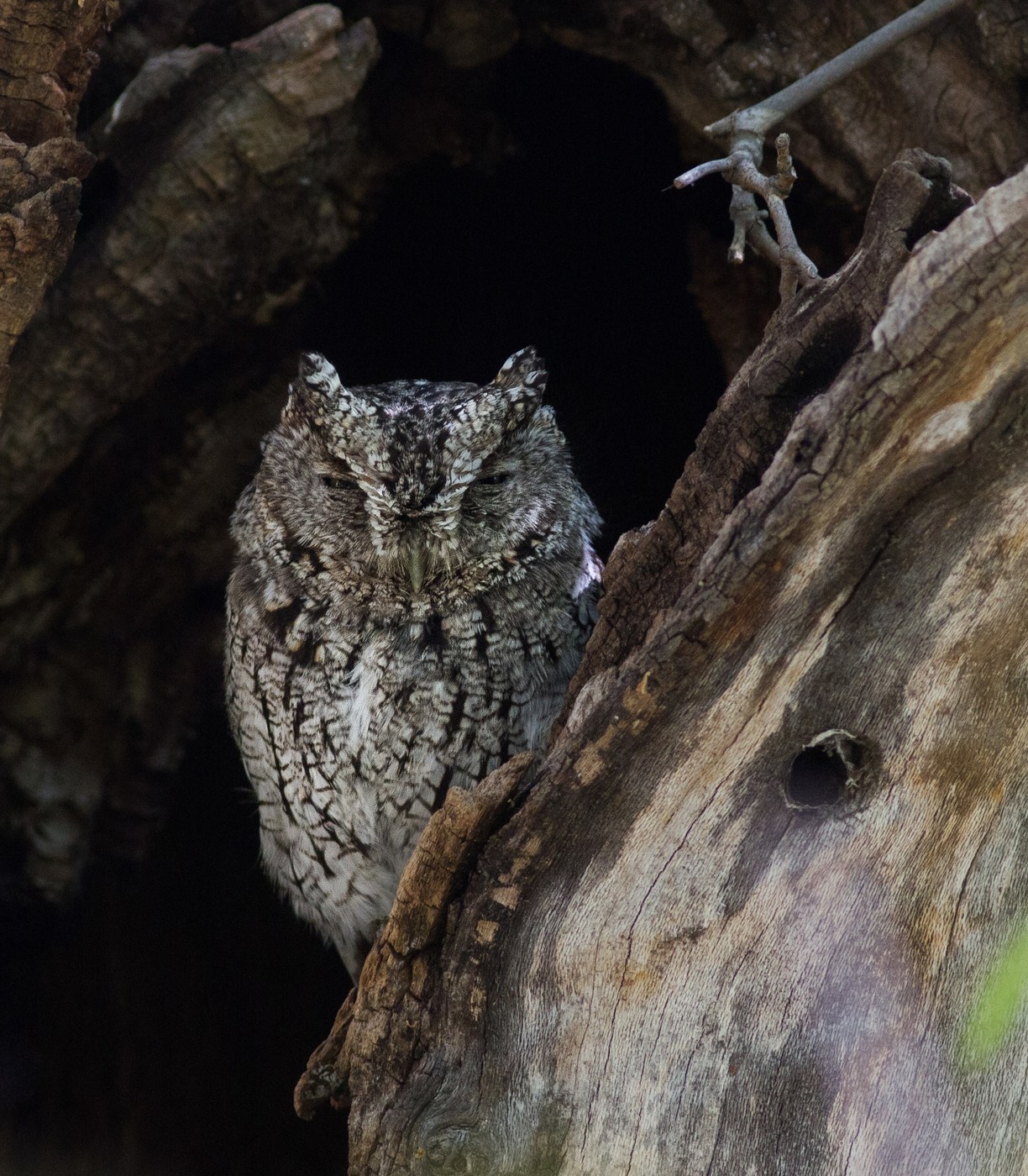
Whiskered Screech-Owl
Small soft-fringed flight feathers; finely mottled body feathers; short ear tufts
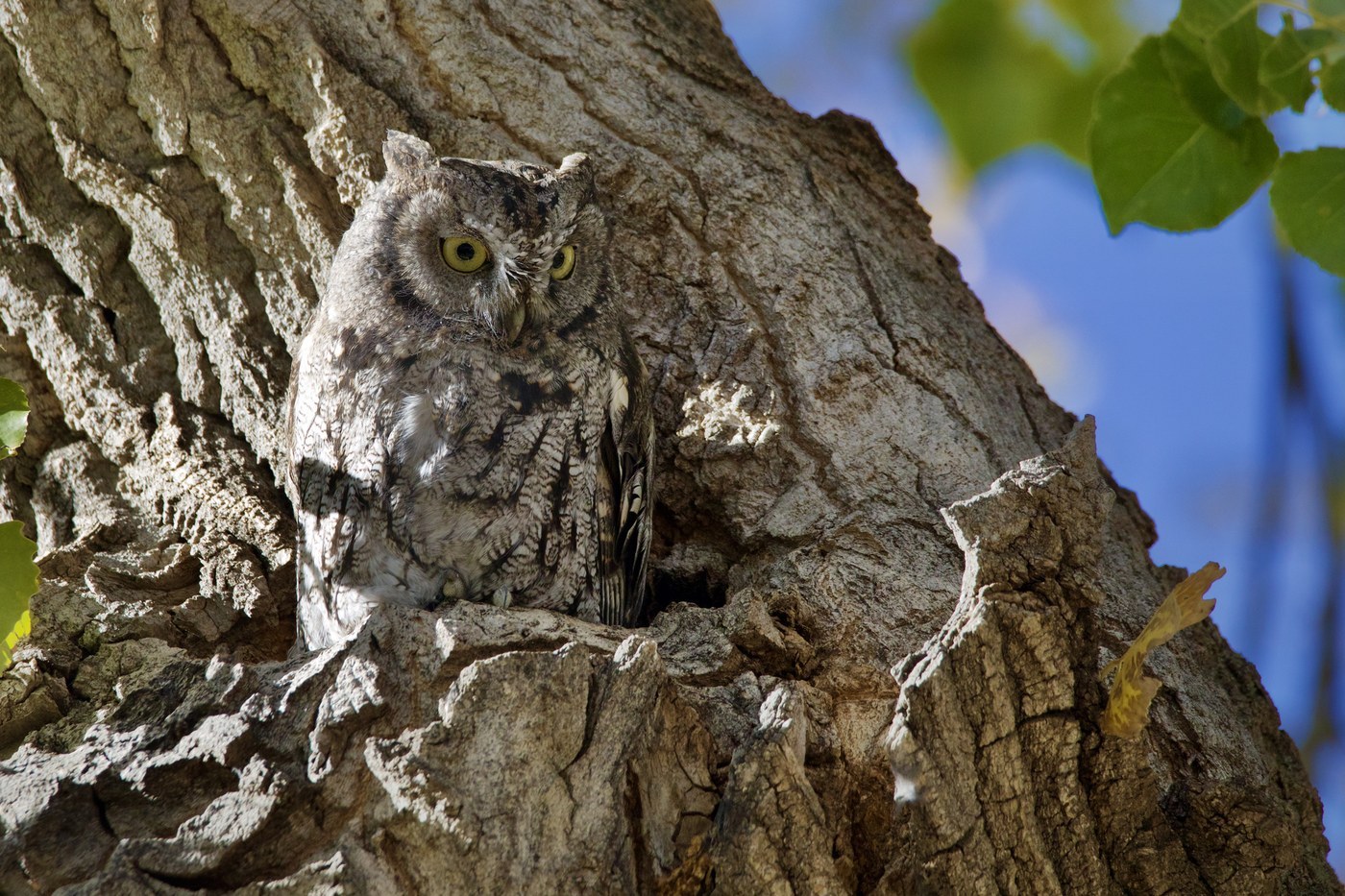
Western Screech-Owl
Small soft-fringed flight feathers; cryptic mottled/streaked body feathers; short ear tufts

White-faced Scops Owl
Small to medium flight feathers with a distinctive whitish facial disc and long ear-tuft plumes