
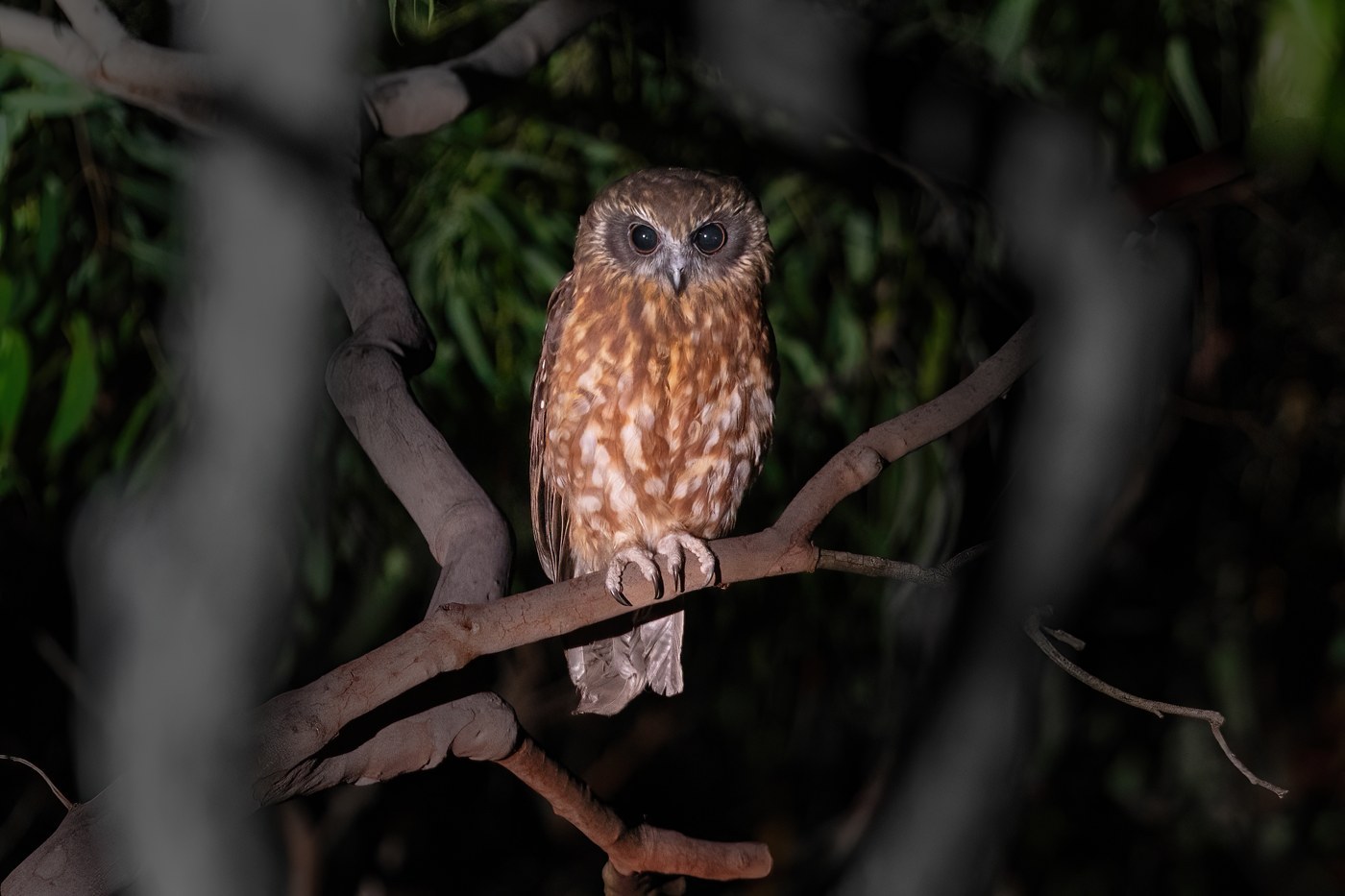
Southern Boobook
Ninox boobook
Australia's most familiar and widespread owl, named for its distinctive 'boo-book' call, with dark brown feathers boldly spotted white above and streaked buff below.
- Feather type
- Rounded flight feathers; banded tail; spotted body plumage
- Colours
- Dark brown above with white or cream spotting; buff underparts with brown streaking
- Bird size
- Small-medium, ~27-36 cm
Found a feather like this?
Identify any feather from a photo, free.
Overview
The Southern Boobook is the smallest and most common owl in Australia, found across nearly every habitat type from forest and woodland to farmland and urban parks. Its onomatopoeic name comes from its far-carrying two-note call, one of the most familiar night sounds across the continent.
As a member of the hawk-owl genus Ninox, it has a relatively flat facial profile without the heart-shaped disc of barn owls, and large forward-facing eyes. Its dark brown plumage, boldly spotted with white or cream, provides effective camouflage while roosting in tree foliage during the day.
Being so widespread and common, it is one of the more frequently encountered owls when searching for feathers, turning up in habitats ranging from remote bushland to suburban gardens.
Identifying the Feather
Size and shape
Small to medium feathers from a bird 27-36 cm long, with rounded wings and a moderately long, banded tail typical of Ninox owls.
Color and pattern
- Upperparts are dark brown, marked with bold white or cream spots on the wing coverts and back.
- Underparts are buff to cream with brown streaking, denser on the chest and thinning toward the belly.
- The tail is dark brown with several narrow pale bars.
- Shafts are pale brown.
Distinguishing from similar species
Compared to the larger Powerful Owl, Southern Boobook feathers are much smaller and show simple streaking on the underparts rather than bold chevron markings. Compared to the Morepork of New Zealand, a very close relative, plumage is similar but ranges do not overlap, making location the best distinguishing clue.
Plumage & Molt
Adults are dark brown above with bold cream or white spotting, and buff below with brown streaking. Plumage can vary somewhat across the many recognized subspecies found across Australia and nearby islands. Sexes look alike, with females slightly larger. Juveniles are paler and downier with less defined spotting. Molt follows breeding on an annual cycle.
Habitat & Range
This species is found across nearly all of Australia in forest, woodland, farmland, and urban parks and gardens, as well as on some nearby islands. It is largely resident, though some populations may make local movements in response to food availability.
Behavior & Field Notes
Southern Boobooks hunt insects, small mammals, and birds at night, often from a low perch, and are highly adaptable in diet and habitat use. They roost by day in dense foliage, sometimes in surprisingly urban settings. The call is a distinctive repeated two-note 'boo-book,' which gives the species its common name. Nests are placed in tree hollows. When identifying a feather, look for dark brown ground color with bold cream or white spotting above and streaked buff underparts, in a small to medium overall size.
Frequently asked questions
Why is this owl called the Southern Boobook?
The name comes from its distinctive, far-carrying two-note call that sounds like 'boo-book,' one of the most familiar nocturnal sounds across Australia.
Is the Southern Boobook common in cities?
Yes, it is highly adaptable and is regularly found in urban parks and gardens as well as natural woodland and forest across Australia.
How can I tell a Southern Boobook feather from a Powerful Owl feather?
Southern Boobook feathers are much smaller and show simple brown streaking on buff underparts, while Powerful Owl feathers are much larger with bold V-shaped chevron markings.
What does the Southern Boobook eat?
It hunts a variety of prey including insects, small mammals, and birds, typically captured at night from a low perch.
Southern Boobook guides
In-depth guides for identifying and understanding Southern Boobook.
Other feathers you may enjoy

Tawny Owl
Wing (flight) and body (contour) feathers
Little Owl
Wing and body feathers

Balsas Screech-Owl
Small ear-tuft feathers; soft, finely vermiculated body feathers

Blakiston's Fish Owl
Massive flight feathers with looser structure; shaggy body plumage; prominent ear-tuft feathers

Barn Owl
Wing and facial-disc feathers

Sooty Owl
Broad soft-edged flight feathers; heart-shaped facial disc feathers; finely speckled body plumage

Short-eared Owl
Broad soft-fringed flight feathers; streaked body feathers; tiny, rarely visible ear tufts

Stygian Owl
Dark, mottled flight and body feathers with long, closely-set ear tufts
Whiskered Screech-Owl
Small soft-fringed flight feathers; finely mottled body feathers; short ear tufts
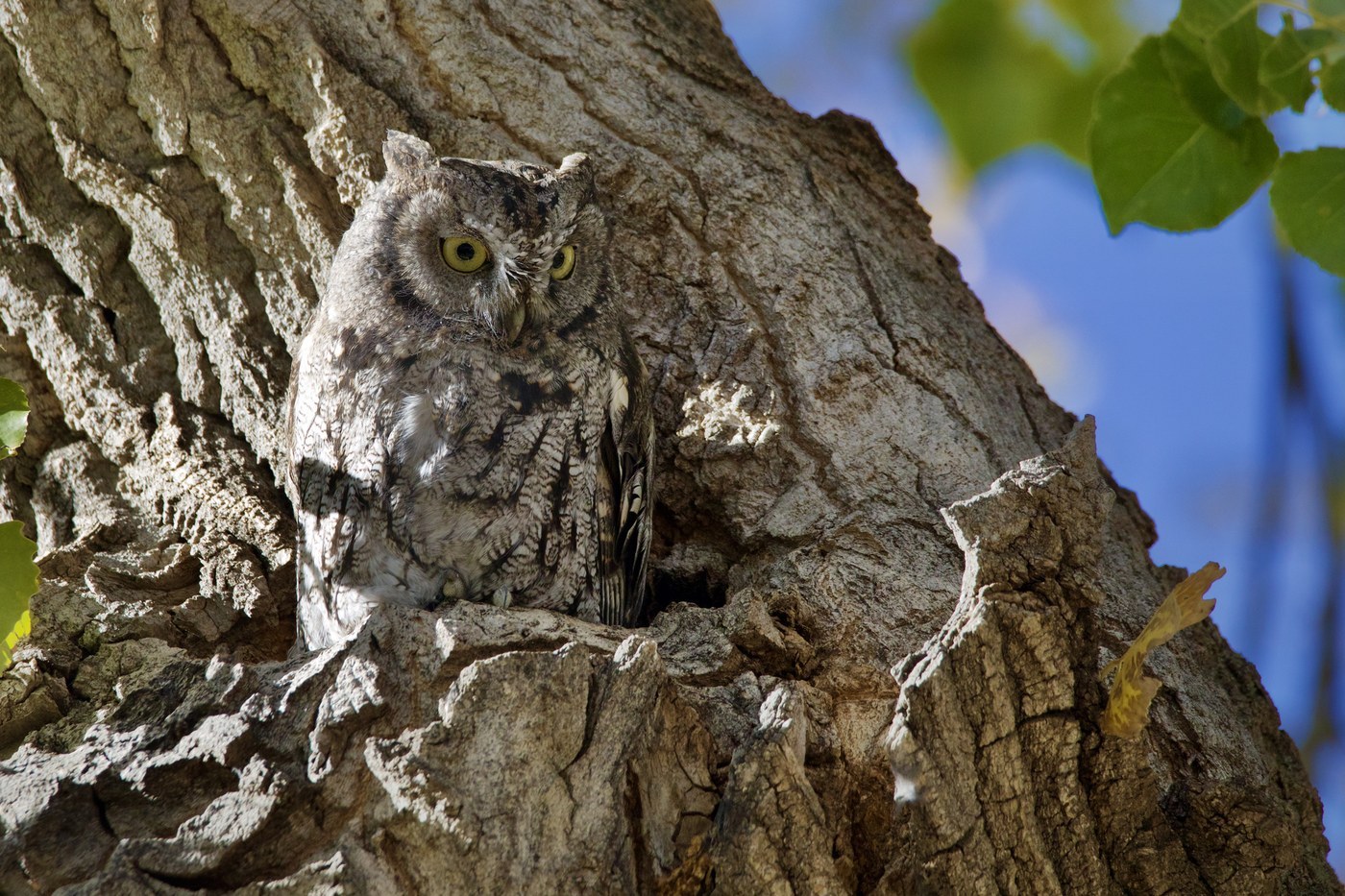
Western Screech-Owl
Small soft-fringed flight feathers; cryptic mottled/streaked body feathers; short ear tufts

White-faced Scops Owl
Small to medium flight feathers with a distinctive whitish facial disc and long ear-tuft plumes

Verreaux's Eagle-Owl
Very large flight and tail feathers; dense soft body plumage; broad ear-tuft feathers