

Pacific Screech-Owl
Megascops cooperi
A small eared owl of Pacific lowland Central America, with greyish-brown streaked plumage and pale eyebrows meeting above the bill.
- Feather type
- Small ear-tuft feathers; soft, streaked body feathers; finely barred flight feathers
- Colours
- Greyish-brown with fine dark streaking and vermiculation, pale eyebrow feathering
- Bird size
- Small owl, ~22-25 cm
Found a feather like this?
Identify any feather from a photo, free.
Overview
The Pacific Screech-Owl inhabits the Pacific lowlands of Central America, ranging from southern Mexico through Costa Rica, typically in dry forest, scrub, and adjacent open woodland habitats. It is one of several small eared owls in the genus Megascops found across the Americas.
Its plumage is a fairly typical greyish-brown screech-owl pattern, but the pale eyebrow feathering meeting over the base of the bill gives it a distinctive, slightly surprised facial expression.
Feathers can be recognized by their fine streaking and vermiculation on a grey-brown background, along with small, loosely structured ear-tuft feathers when present.
Identifying the Feather
Size and shape
- Small, compact contour feathers and short rounded wings typical of a small eared owl
- Small ear-tuft feathers, often loose and easily detached
Color and pattern
- Ground color greyish-brown, with fine dark streaking down the body and finer vermiculation across the back and wings
- Pale, whitish eyebrow feathering that meets above the bill, a useful facial clue if the crown and forehead feathers are found together
- Flight feathers show narrow dark barring on a paler background
Distinguishing from similar species
- Generally paler and greyer than tropical screech-owls found in wetter forest habitats nearby, which tend to be warmer brown
- Range is a strong clue: confined largely to Pacific slope dry habitats rather than humid forest
Plumage & Molt
Plumage is greyish-brown overall with fine dark streaking and vermiculation, providing camouflage against dry forest bark. Sexes look similar, with females averaging larger. Juveniles show a softer, less defined version of the adult pattern with more uniform downy feathering before acquiring adult streaking. Molt is gradual, generally tied loosely to the breeding season.
Habitat & Range
Found along the Pacific slope of Central America from southern Mexico through Costa Rica, favoring dry deciduous forest, scrubby woodland, and edge habitat, often near water sources in otherwise arid landscapes. It is a non-migratory resident, remaining within its territory year-round.
Behavior & Field Notes
A nocturnal hunter of insects and small vertebrates, often perching low in scrub or open woodland to hunt. It nests in natural cavities or old woodpecker holes. Its voice includes a rhythmic series of hooting or barking notes, differing from the classic descending whinny of some other screech-owls. Pairs are often heard duetting at dusk, useful context if trying to confirm a species tentatively identified from a found feather.
Frequently asked questions
Where is the Pacific Screech-Owl found?
Along the Pacific lowlands of Central America, from southern Mexico through Costa Rica, mainly in dry forest and scrub habitat.
What is distinctive about its face?
Pale eyebrow feathering that meets above the base of the bill, giving it a wide-eyed expression.
How can I tell it apart from other screech-owls nearby?
It is generally paler and greyer, associated with dry Pacific-slope habitat rather than the warmer-toned screech-owls of humid forest.
Does it have ear tufts?
Yes, small ear tufts typical of the Megascops screech-owl group, though they can be raised or lowered depending on the bird's alertness.
Pacific Screech-Owl guides
In-depth guides for identifying and understanding Pacific Screech-Owl.

Other feathers you may enjoy

Tawny Owl
Wing (flight) and body (contour) feathers
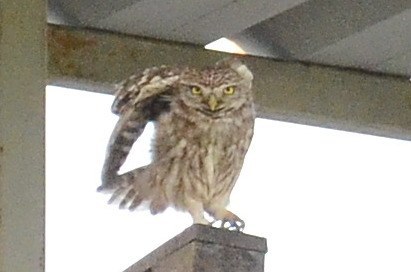
Little Owl
Wing and body feathers

Balsas Screech-Owl
Small ear-tuft feathers; soft, finely vermiculated body feathers

Blakiston's Fish Owl
Massive flight feathers with looser structure; shaggy body plumage; prominent ear-tuft feathers

Barn Owl
Wing and facial-disc feathers
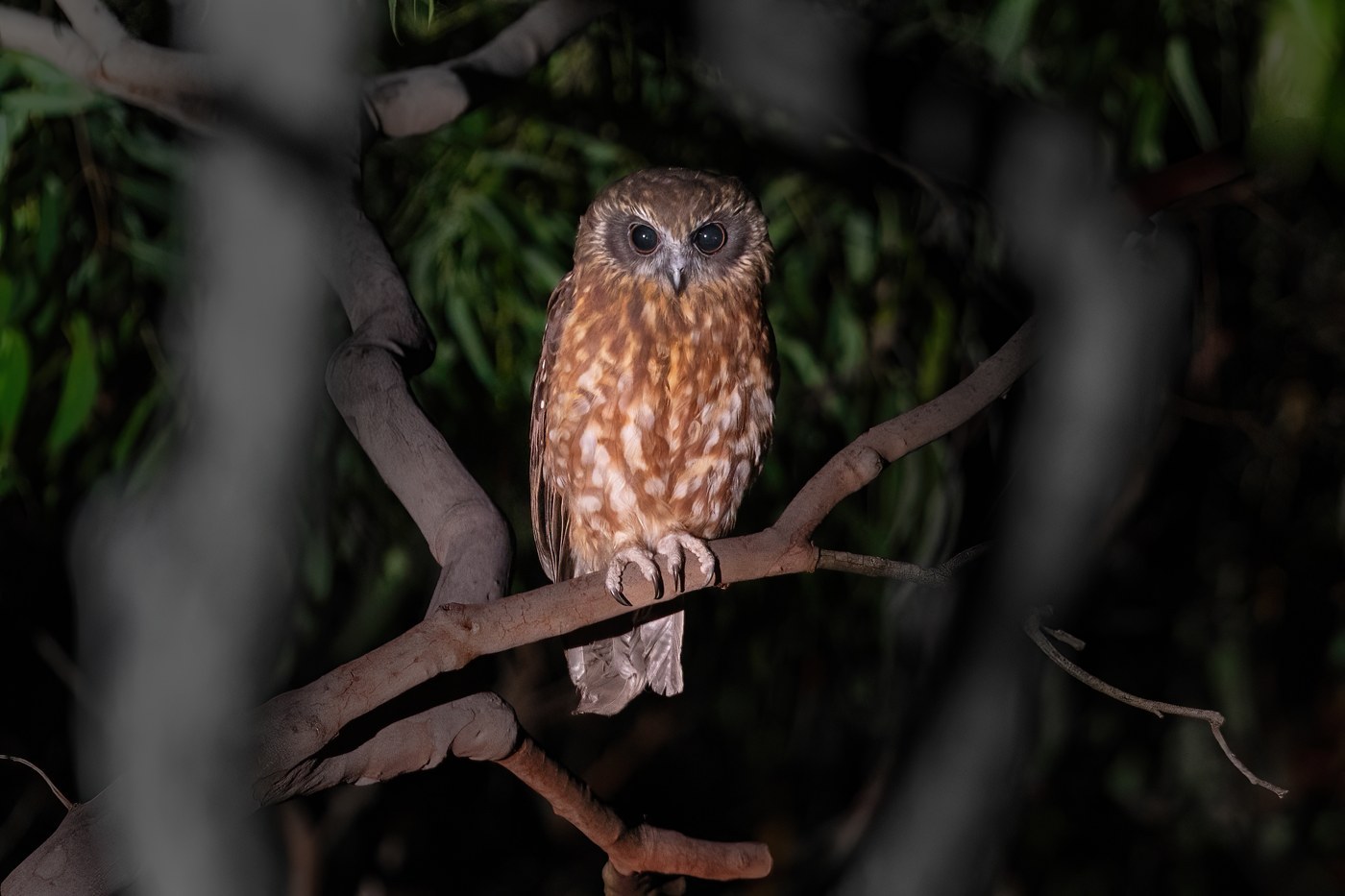
Southern Boobook
Rounded flight feathers; banded tail; spotted body plumage

Sooty Owl
Broad soft-edged flight feathers; heart-shaped facial disc feathers; finely speckled body plumage

Short-eared Owl
Broad soft-fringed flight feathers; streaked body feathers; tiny, rarely visible ear tufts

Stygian Owl
Dark, mottled flight and body feathers with long, closely-set ear tufts
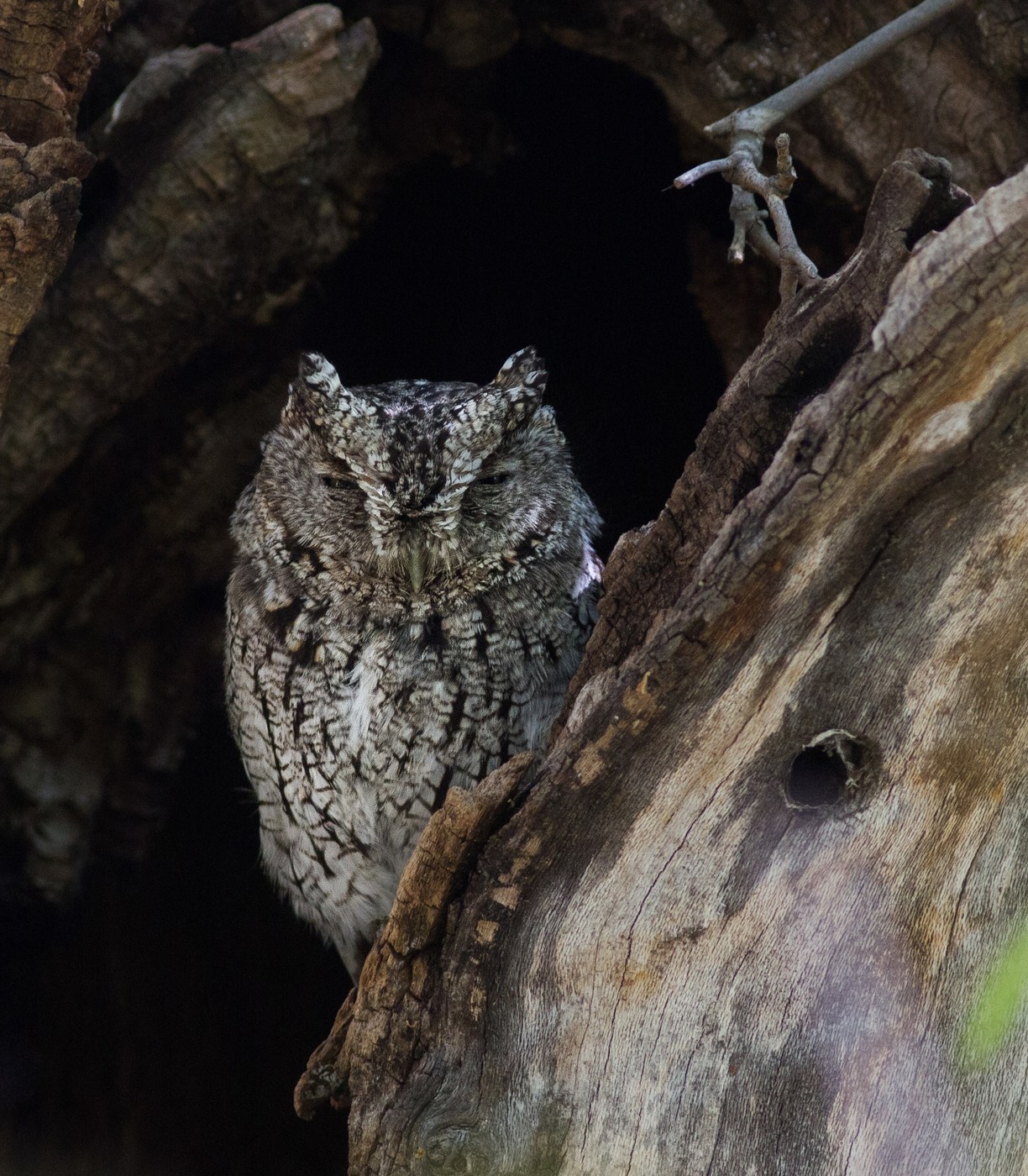
Whiskered Screech-Owl
Small soft-fringed flight feathers; finely mottled body feathers; short ear tufts
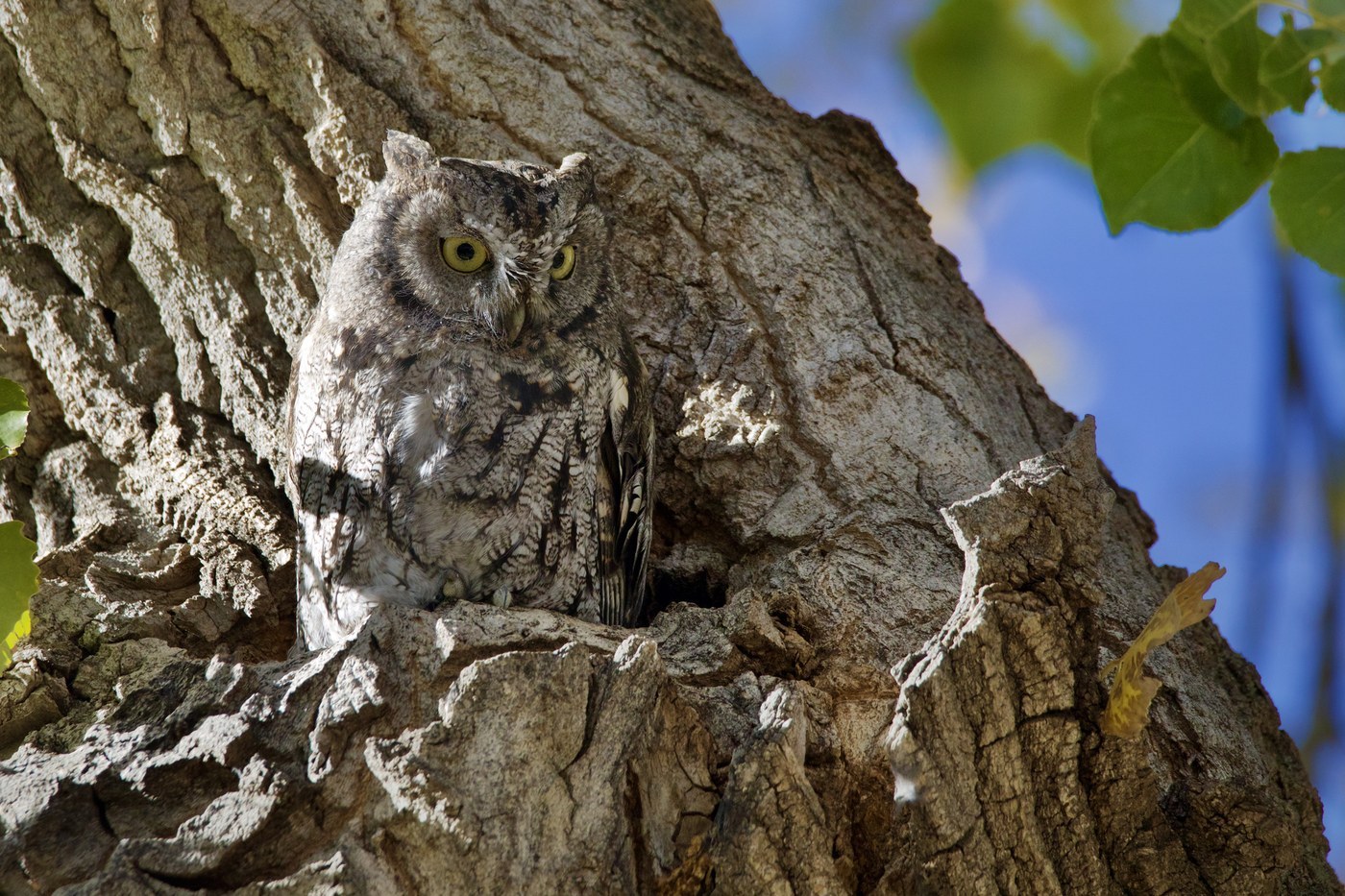
Western Screech-Owl
Small soft-fringed flight feathers; cryptic mottled/streaked body feathers; short ear tufts

White-faced Scops Owl
Small to medium flight feathers with a distinctive whitish facial disc and long ear-tuft plumes