
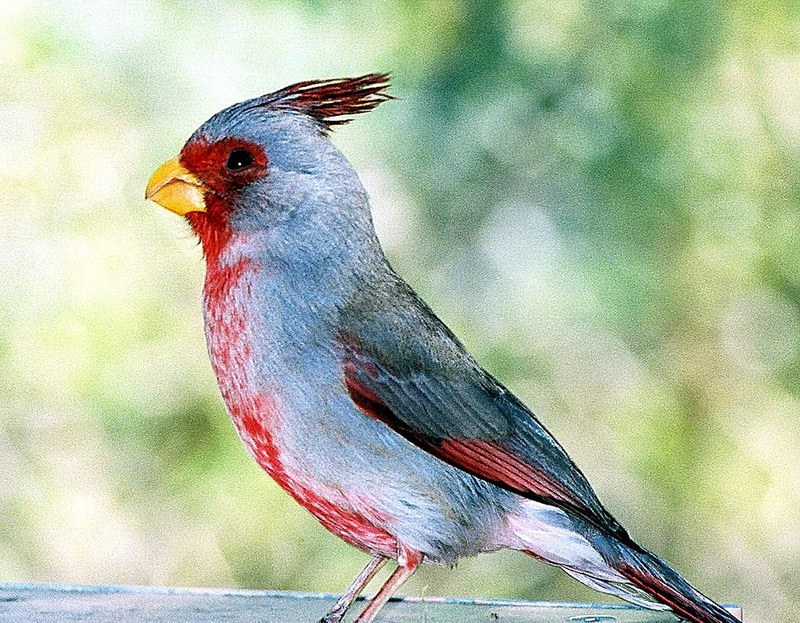
Pyrrhuloxia
Cardinalis sinuatus
A desert relative of the Northern Cardinal, the Pyrrhuloxia is soft gray overall with splashes of red on the crest, face, and underparts, plus a distinctive stubby yellow bill.
- Feather type
- Soft gray contour feathers with red-tipped crest and red-washed underparts
- Colours
- Ash gray overall with red on face, crest, wings, and belly
- Bird size
- Cardinal-sized, ~21 cm
Found a feather like this?
Identify any feather from a photo, free.
Overview
The Pyrrhuloxia is a crested songbird of arid brushlands in the southwestern United States and northern Mexico, closely related to the Northern Cardinal but adapted to a much drier, thornier habitat. Its most memorable feature is a short, thick, parrot-like bill that curves noticeably along the culmen, quite different from the straight conical bill of its cardinal cousin. Overall plumage is pale ashy gray rather than red, with red confined to specific feather tracts, giving the bird a subtler but still handsome appearance.
Identifying the Feather
The crest feathers are gray with red tips that form a red-tinged peak, most vivid in adult males. The face and center of the breast show a variable red patch that can appear as a thin line down the belly, while the wings and tail edges are washed with a brighter, more saturated red, especially visible in flight. The overall body plumage is a soft, pale ash gray, finer and less richly colored than a Northern Cardinal's, and lacks the black facial mask of that species. The bill is short, deep-based, and yellowish, distinctly more curved than a cardinal's bill, which combined with the gray-and-red pattern is the most reliable field mark. Females show the same overall pattern but with much reduced, more muted red, sometimes limited to faint tinges on the crest and wings.
Plumage & Molt
Adult males are pale gray overall with red confined to the crest tips, face, central breast stripe, and wing and tail edges. Adult females are duller, mostly gray-brown with only faint reddish tinges on the crest and wing edges, generally lacking any red on the face or breast. Juveniles resemble females and lack a black bill base seen in some closely related species; the yellowish bill is present from early life and darkens somewhat with maturity. There is no distinct seasonal plumage; wear over the year can mute the red slightly before the next molt refreshes it.
Habitat & Range
Pyrrhuloxias are year-round residents of desert scrub, mesquite thickets, and thorny brushland across the southwestern United States (Arizona, New Mexico, Texas) and adjacent Mexico. They favor dense, thorny vegetation along washes and desert edges rather than open desert flats, and they generally do not migrate, though some populations shift locally with food availability, sometimes moving into more open areas or feeders during winter.
Behavior & Field Notes
Pyrrhuloxias forage low in dense brush and on the ground, taking seeds and invertebrates with their stout, curved bill well suited to cracking hard seed coats. They are often seen in pairs or small flocks outside the breeding season and readily visit desert feeding stations. The song is a clear, whistled series similar to but often thinner and more rapid than a Northern Cardinal's, and both sexes are capable singers. Nests are cup-shaped, built low in thorny shrubs, and pairs can be territorial during the breeding season while forming loose flocks the rest of the year.
Frequently asked questions
How can you tell a Pyrrhuloxia's feathers from a Northern Cardinal's?
The Pyrrhuloxia is mostly ash gray rather than overall red, with red limited to the crest tips, face, breast center, and wing edges, and it has a short, curved yellowish bill instead of a straight red-orange one.
Do female Pyrrhuloxias have any red plumage?
Yes, but it is much reduced compared to males, usually limited to faint reddish tinges on the crest and wings rather than a bold red face or breast.
What kind of habitat does the Pyrrhuloxia prefer?
It favors dense desert scrub, mesquite thickets, and thorny brush in the arid Southwest, rather than open desert or dense forest.
Is the Pyrrhuloxia the same species as the cardinal?
No, it is a separate but closely related species within the same genus, distinguished by its gray body, curved bill, and desert habitat preference.
Pyrrhuloxia guides
In-depth guides for identifying and understanding Pyrrhuloxia.
Other feathers you may enjoy

Yellow-breasted Bunting
Contour and flight feathers, chestnut-and-yellow breeding pattern
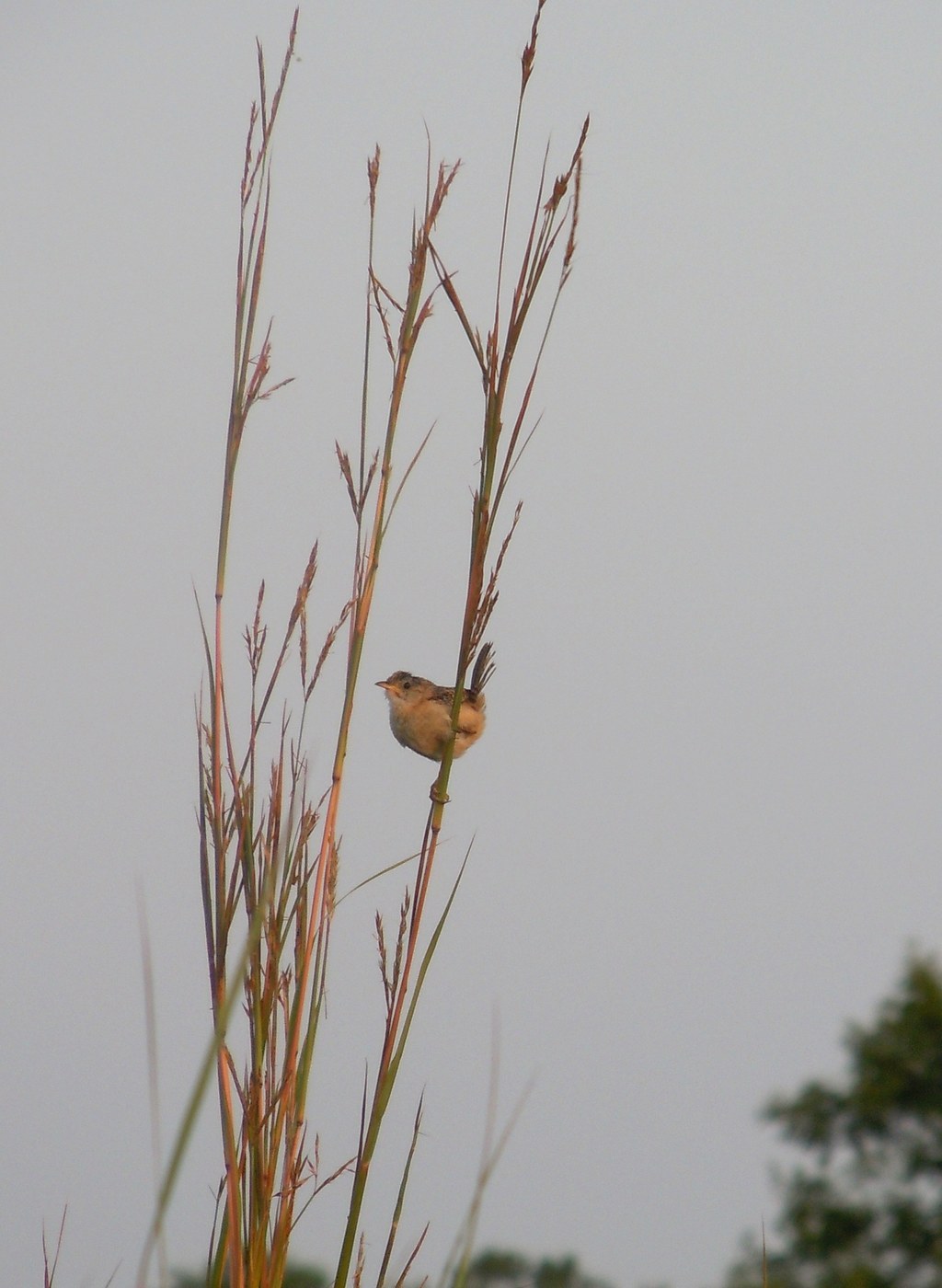
Sedge Wren
Tiny streaked crown and back feathers

Yellow-winged Cacique
Glossy black body feathers, yellow wing patch, shaggy crest

Yellow Warbler
Small contour and flight feathers
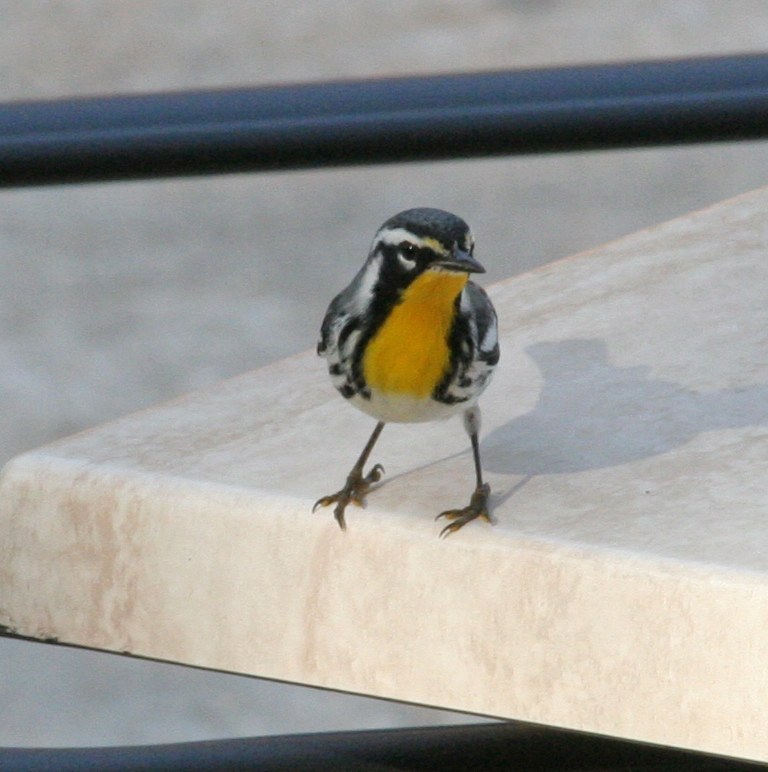
Yellow-throated Warbler
Small contour and flight feathers
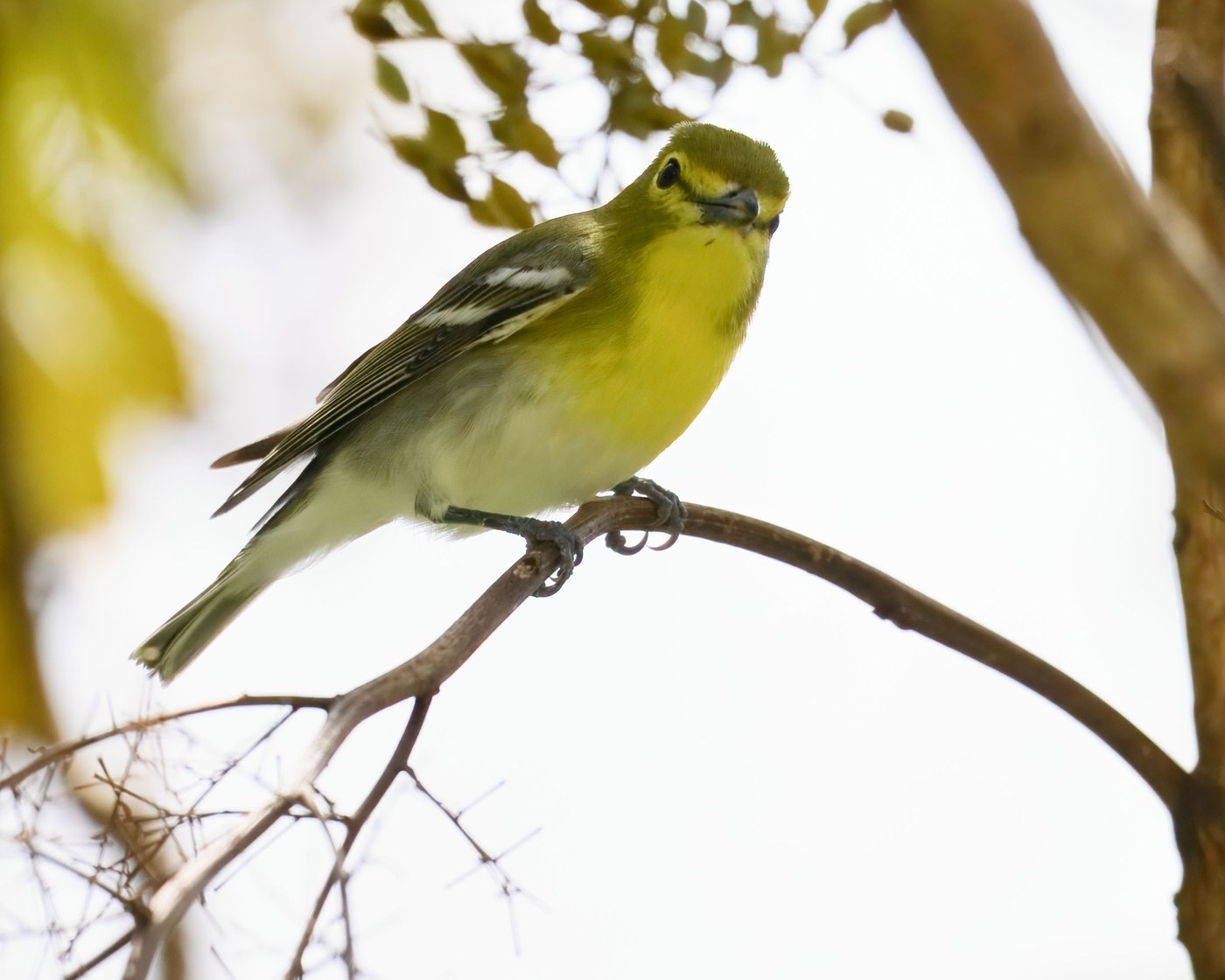
Yellow-throated Vireo
Bright yellow throat and spectacle feathers; olive-green back feathers; two white wing-bar feathers

Yellow-rumped Warbler
Small contour and flight feathers
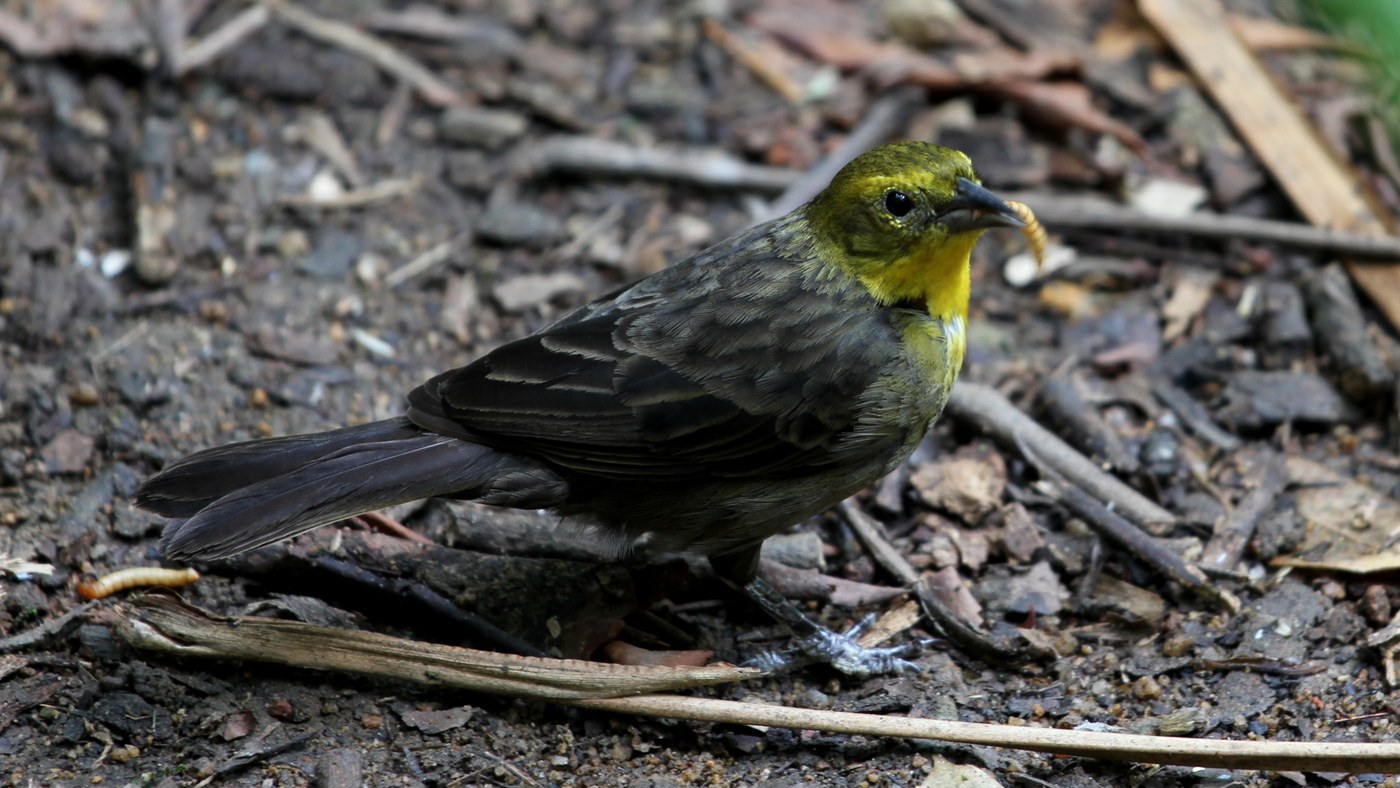
Yellow-hooded Blackbird
Contrasting hood and body feathers
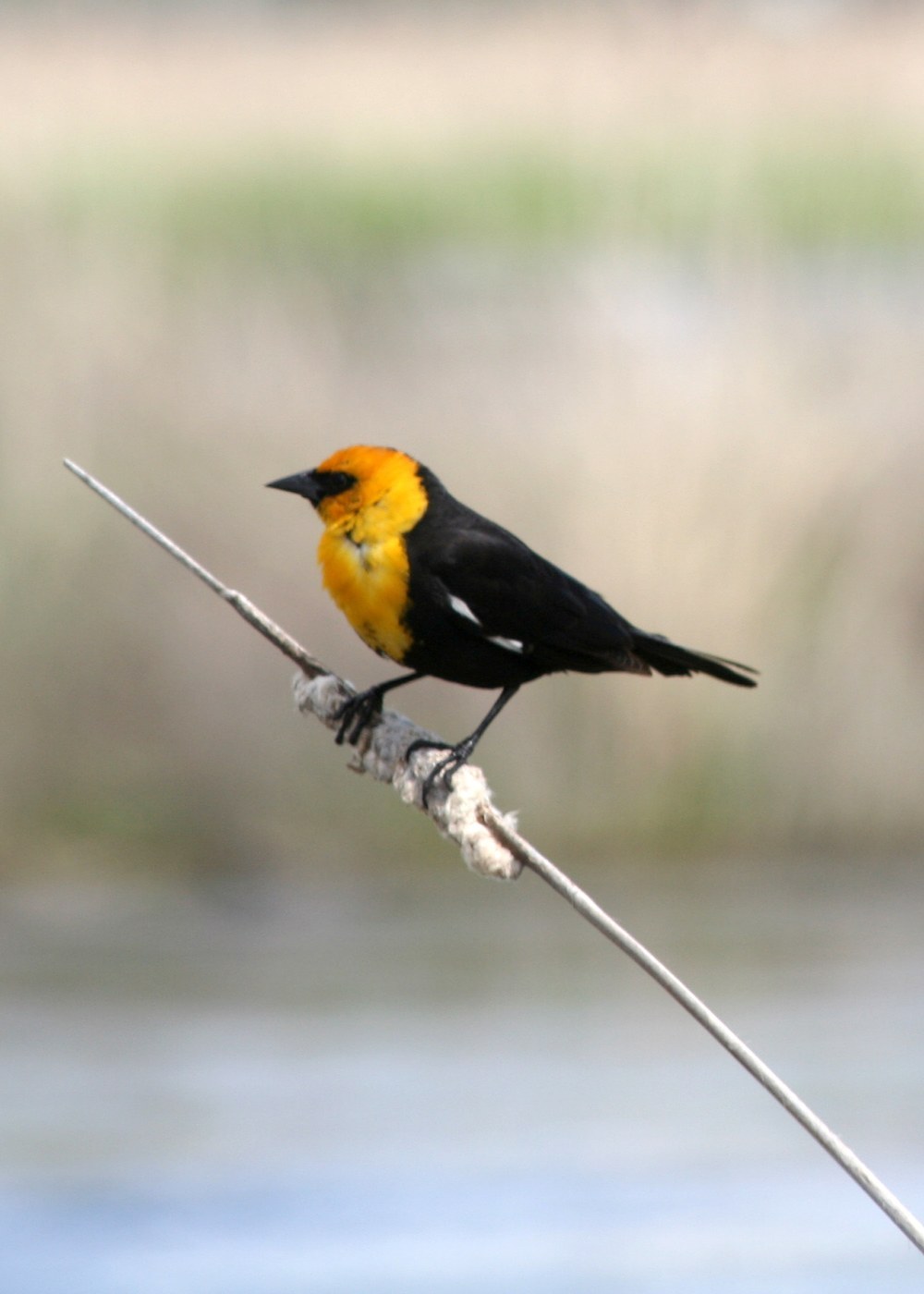
Yellow-headed Blackbird
Glossy black body plumage with a bright yellow head and breast

Yellow-eyed Junco
Contour and flight feathers

Yellow-fronted Canary
Small, smooth body plumage

Yellow-breasted Greenfinch
Compact, smooth body plumage