

Short-billed Dowitcher
Limnodromus griseus
A long-billed, sewing-machine-feeding shorebird whose breeding-season feathers show a warm rufous-orange wash with fine spotting, closely resembling the Long-billed Dowitcher but generally with finer, more restrained markings.
- Feather type
- Medium wader contour and flight feathers
- Colours
- Rufous-orange, spotted breeding underparts; plain gray nonbreeding plumage; barred tail
- Bird size
- Robin-sized, ~25-29 cm
Found a feather like this?
Identify any feather from a photo, free.
Overview
Overview
The Short-billed Dowitcher is a chunky, long-billed shorebird best known for its rapid, repetitive vertical probing action while feeding, often likened to a sewing machine. It breeds in boreal muskeg and bog habitats across northern North America and is one of the more common migratory shorebirds along coasts in much of the continent.
Feathers are commonly found on coastal mudflats and estuaries during migration, often alongside the very similar Long-billed Dowitcher.
Identifying the Feather
Feather Identification
- Breeding underparts: warm rufous-orange wash across the breast and belly with fine, restrained dark spotting, particularly along the flanks.
- Tail feathers: barred black-and-white pattern with bars of roughly equal width, useful when compared directly with Long-billed Dowitcher's tail.
- Upperparts: dark-centered feathers broadly fringed with rufous and buff in breeding plumage, becoming plain gray in winter.
- Nonbreeding feathers: plain gray above and pale gray-white below, nearly identical to Long-billed Dowitcher in this plumage.
- Versus Long-billed Dowitcher: the two species are extremely difficult to distinguish by feather alone; Short-billed tends to show finer breast spotting versus Long-billed's more extensive barring on the flanks, and tail bars are roughly equal in width versus wider dark bars in Long-billed, though voice remains the most reliable field distinction for live birds.
Plumage & Molt
Plumage Notes
Breeding adults show a rufous-orange wash across the underparts with fine spotting concentrated on the breast and finer barring restricted mostly to the flanks; sexes look similar, with subtle regional plumage variation across subspecies. Nonbreeding adults become plain gray above and pale below, nearly indistinguishable from nonbreeding Long-billed Dowitcher.
Juveniles show warm buff-and-rufous fringed upperpart feathers with a neatly scaled pattern, brighter and more patterned than juvenile Long-billed Dowitcher typically shows. Molt into nonbreeding plumage occurs mostly after migration to wintering grounds.
Habitat & Range
Habitat & Range
Short-billed Dowitchers breed in boreal muskeg, bog, and forest-edge wetlands across Alaska and Canada. They migrate to winter primarily on coastal mudflats, estuaries, and salt marshes along both coasts of the United States south through Central America and into northern South America, generally favoring more saline coastal habitats than Long-billed Dowitcher.
Behavior & Field Notes
Behavior & Field Notes
Dowitchers forage with a distinctive rapid, vertical probing motion likened to a sewing machine needle, taking invertebrates from soft mud and shallow water. Short-billed Dowitchers tend to favor more coastal, saline habitats than the more freshwater-associated Long-billed Dowitcher.
Nests are shallow scrapes in muskeg or bog vegetation. The flight call is a mellow, whistled "tu-tu-tu," softer and more musical than the sharp, single "keek" of Long-billed Dowitcher, and remains the most dependable way to separate the two species where feathers alone are ambiguous.
Frequently asked questions
Can Short-billed and Long-billed Dowitcher feathers be told apart reliably?
It's difficult - the two are extremely similar, though Short-billed often shows finer breast spotting and tail bars of more equal width, while voice remains the most reliable distinction for live birds.
What does a breeding Short-billed Dowitcher feather look like?
A warm rufous-orange wash across the underparts with fine spotting on the breast and restrained barring on the flanks.
Where are Short-billed Dowitcher feathers commonly found?
On coastal mudflats, estuaries, and salt marshes during migration and winter.
What feeding behavior is typical of dowitchers?
A rapid, repetitive vertical probing motion in soft mud, often compared to a sewing machine needle.
Does this species prefer coastal or freshwater habitats?
It generally favors more coastal, saline habitats compared to the more freshwater-associated Long-billed Dowitcher.
Short-billed Dowitcher guides
In-depth guides for identifying and understanding Short-billed Dowitcher.

Other feathers you may enjoy
Southern Lapwing
Body, flight, and tail feathers

Jack Snipe
Body and flight feathers

Far Eastern Curlew
Body, flight, and tail feathers

Terek Sandpiper
Body and flight feathers

Wilson's Phalarope
Body and flight feathers
Long-billed Curlew
Body, flight, and tail feathers

Upland Sandpiper
Body, flight, and tail feathers

Red Phalarope
Body and flight feathers

Eurasian Dotterel
Body feathers
Masked Lapwing
Body, flight, and tail feathers
Eurasian Curlew
Body, flight, and tail feathers
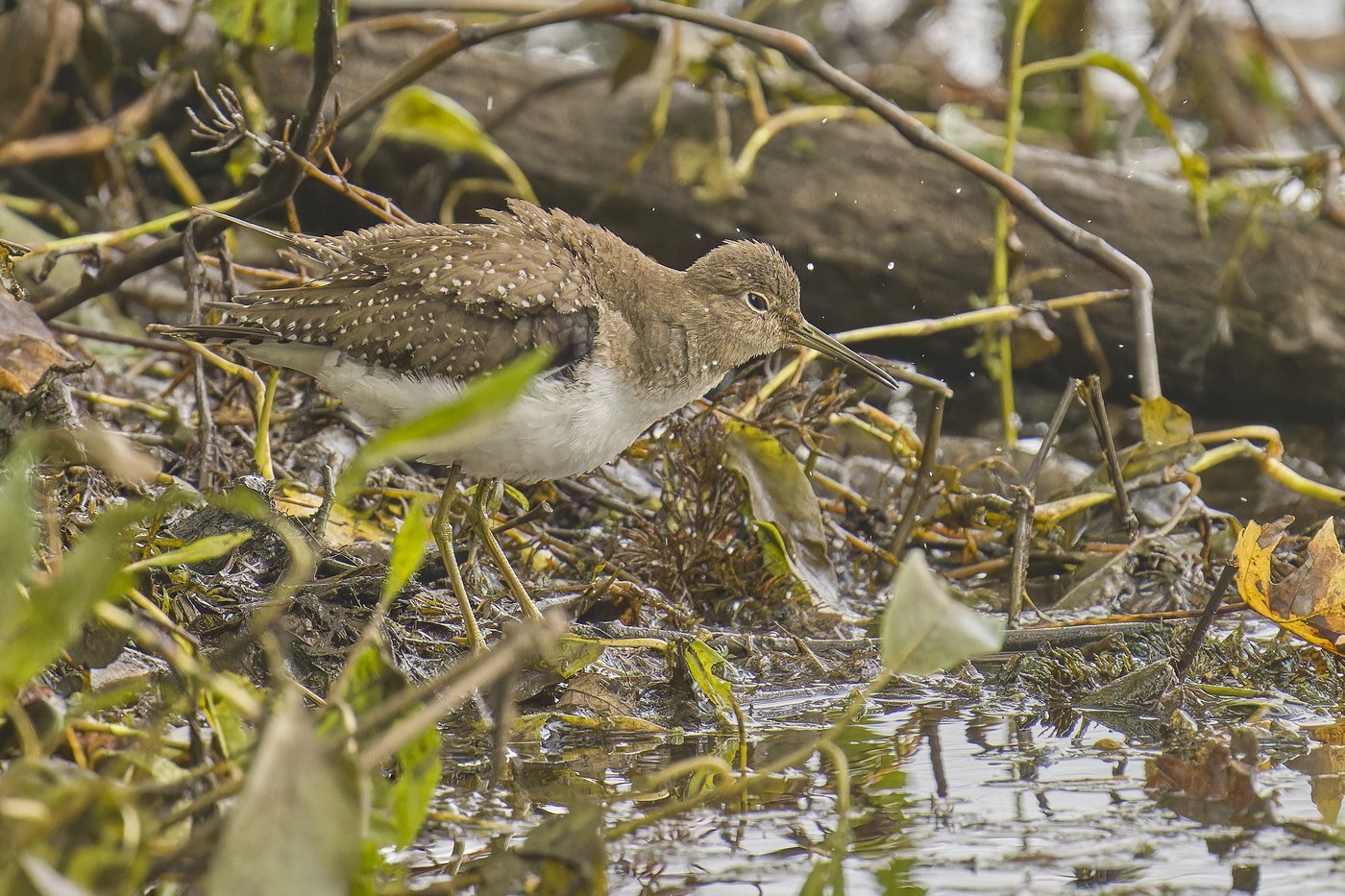
Solitary Sandpiper
Contour and flight feathers