
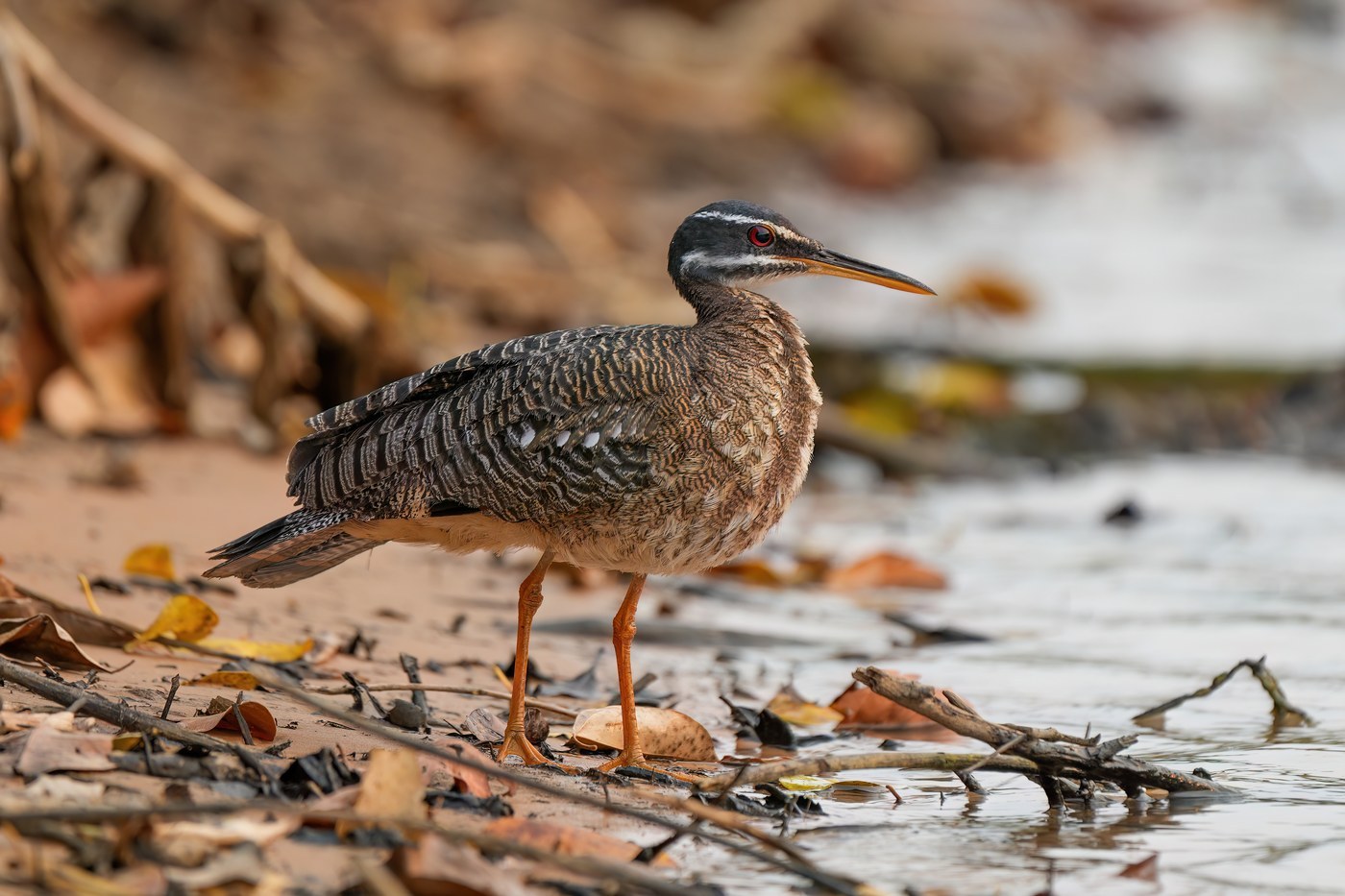
Sunbittern
Eurypyga helias
A slender, heron-like bird whose subdued, bark-patterned plumage conceals a spectacular sunburst of chestnut, black, and buff revealed on the wings during display or flight. It stalks quietly along forest streams in the American tropics.
- Feather type
- Finely patterned, cryptic contour feathers with broad rounded wings that reveal a striking pattern in display
- Colours
- Cryptic brown, black, and buff barring overall; chestnut, black, and buff sunburst pattern on the wings in flight or display
- Bird size
- Heron-like, ~43-48 cm
Found a feather like this?
Identify any feather from a photo, free.
Overview
Overview
The Sunbittern is a slender, long-necked bird found along shaded streams and wetland edges from southern Mexico through Central America into the Amazon basin. At rest, its finely patterned brown, black, and buff plumage provides excellent camouflage against bark and leaf litter, but when the wings are spread in flight or in a threat display, a dramatic sunburst pattern of chestnut, black, and buff is revealed. It is the sole living member of its family, with its closest relative being the Kagu of New Caledonia.
Identifying the Feather
Feather Identification
- Body: Finely vermiculated and barred plumage in browns, black, and buffy tones, providing camouflage against leaf litter and bark.
- Wings: When spread in flight or display, large chestnut-orange, black, and buff eyespot-like patches are revealed on the flight feathers, a pattern unlike any other bird sharing its range.
- Neck and bill: Long and slender.
- Tail: Barred with dark bands.
- Versus similar birds: Herons and bitterns lack this hidden wing pattern and have different bill and neck proportions; the Sunbittern's dramatic wing display when threatened is unique.
Plumage & Molt
Plumage Notes
Sexes are similar. Juveniles resemble adults with a slightly duller wing pattern. Molt is not strongly tied to a distinct season, consistent with its largely non-migratory tropical lifestyle.
Habitat & Range
Habitat & Range
The Sunbittern is found from southern Mexico through Central America and into the Amazon basin and parts of the Guianas. It inhabits shaded streamsides, forest wetland edges, and slow-moving rivers within humid lowland forest, and is resident and non-migratory.
Behavior & Field Notes
Behavior & Field Notes
Sunbitterns forage by walking slowly along stream edges, stalking small fish, insects, and amphibians. When threatened, they spread their wings in a startling display that reveals the hidden sunburst pattern. They build a bulky nest of mud and vegetation in a tree, and their call is a thin, high whistle.
Frequently asked questions
Why is the Sunbittern's wing pattern called a 'sunburst'?
When the wings are spread in flight or display, they reveal large chestnut, black, and buff eyespot-like patches that resemble a burst of color, hidden when the bird is at rest.
What is the Sunbittern's closest relative?
It is the sole living member of its family, with the Kagu of New Caledonia considered its closest known relative.
Where does the Sunbittern live?
It inhabits shaded streamsides and wetland edges in humid forest from southern Mexico through Central America into the Amazon basin.
What does the Sunbittern eat?
It forages along stream edges for small fish, insects, and amphibians.
Sunbittern guides
In-depth guides for identifying and understanding Sunbittern.
Other feathers you may enjoy

Wreathed Hornbill
Dense contour feathers, broad flight feathers

Woodland Kingfisher
Firm contour feathers; broad wing feathers
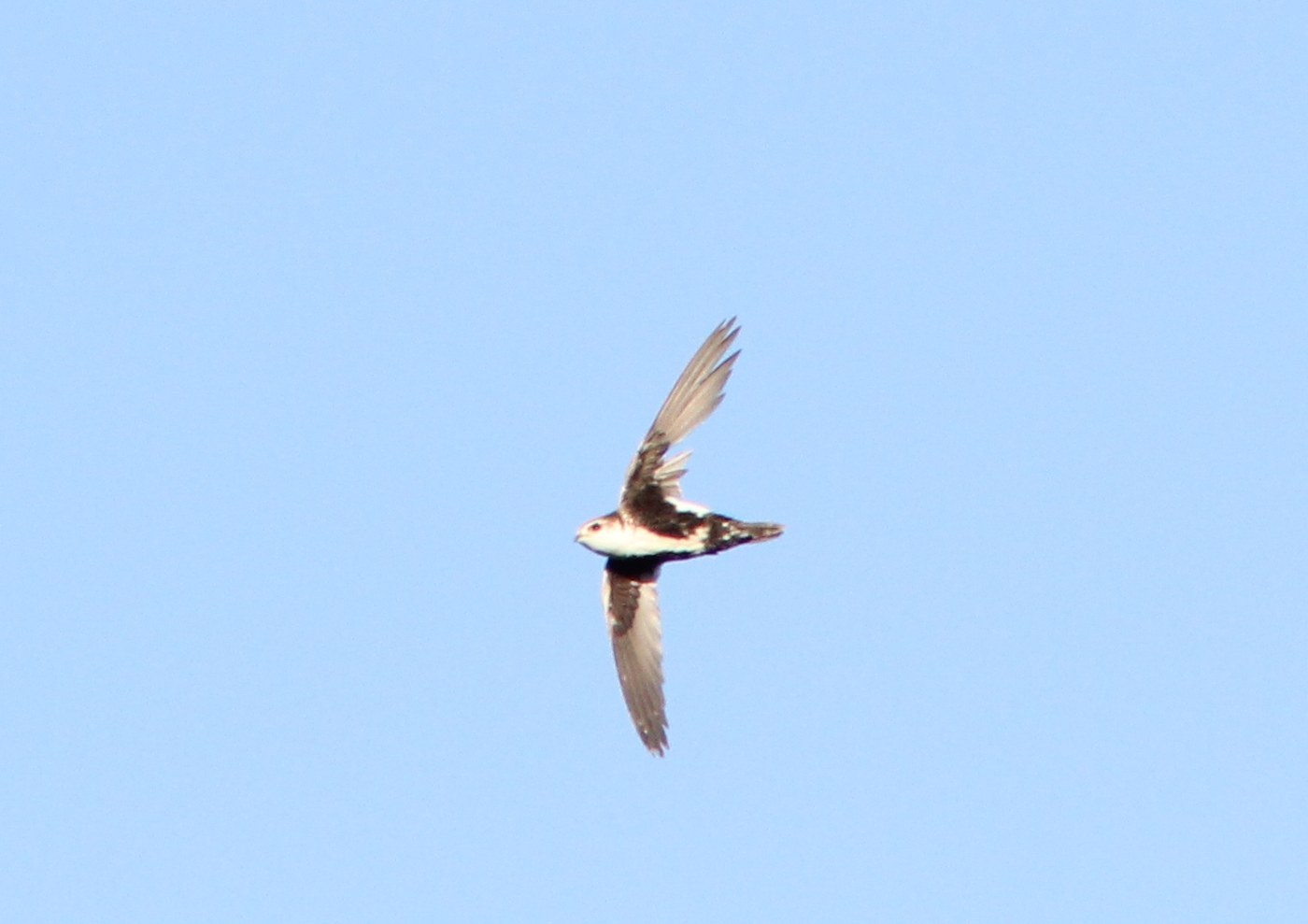
White-throated Swift
Long, stiff pointed flight feathers; sleek contrasting body feathers
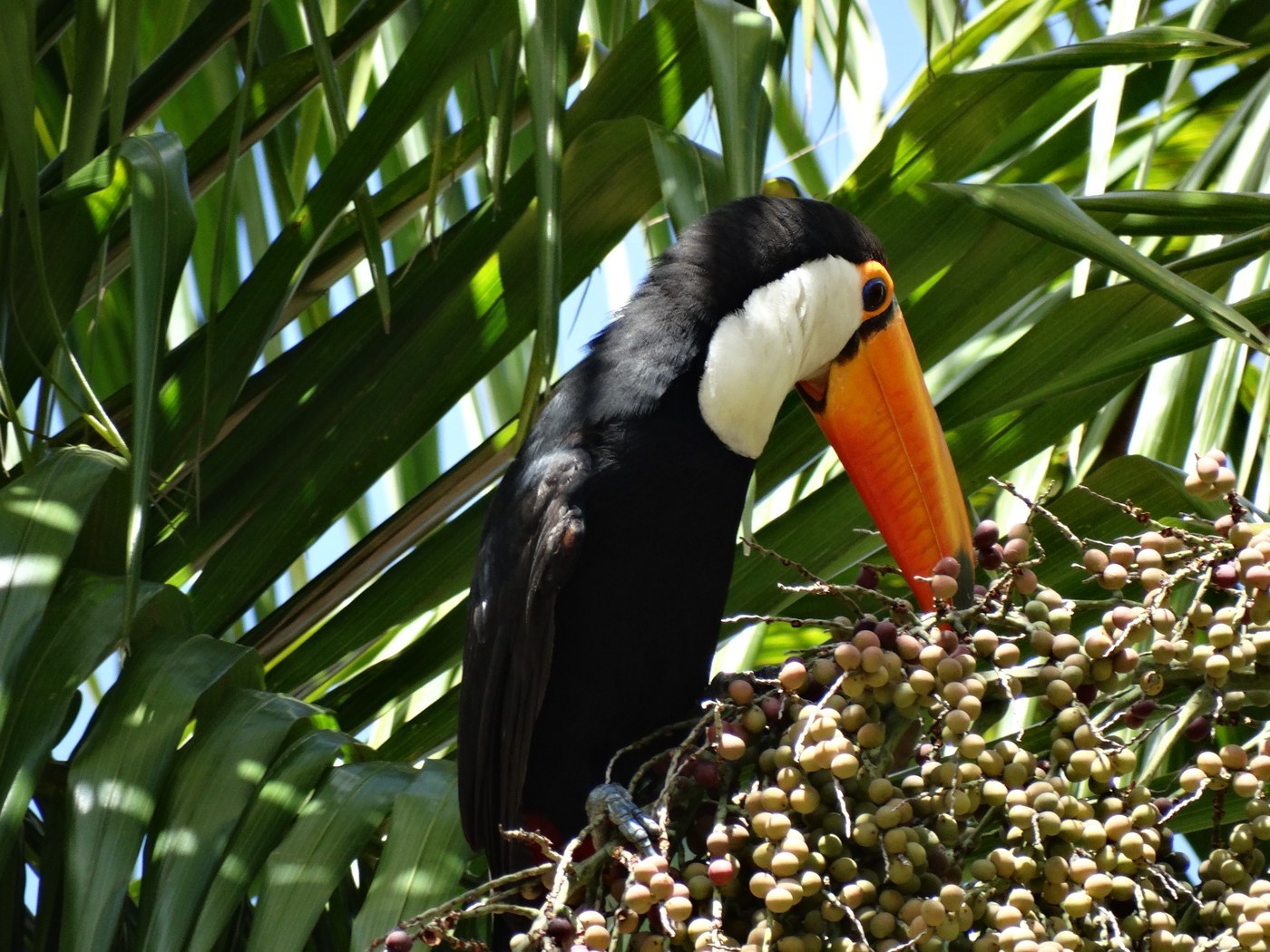
Toco Toucan
Dense, glossy contour feathers; short broad wings
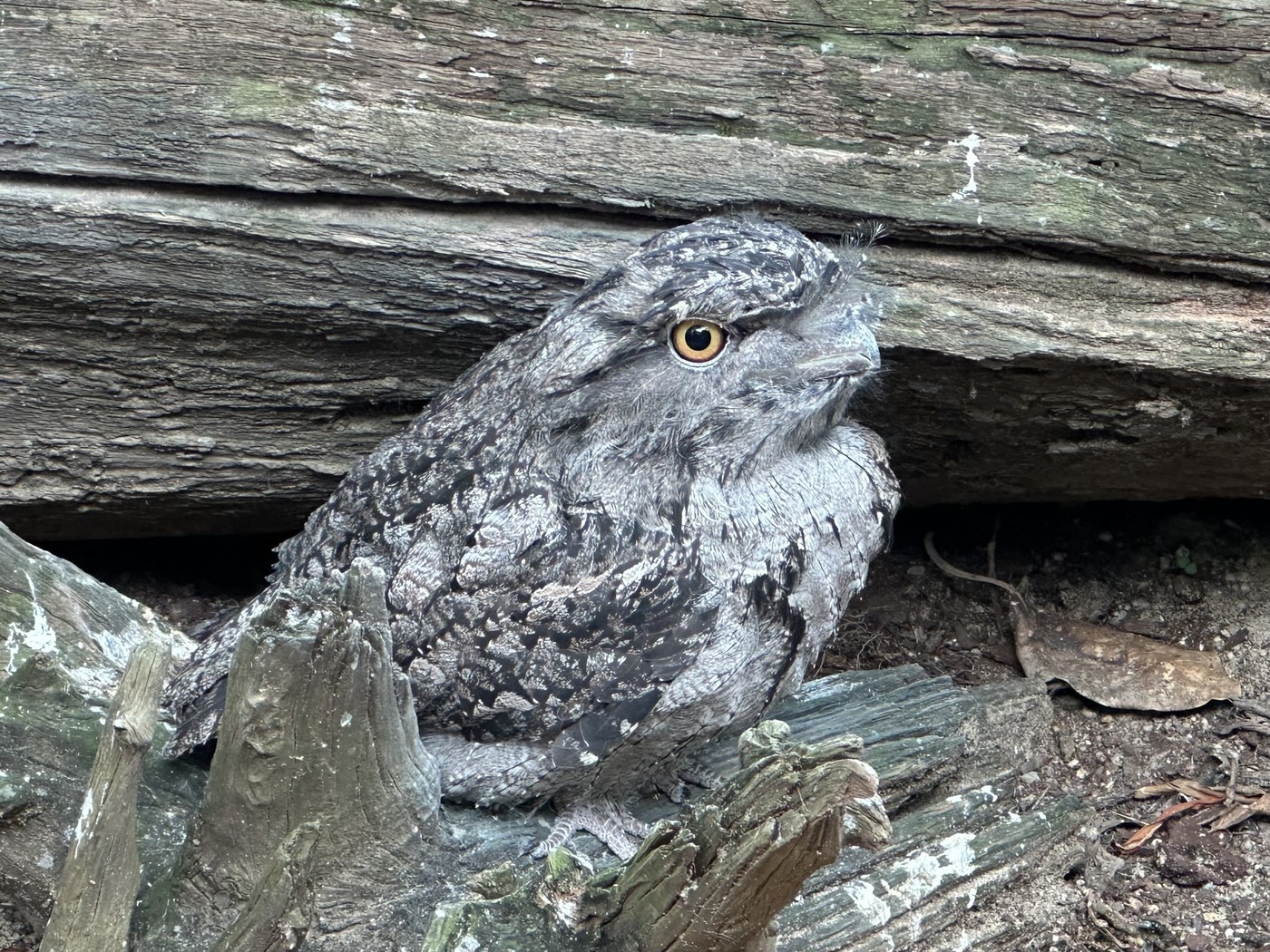
Tawny Frogmouth
Soft, cryptic mottled plumage resembling bark

Vaux's Swift
Stiff, tapered flight feathers; short dense body plumage

Southern Ground Hornbill
Coarse contour feathers, large flight feathers

Southern Cassowary
Coarse, hair-like double-shafted feathers lacking barbules; quill-like reduced wing feathers

Southern Screamer
Dense contour feathers with a short crest at the rear of the crown; bony wing spurs
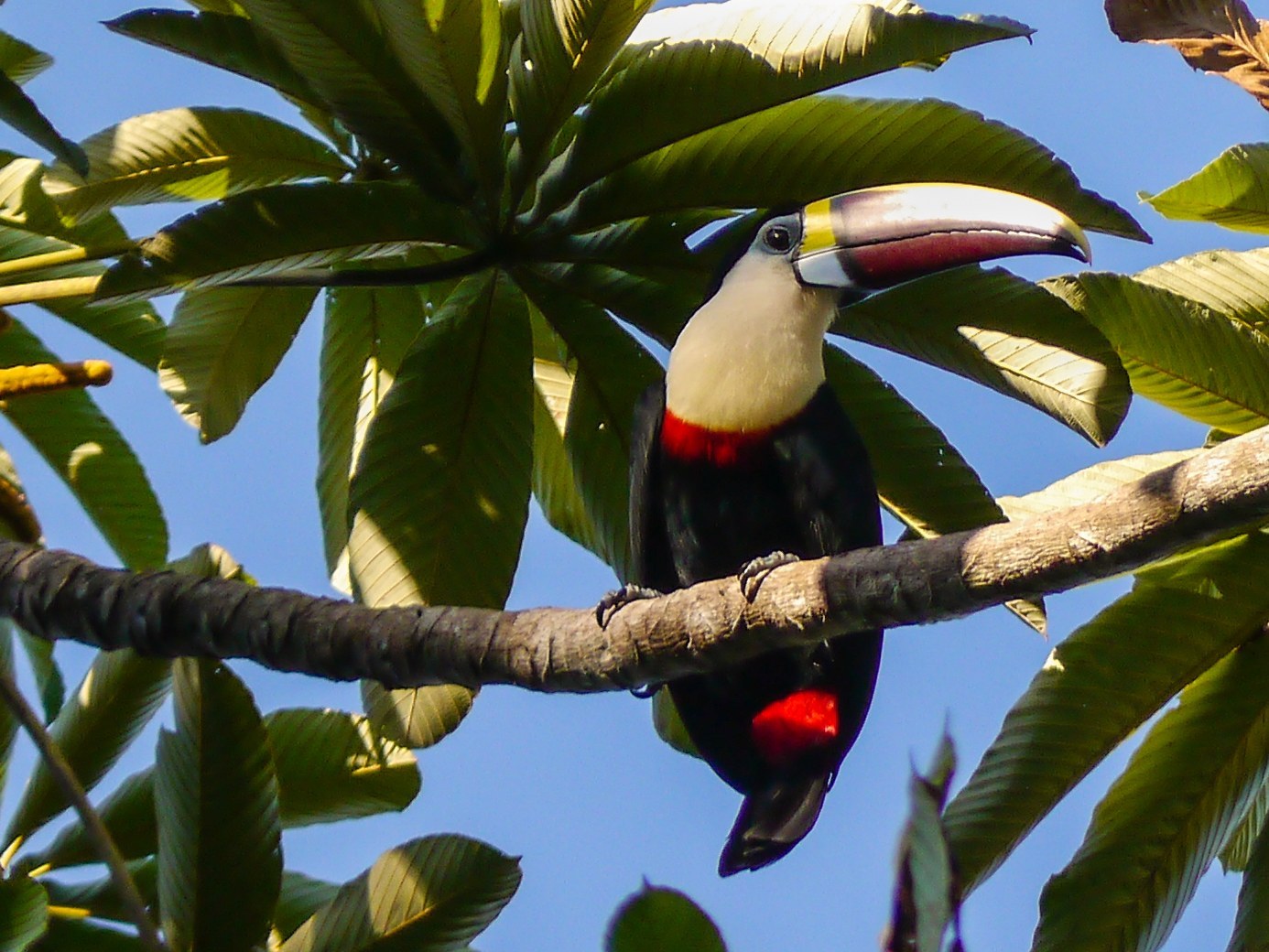
White-throated Toucan
Short rounded contour feathers, short broad wings
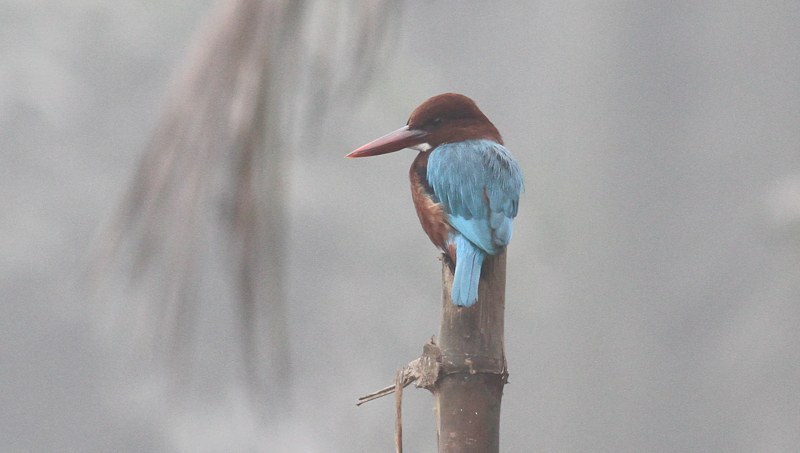
White-throated Kingfisher
Dense contour feathers; broad rounded wings

White-throated Bee-eater
Sleek, aerodynamic contour feathers; elongated central tail streamers