
White-throated Toucan
Ramphastos tucanus
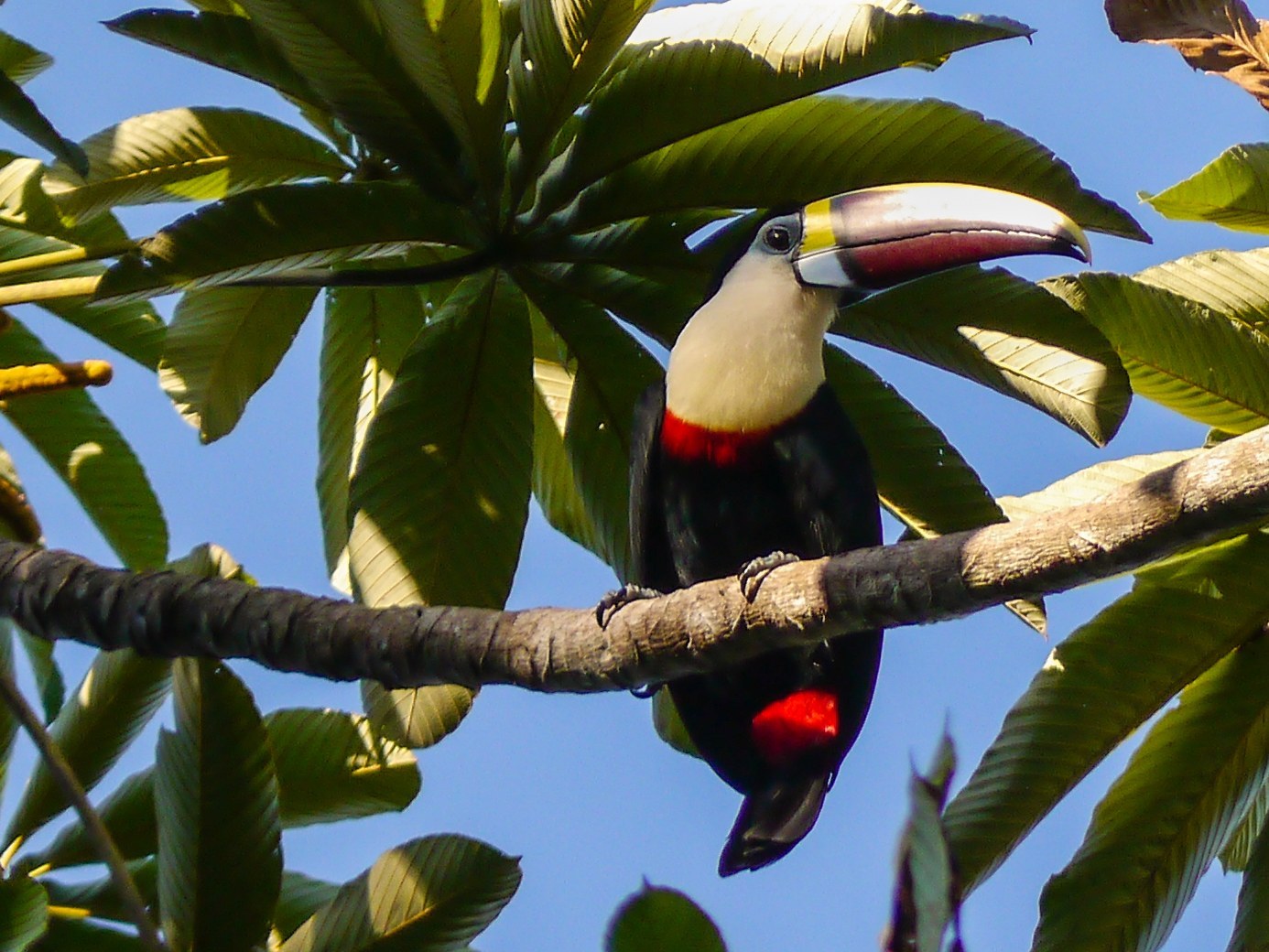
The White-throated Toucan is one of the largest Amazonian toucans, known for its oversized bicolored bill and bold white throat patch set against jet-black plumage. It moves through the rainforest canopy in noisy family groups, hopping between branches rather than flying long distances.
- Feather type
- Short rounded contour feathers, short broad wings
- Colours
- Glossy black with a bright white throat/chest patch and scarlet undertail coverts
- Bird size
- Crow-to-raven-sized, ~55-61 cm
Found a feather like this?
Identify any feather from a photo, free.
Overview
Overview
The White-throated Toucan is a large, unmistakable canopy bird of the Amazon Basin. It is best known for its enormous, brightly patterned bill, which is nearly as long as its body but light enough in structure to pose little cost in flight. Beneath the spectacular bill, the plumage is comparatively simple, built around strong blocks of black and white.
- Large-bodied toucan of Amazonian forest
- Bill is the visual focal point, not the plumage
- Plumage is bold but simply patterned, aiding quick recognition at a distance
Identifying the Feather
Feather Identification
Body contour feathers are short, dense, and glossy black over most of the body, giving a smooth, almost velvety look in good light. The throat and upper breast carry a sharply defined white patch that stands out strongly against the black head and back.
- Undertail coverts: bright scarlet-red, often the most colorful feather feature found on the ground
- Rump: white to pale, contrasting with the black back and tail
- Flight feathers: short, broad, and rounded, built for brief hops between branches rather than sustained flight
- Shaft color: dark, blending into the black vane with little contrast
Compared to other large Ramphastos toucans, the combination of a white throat/chest patch with red (not yellow) undertail coverts helps separate shed body feathers from similar species such as the Channel-billed or Toco Toucan.
Plumage & Molt
Plumage Notes
Adults of both sexes look alike, with glossy black body plumage broken by the white throat patch and red undertail coverts. Juveniles are duller overall, with a less crisp white throat patch and a shorter, less vividly patterned bill that brightens with age.
- Sexes are essentially identical in plumage
- Juvenile plumage is a muted version of the adult pattern
- No distinct seasonal plumage change is apparent; molt is gradual and not tied to a sharp breeding-plumage shift
Habitat & Range
Habitat & Range
This species inhabits the canopy and upper mid-story of humid lowland and terra firme forest across the Amazon Basin, including parts of Brazil, Venezuela, the Guianas, Colombia, Peru, Bolivia, and Ecuador.
- Resident, non-migratory throughout its range
- Prefers tall, continuous rainforest but tolerates forest edge and secondary growth
- Found from lowlands up into foothill forest at moderate elevations
Behavior & Field Notes
Behavior & Field Notes
White-throated Toucans travel in small, vocal family groups, hopping along branches and making short, undulating flights between trees. Their diet is broadly omnivorous, including fruit and small animal prey found in the canopy.
- Voice: a far-carrying, croaking or yelping call often repeated in series
- Nesting: uses natural tree cavities or old woodpecker holes, typically high in a canopy tree
- Field notes: look for the pairing of a white throat patch with red (not yellow) undertail coverts, and listen for loud croaking calls echoing through the canopy
Frequently asked questions
What makes White-throated Toucan feathers identifiable?
The combination of glossy black body plumage, a sharply defined white throat and chest patch, and scarlet-red undertail coverts is distinctive among large Amazonian toucans.
Do males and females look different?
No, the sexes share the same black, white, and red plumage pattern; the bill size is the more reliable way to judge age rather than sex.
Where would you find this species' feathers?
Only within the Amazon Basin canopy, since the species is resident to lowland and terra firme rainforest of northern and western South America.
How can you tell a juvenile feather from an adult one?
Juvenile plumage is a duller, less crisp version of the adult pattern, with a less sharply bordered white throat patch.
White-throated Toucan guides
In-depth guides for identifying and understanding White-throated Toucan.
Other feathers you may enjoy

Common Cuckoo
Flight and body feathers
Common Kingfisher
Body (contour) and wing feathers
White-throated Kingfisher
Dense contour feathers; broad rounded wings

White-throated Bee-eater
Sleek, aerodynamic contour feathers; elongated central tail streamers
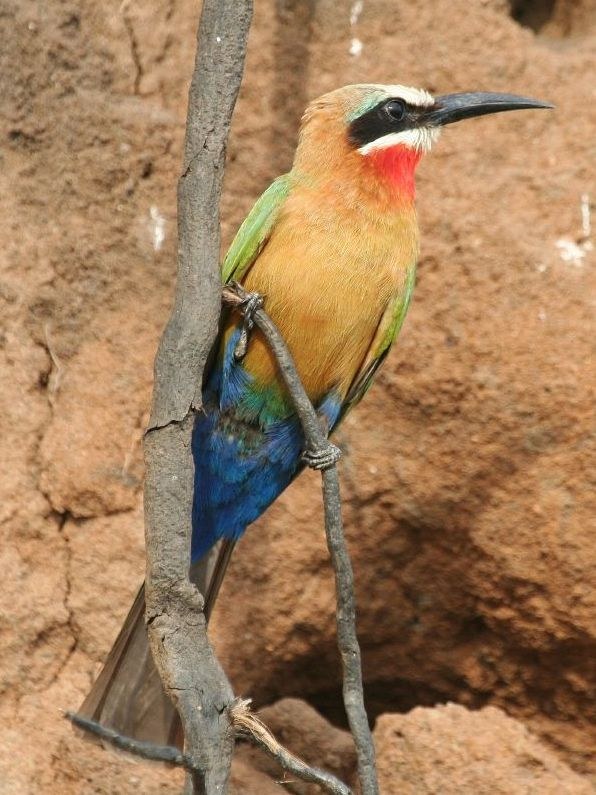
White-fronted Bee-eater
Sleek contour feathers; short tail with slight point

Southern Yellow-billed Hornbill
Slender contour feathers, moderate flight feathers
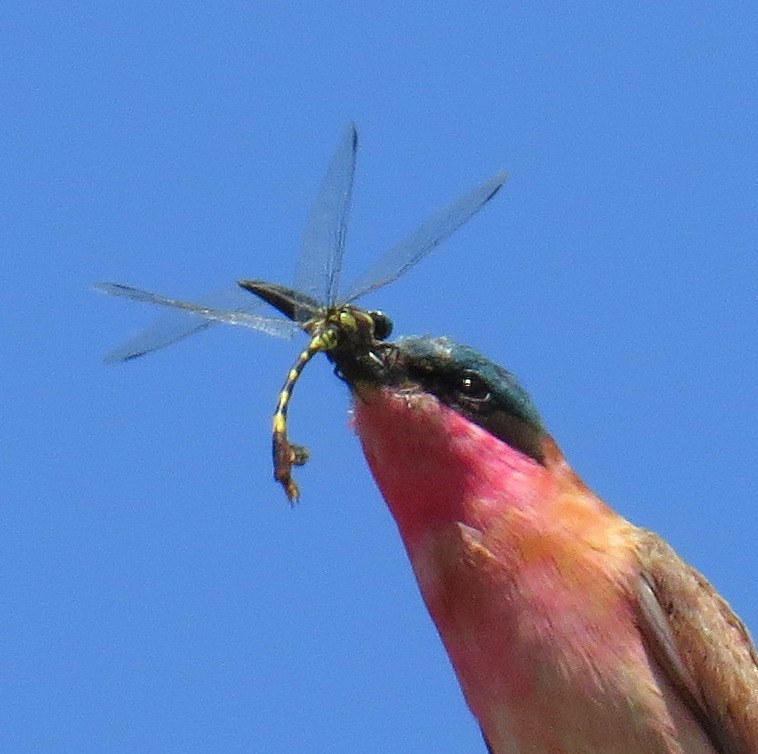
Southern Carmine Bee-eater
Sleek, pointed contour feathers; elongated central tail streamers
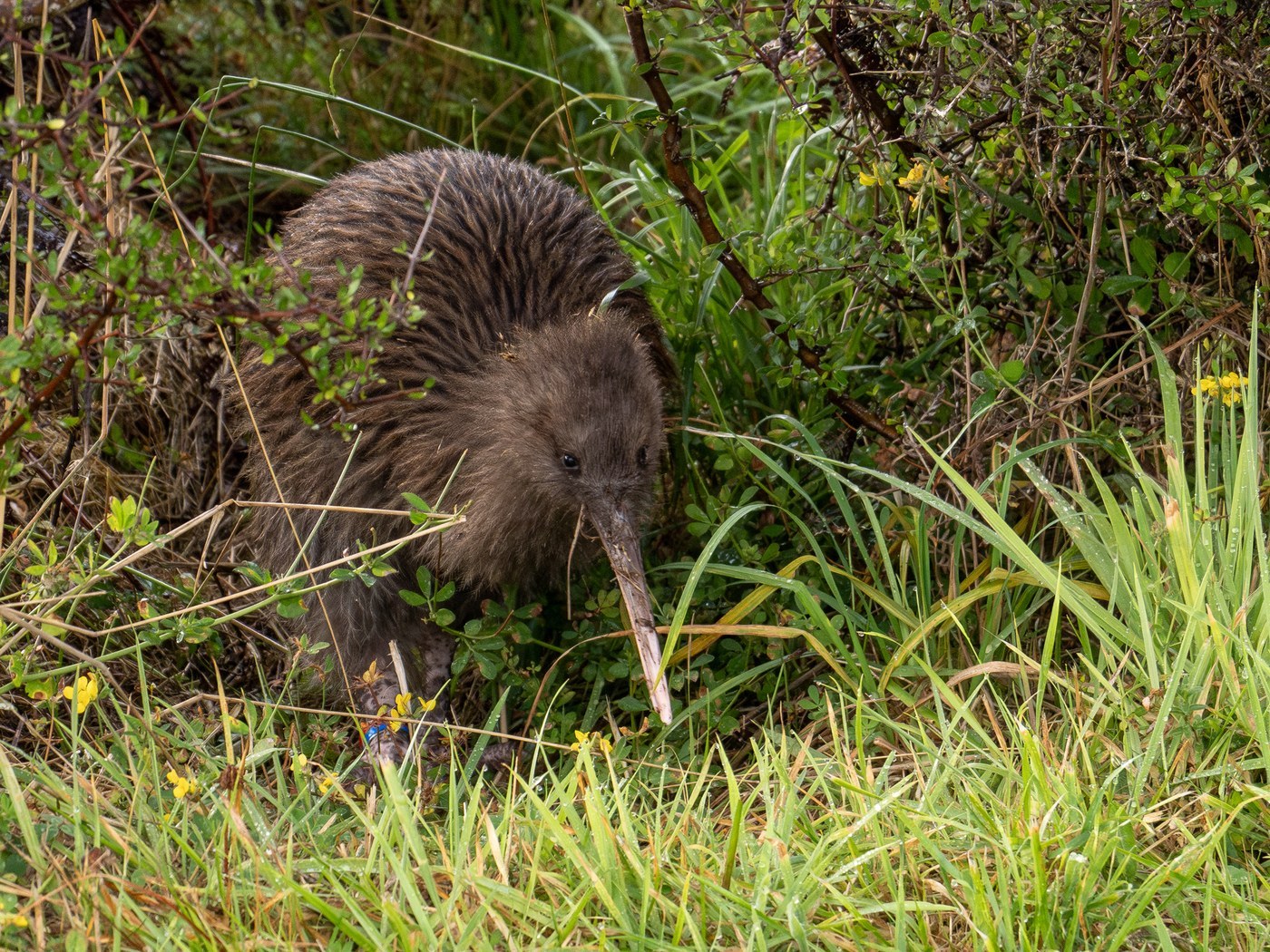
Southern Brown Kiwi
Shaggy, hair-like plumage with loose barbs lacking barbules; flightless, vestigial wings hidden beneath body feathers

Somali Ostrich
Loose, soft plumes lacking interlocking barbules

Wreathed Hornbill
Dense contour feathers, broad flight feathers

Woodland Kingfisher
Firm contour feathers; broad wing feathers

Russet-crowned Motmot
Dense contour feathers with elongated, racket-tipped central tail feathers