
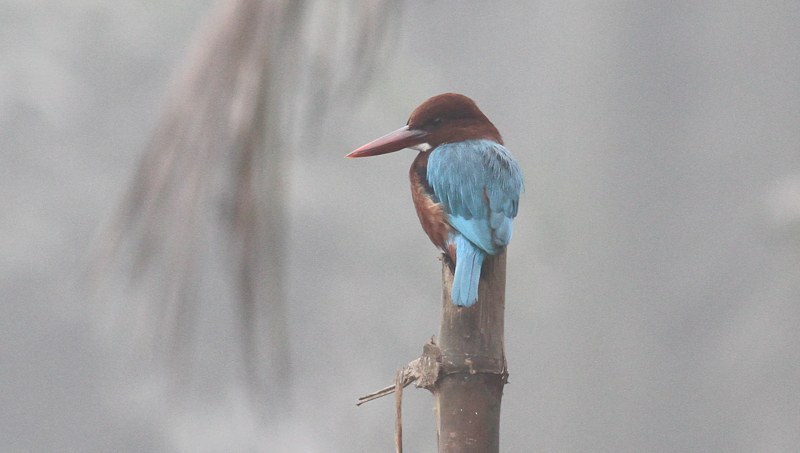
White-throated Kingfisher
Halcyon smyrnensis
A widespread Asian kingfisher combining a rich chestnut body with a brilliant turquoise back, often perched conspicuously on wires and fence posts.
- Feather type
- Dense contour feathers; broad rounded wings
- Colours
- Chestnut-brown head and underparts, turquoise-blue back and wings, white throat patch
- Bird size
- Robin-to-jay-sized, ~28 cm
Found a feather like this?
Identify any feather from a photo, free.
Overview
Overview
The White-throated Kingfisher is one of the most familiar and adaptable kingfishers across South and Southeast Asia, extending into the Middle East. It thrives in a wide range of habitats, including cities and farmland far from water.
- Highly adaptable, often seen in urban and agricultural settings
- Large, heavy red bill
- Frequently perches on wires and poles
Identifying the Feather
Feather Identification
White-throated Kingfisher feathers combine warm brown tones with brilliant blue.
- Head, breast, belly: rich chestnut-brown feathers
- Throat and center breast: contrasting white patch
- Back, wings, tail: bright turquoise-blue feathers, often appearing almost purplish in certain light
- Primaries: blackish with a white flash visible in flight
The combination of chestnut body and turquoise back separates it readily from the more uniformly blue Woodland Kingfisher or the smaller all-blue Malachite Kingfisher.
Plumage & Molt
Plumage Details
Sexes are similar, both showing the chestnut-and-turquoise pattern. Juveniles are duller and browner overall with less defined white throat patch and some dusky mottling on the breast. Adult plumage is retained through a single post-breeding molt with little seasonal variation.
Habitat & Range
Habitat & Range
Ranges from the Middle East across the Indian subcontinent to Southeast Asia and southern China, inhabiting wetlands, rice paddies, farmland, and increasingly urban parks and gardens. Most populations are resident, with some local seasonal movements.
Behavior & Field Notes
Behavior & Field Notes
This kingfisher hunts a broad diet including insects, small reptiles, crabs, and amphibians, often far from open water. It perches prominently on wires, fence posts, or bare branches while scanning for prey, then drops down to seize it. Nesting occurs in burrows dug into earthen banks. Its loud, cackling call is commonly heard in both rural and urban settings, making it one of the most frequently noticed kingfishers in its range.
Frequently asked questions
Why is the White-throated Kingfisher seen in cities?
It is highly adaptable and hunts a varied diet of insects and small animals, allowing it to thrive in urban parks and farmland, not just near water.
What feather pattern distinguishes this species?
A rich chestnut-brown head and underparts contrasted with a bright turquoise back and wings, plus a white throat patch.
How do juveniles differ from adults?
Juveniles are duller and browner with a less distinct white throat and light mottling on the breast.
Is this kingfisher always found near rivers or lakes?
No, it frequently forages well away from water in farmland, grassland, and urban green spaces.
White-throated Kingfisher guides
In-depth guides for identifying and understanding White-throated Kingfisher.
Other feathers you may enjoy

Common Cuckoo
Flight and body feathers
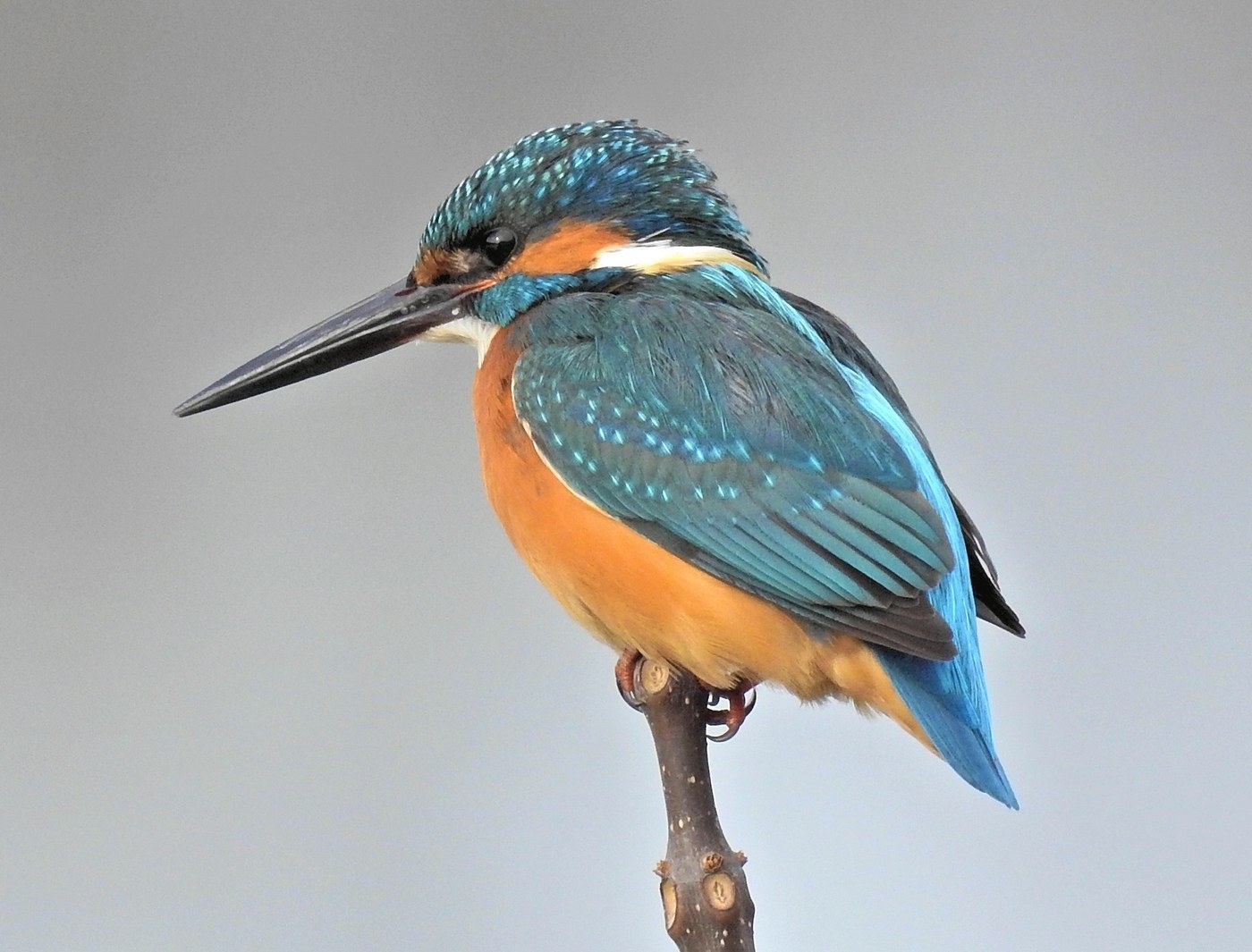
Common Kingfisher
Body (contour) and wing feathers
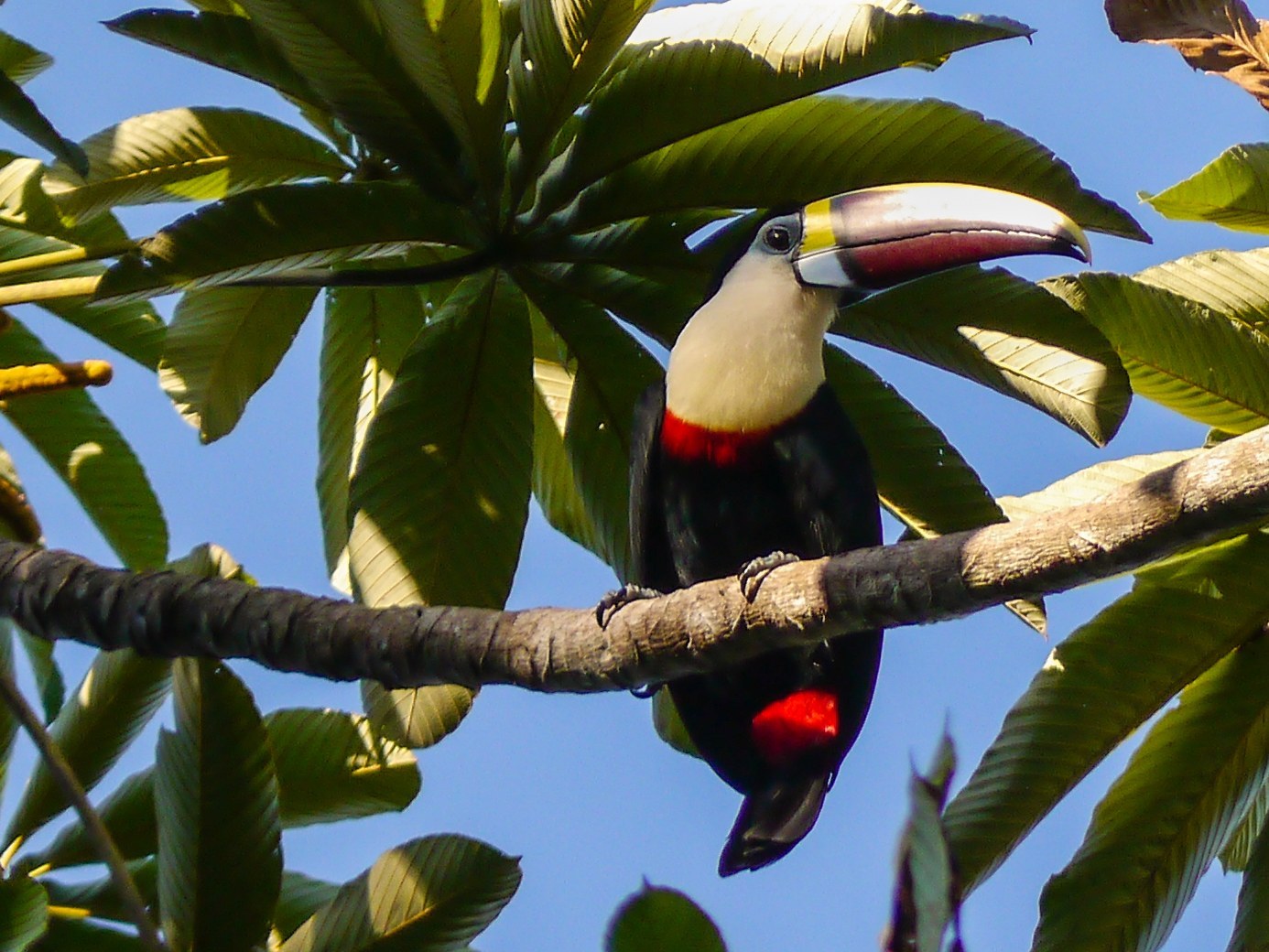
White-throated Toucan
Short rounded contour feathers, short broad wings

White-throated Bee-eater
Sleek, aerodynamic contour feathers; elongated central tail streamers
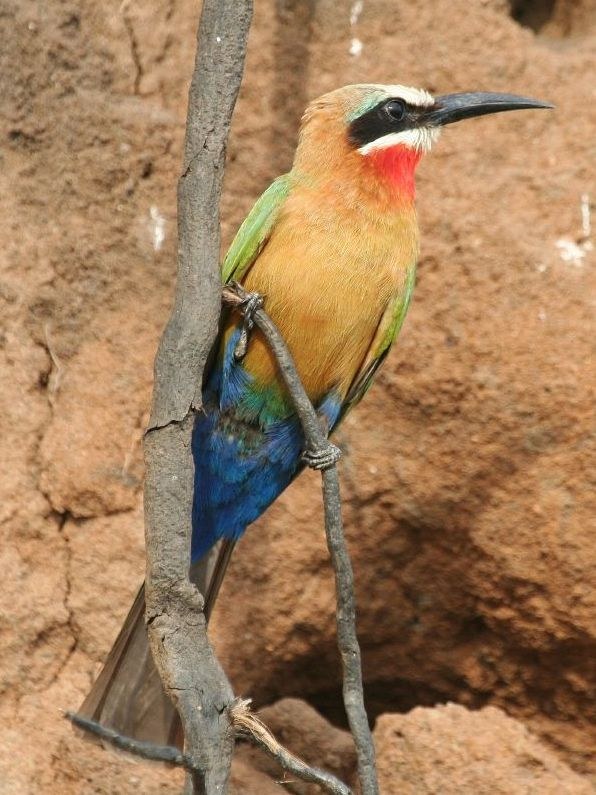
White-fronted Bee-eater
Sleek contour feathers; short tail with slight point

Southern Yellow-billed Hornbill
Slender contour feathers, moderate flight feathers
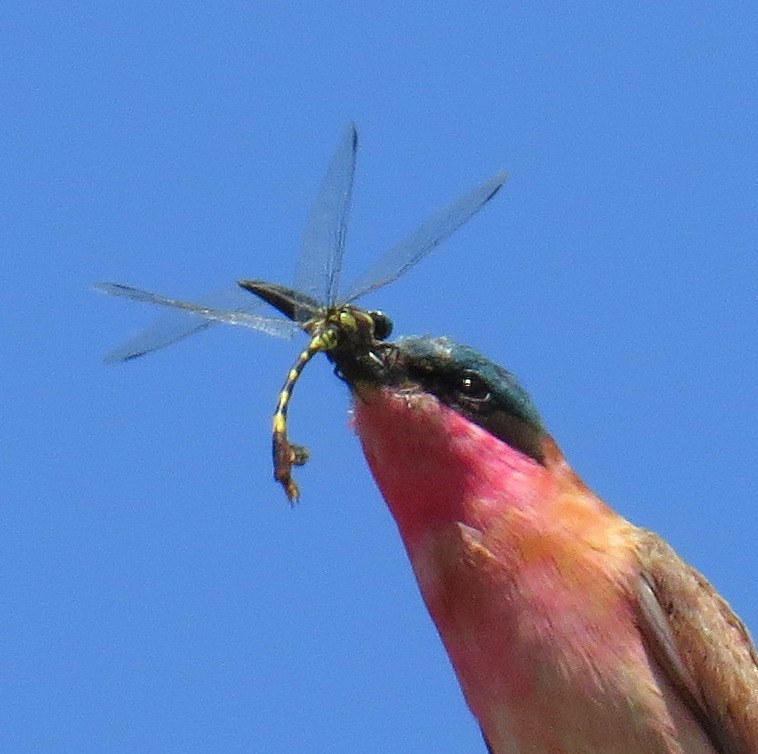
Southern Carmine Bee-eater
Sleek, pointed contour feathers; elongated central tail streamers
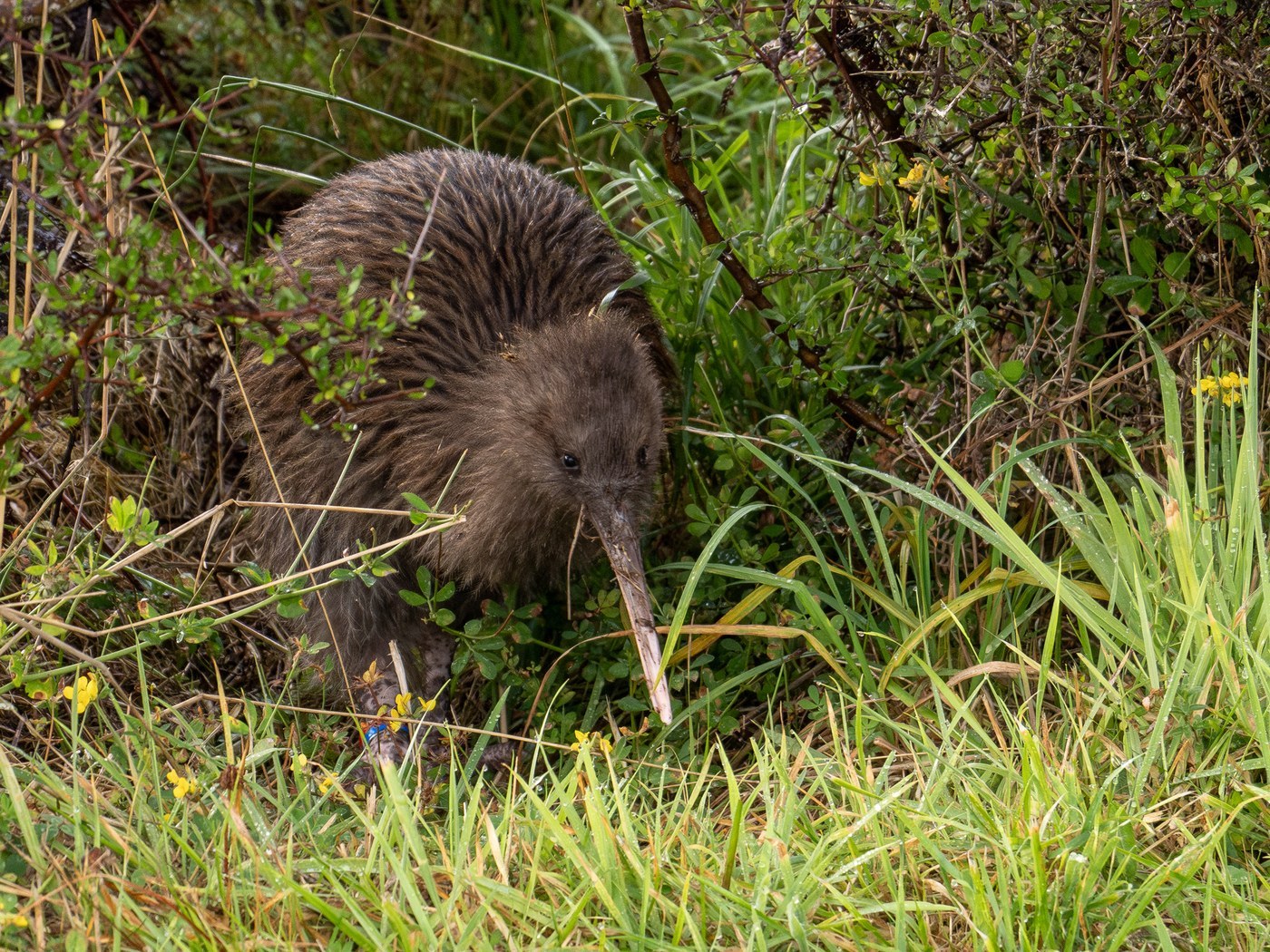
Southern Brown Kiwi
Shaggy, hair-like plumage with loose barbs lacking barbules; flightless, vestigial wings hidden beneath body feathers

Somali Ostrich
Loose, soft plumes lacking interlocking barbules

Wreathed Hornbill
Dense contour feathers, broad flight feathers

Woodland Kingfisher
Firm contour feathers; broad wing feathers

Russet-crowned Motmot
Dense contour feathers with elongated, racket-tipped central tail feathers