
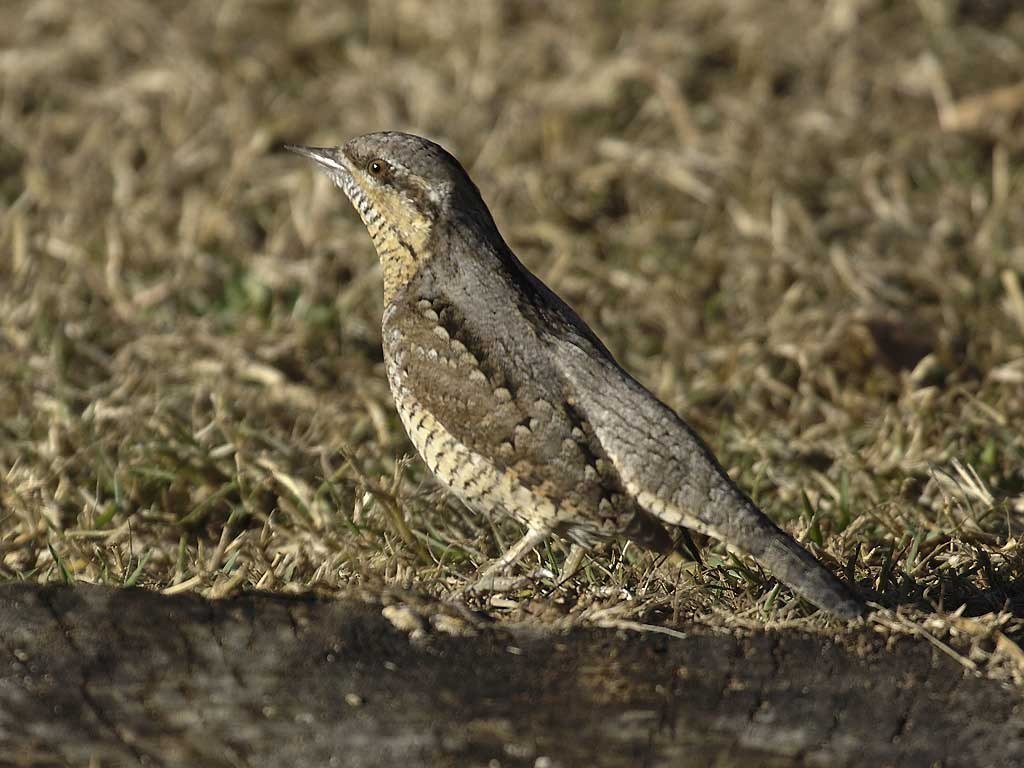
Eurasian Wryneck
Jynx torquilla
A cryptically patterned, bark-camouflaged relative of true woodpeckers that lacks their stiff tail and chisel bill, famous for twisting its neck in a slow, snake-like threat display.
- Feather type
- Soft, cryptically mottled contour feathers and a soft, non-stiffened tail
- Colours
- Bark-like grey-brown with fine vermiculations and darker streaks
- Bird size
- Small, sparrow-sized, ~16-17 cm
Found a feather like this?
Identify any feather from a photo, free.
Overview
The Eurasian Wryneck is an unusual member of the woodpecker family, lacking the stiff, chisel-tipped bill and reinforced tail feathers typical of true woodpeckers, and instead relying on cryptic, bark-like plumage for camouflage. It breeds across much of Europe and temperate Asia and migrates to sub-Saharan Africa or South and Southeast Asia for the winter, unlike most true woodpeckers, which tend to be resident year-round.
Its common name refers to its striking ability to slowly twist and turn its head and neck in a snake-like motion when threatened at the nest.
Identifying the Feather
Key features:
- Overall plumage is grey-brown, finely vermiculated (marked with fine wavy dark lines) to closely resemble tree bark
- A dark stripe runs down the center of the crown and back
- A dark stripe passes through the eye, and flanks and tail show fine barring
- Tail feathers are soft and rounded rather than stiff and pointed, since wrynecks do not brace against tree trunks the way true woodpeckers do
Compared to similar species: the combination of cryptic, mottled bark-like patterning and soft (rather than stiffened, spike-tipped) tail feathers immediately separates a wryneck feather from any true woodpecker, which show much bolder black-white-red patterns and stiff tail feathers.
Plumage & Molt
Unlike many true woodpeckers, the Eurasian Wryneck shows no obvious plumage difference between the sexes, with both showing the same cryptic, mottled coloration. Juveniles closely resemble adults but are slightly duller. A single complete molt occurs annually, typically after the breeding season.
Habitat & Range
This species breeds in open woodland, orchards, hedgerows, and other lightly wooded or scrubby habitat across Europe and temperate Asia. Unlike most true woodpeckers, it is a long-distance migrant, wintering in sub-Saharan Africa or South and Southeast Asia depending on breeding population.
Behavior & Field Notes
Eurasian Wrynecks feed mainly on ants gleaned from the ground and bark surfaces rather than excavating solid wood, and they do not drum in the manner of true woodpeckers. They typically perch across branches rather than clinging vertically to trunks. The species is named for its distinctive habit of slowly twisting and turning its head and neck in a snake-like motion as a threat display when disturbed at the nest. It nests in existing cavities rather than excavating its own, and its call is a repeated, nasal note.
Frequently asked questions
How can I tell a wryneck feather from a true woodpecker feather?
Wryneck feathers are cryptically mottled grey-brown resembling bark, and the tail feathers are soft and rounded rather than stiff and pointed, unlike the bold black-white-red patterns and stiffened tail feathers of true woodpeckers.
Why is this species called a 'wryneck'?
It is named for its distinctive defensive display of slowly twisting and turning its head and neck in a snake-like motion when threatened, particularly at the nest.
Does this species migrate?
Yes, unlike most true woodpeckers, the Eurasian Wryneck is a long-distance migrant, breeding in Europe and temperate Asia and wintering in sub-Saharan Africa or South and Southeast Asia.
Does this species excavate its own nest cavity?
No, it uses existing cavities rather than excavating new ones, another difference from most true woodpeckers.
Eurasian Wryneck guides
In-depth guides for identifying and understanding Eurasian Wryneck.
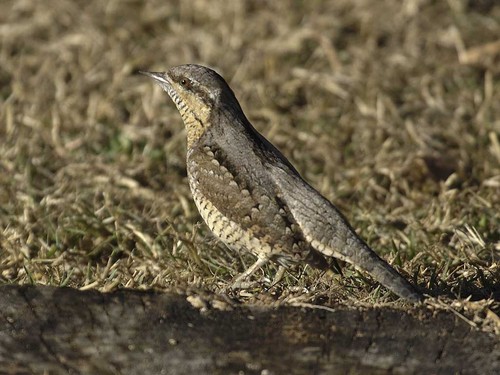
Eurasian Wryneck identified by the community
Real feathers identified with Feather Identifier.


Other feathers you may enjoy

Ivory-billed Woodpecker
Very large flight feathers with a solid white trailing patch

Great Slaty Woodpecker
Massive, uniformly colored contour feathers

Yellow-tufted Woodpecker
Black body feathers with bright yellow forehead tufts

Magellanic Woodpecker
Very large, glossy contour feathers with a recurved crest

Yellow-bellied Sapsucker
Black-and-white patterned back and facial-stripe feathers
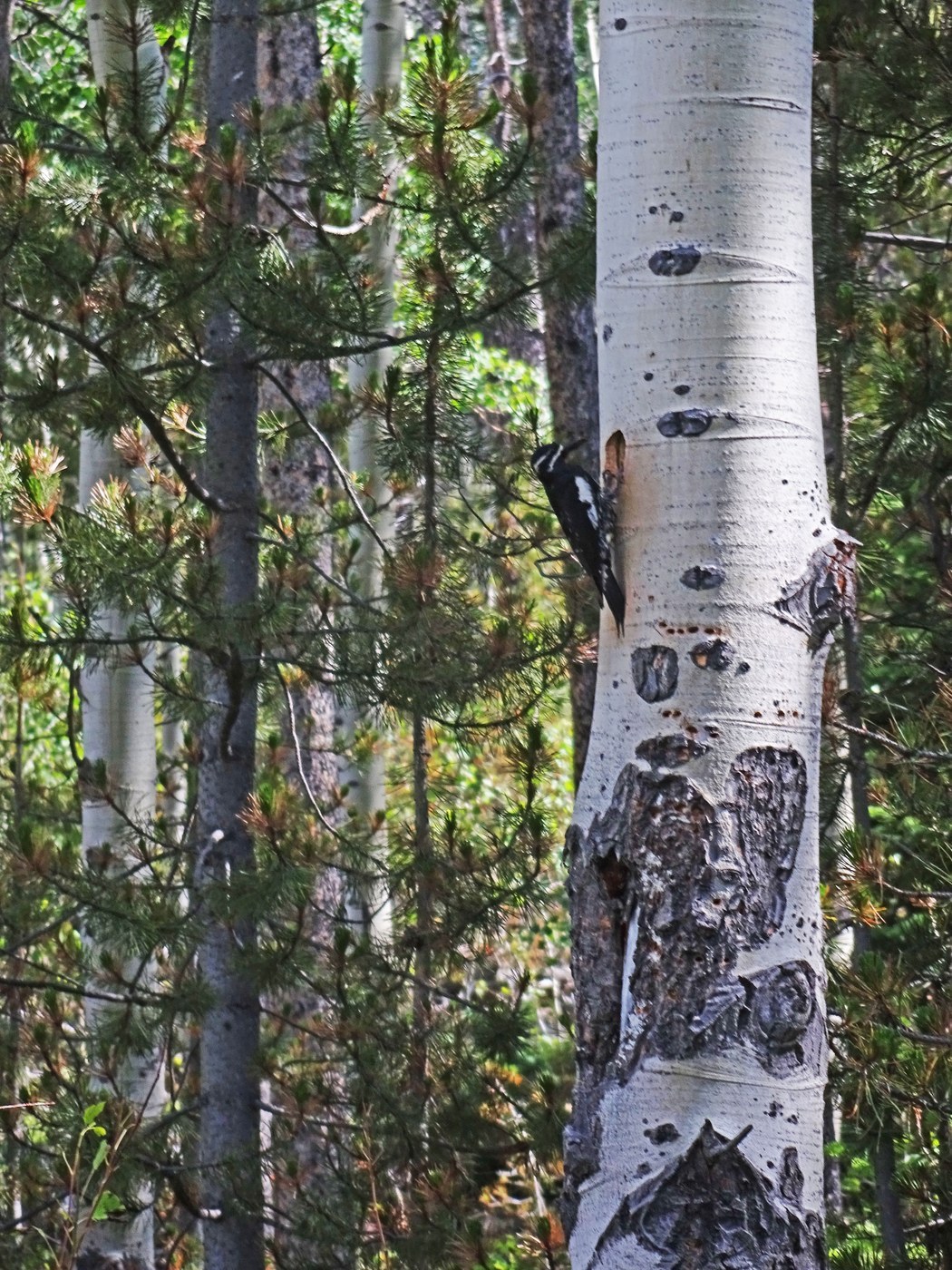
Williamson's Sapsucker
Strongly sexually dimorphic body feathers, glossy black or finely barred brown

Yellow-crowned Woodpecker
Contour and flight feathers

White Woodpecker
Mostly white body feathers with contrasting black wings and back

Red-throated Wryneck
Soft, cryptically mottled contour feathers

White-bellied Woodpecker
Large, glossy black contour and flight feathers

White-backed Woodpecker
Barred back feathers rather than a solid white patch
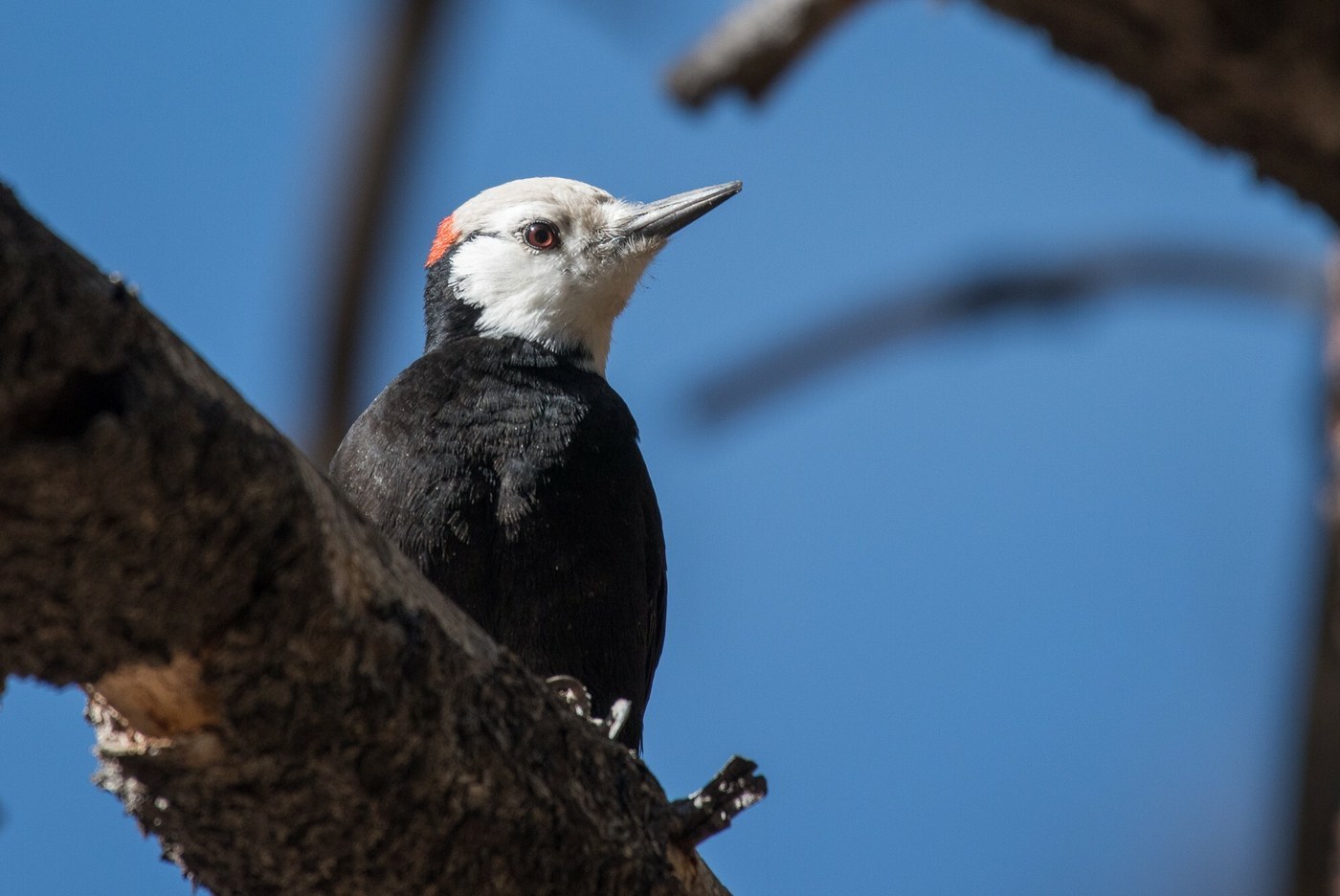
White-headed Woodpecker
Solid black body feathers with an entirely white head