
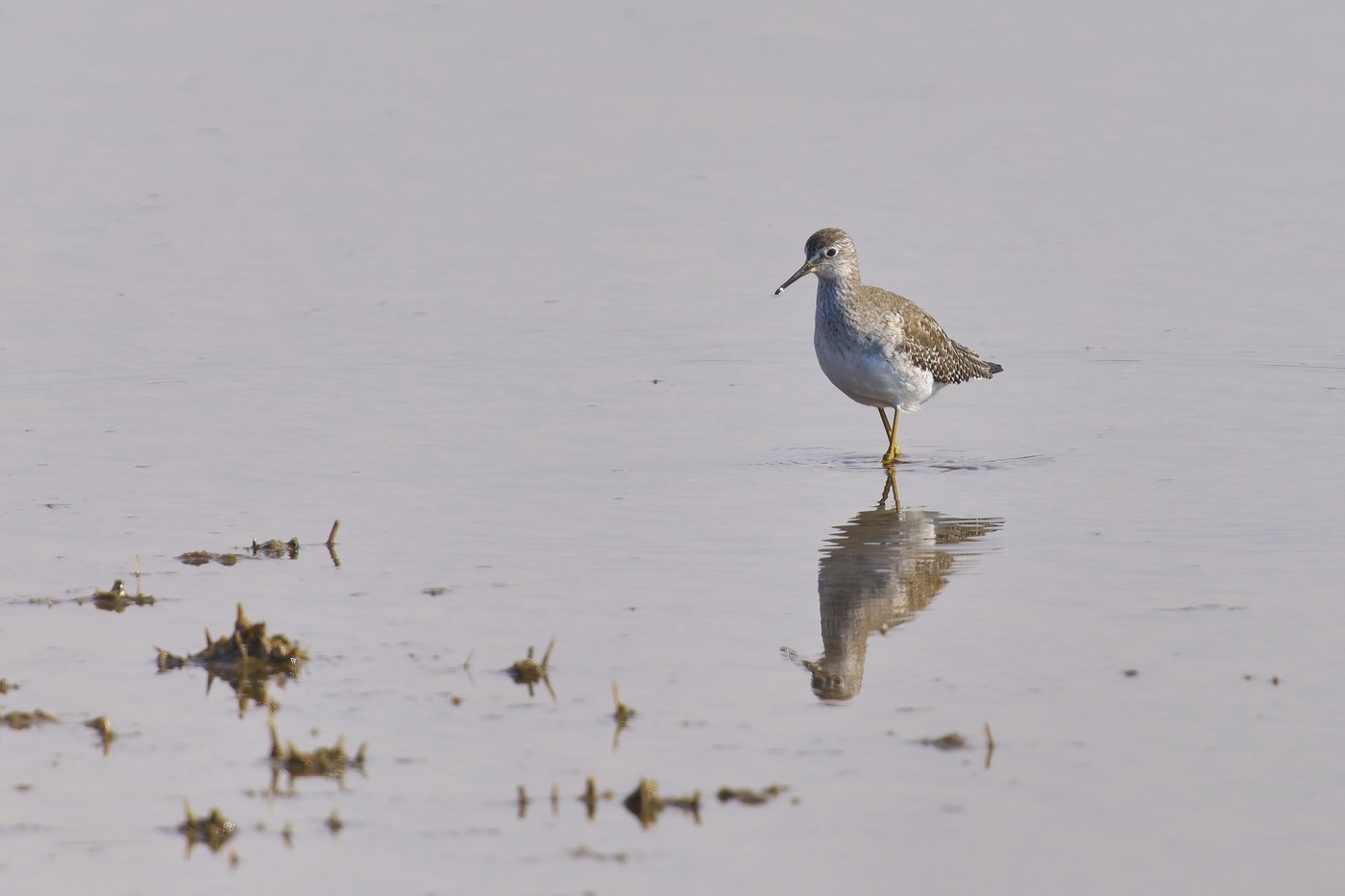
Lesser Yellowlegs
Tringa flavipes
A slender, dainty shorebird with bright yellow legs and a short, straight, needle-thin bill, smaller and less wary than its close relative.
- Feather type
- Contour and flight feathers
- Colours
- Gray-brown with white spotting
- Bird size
- Medium sandpiper, ~23-25 cm
Found a feather like this?
Identify any feather from a photo, free.
Overview
Overview
The Lesser Yellowlegs is a slender wader closely resembling the larger Greater Yellowlegs, sharing bright yellow legs and gray-brown, white-spotted upperparts. Its bill is notably shorter, thinner, and perfectly straight, giving it a daintier profile overall. It tends to be less wary than its larger relative and often forms sizable feeding flocks.
Both yellowlegs species are common sights on shallow wetlands during migration, requiring careful attention to bill proportions for confident separation.
Identifying the Feather
Feather Identification
- Upperparts: Gray-brown feathers finely spotted and edged with white, similar in pattern to the Greater Yellowlegs but on a smaller frame.
- Underparts (breeding): Light streaking on the neck and upper breast, fading to white on the belly, generally less heavily marked than the Greater Yellowlegs.
- Bill: Short, thin, and perfectly straight, roughly equal to the length of the head, lacking the slight upturn and heaviness of the Greater Yellowlegs' bill.
- Legs: Bright yellow and slender, proportionally as long as in the Greater Yellowlegs relative to overall smaller body size.
- Compared to similar species: Best distinguished from the Greater Yellowlegs by its shorter, straighter, thinner bill and generally daintier build and call.
Plumage & Molt
Plumage Notes
Breeding adults show light dark streaking on the neck and breast with spotted gray-brown upperparts; non-breeding plumage is plainer pale gray above and white below. Sexes look similar. Juveniles resemble non-breeding adults with slightly buffier fringes on the wing coverts through the fall migration period.
Habitat & Range
Habitat & Range
Lesser Yellowlegs breed in open boreal woodland clearings and muskeg across Alaska and Canada, migrating through the rest of North America to winter along coasts and wetlands from the southern United States through South America. It favors shallow wetlands, flooded fields, and mudflats, often in larger, more sociable flocks than the Greater Yellowlegs.
Behavior & Field Notes
Behavior & Field Notes
This species forages by walking steadily through shallow water, picking small invertebrates from the surface or just below it, less prone to the vigorous bill-sweeping seen in Greater Yellowlegs. Its call is a softer, lower one- or two-note "tew" compared to the louder three-note call of its larger relative. Nests are simple ground scrapes in open boreal habitat, often placed near a low shrub or hummock.
Frequently asked questions
What do Lesser Yellowlegs feathers look like?
Gray-brown upperparts spotted with white, paler streaked underparts, and bright yellow legs, similar to but smaller and daintier than the Greater Yellowlegs.
How can I tell a Lesser Yellowlegs feather or bird from a Greater Yellowlegs?
The Lesser Yellowlegs has a notably shorter, thinner, perfectly straight bill compared to the longer, slightly upturned, heavier bill of the Greater Yellowlegs.
Do Lesser Yellowlegs form flocks?
Yes, they are often more sociable than Greater Yellowlegs, forming larger feeding flocks on migration and winter grounds.
Where would I find a Lesser Yellowlegs feather?
Around shallow wetlands, flooded fields, and mudflats across much of North America, especially during migration.
Lesser Yellowlegs guides
In-depth guides for identifying and understanding Lesser Yellowlegs.
Other feathers you may enjoy
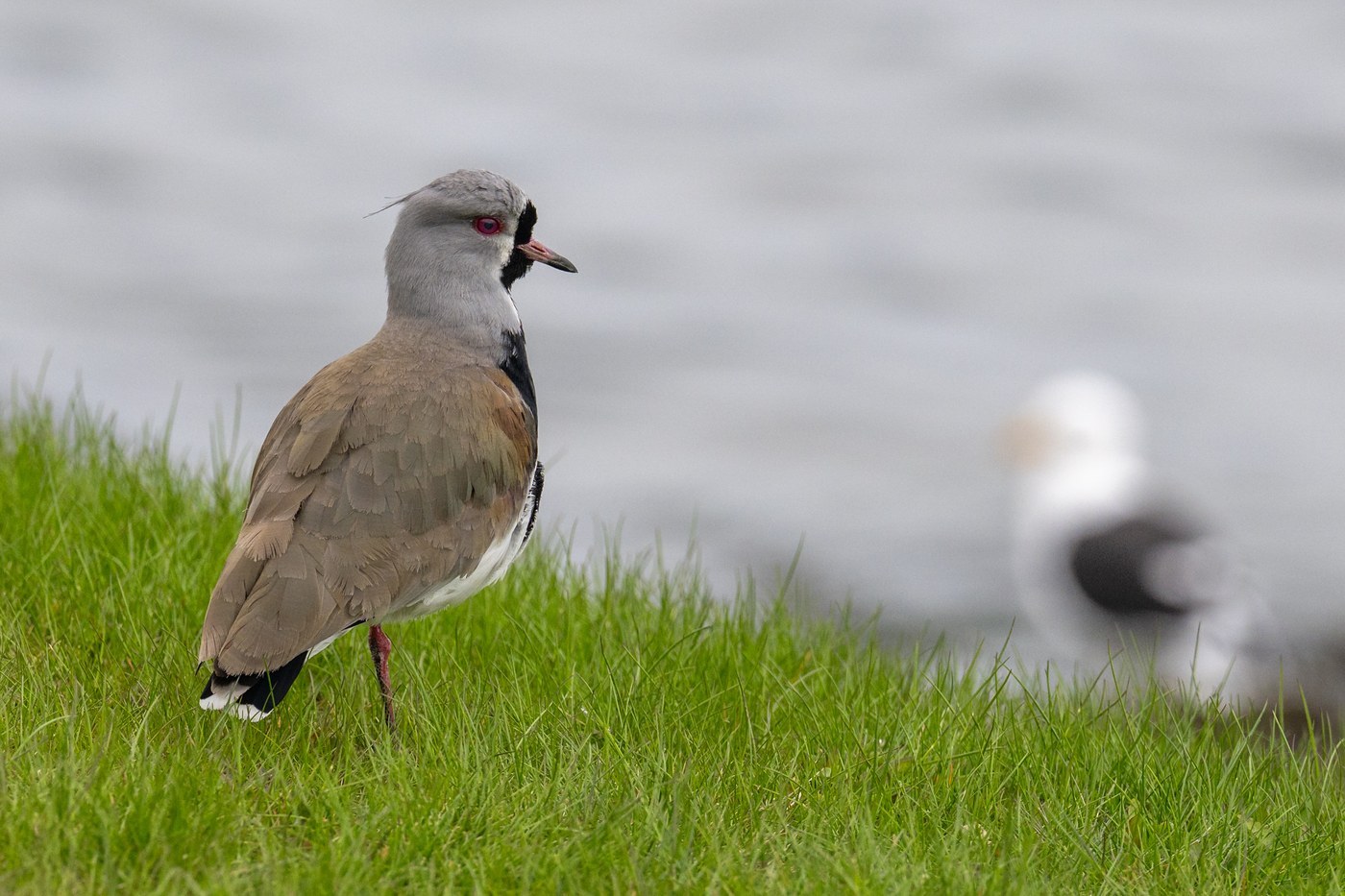
Southern Lapwing
Body, flight, and tail feathers

Jack Snipe
Body and flight feathers

Far Eastern Curlew
Body, flight, and tail feathers

Terek Sandpiper
Body and flight feathers

Wilson's Phalarope
Body and flight feathers
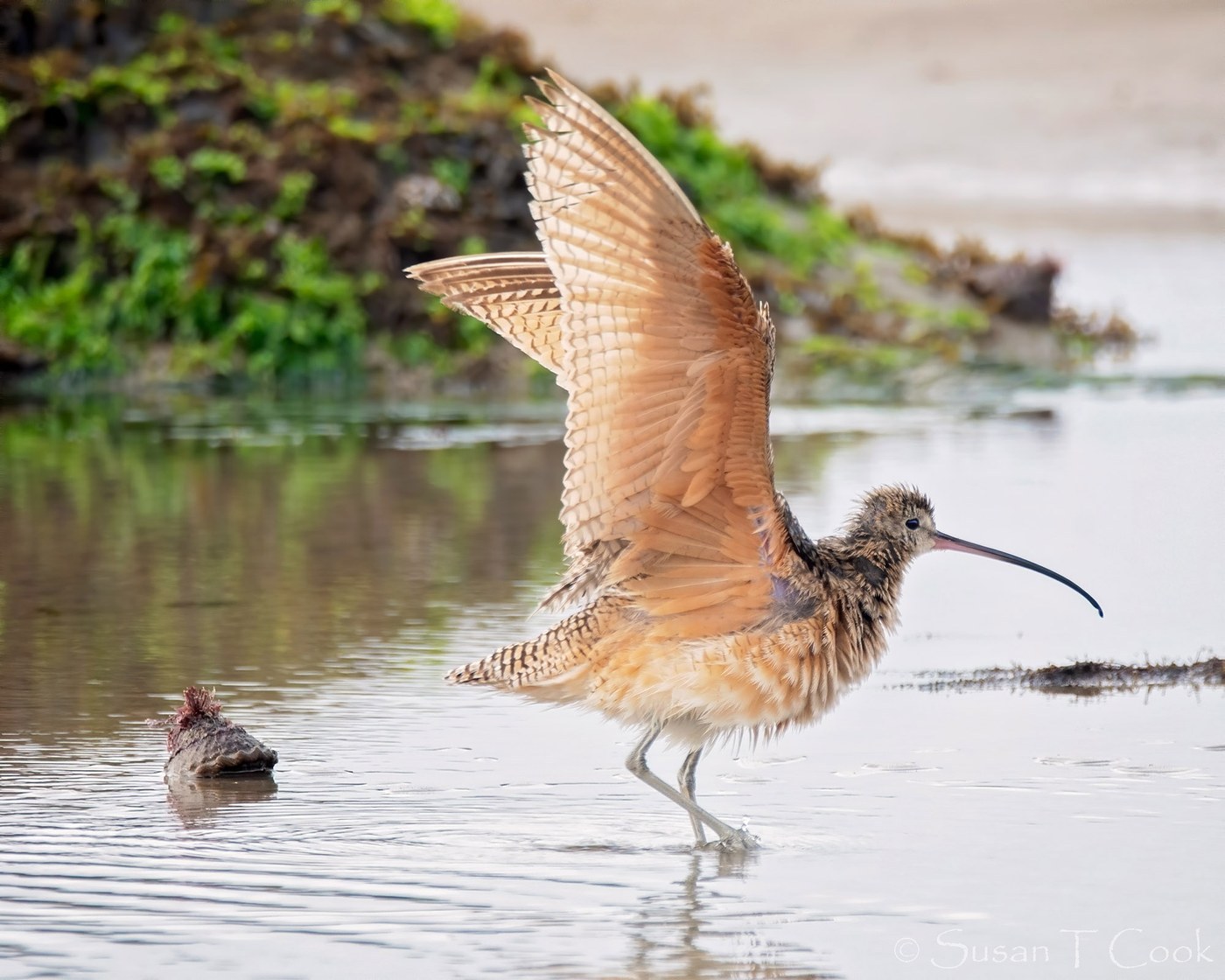
Long-billed Curlew
Body, flight, and tail feathers

Upland Sandpiper
Body, flight, and tail feathers

Red Phalarope
Body and flight feathers

Eurasian Dotterel
Body feathers
Masked Lapwing
Body, flight, and tail feathers
Eurasian Curlew
Body, flight, and tail feathers
Solitary Sandpiper
Contour and flight feathers