
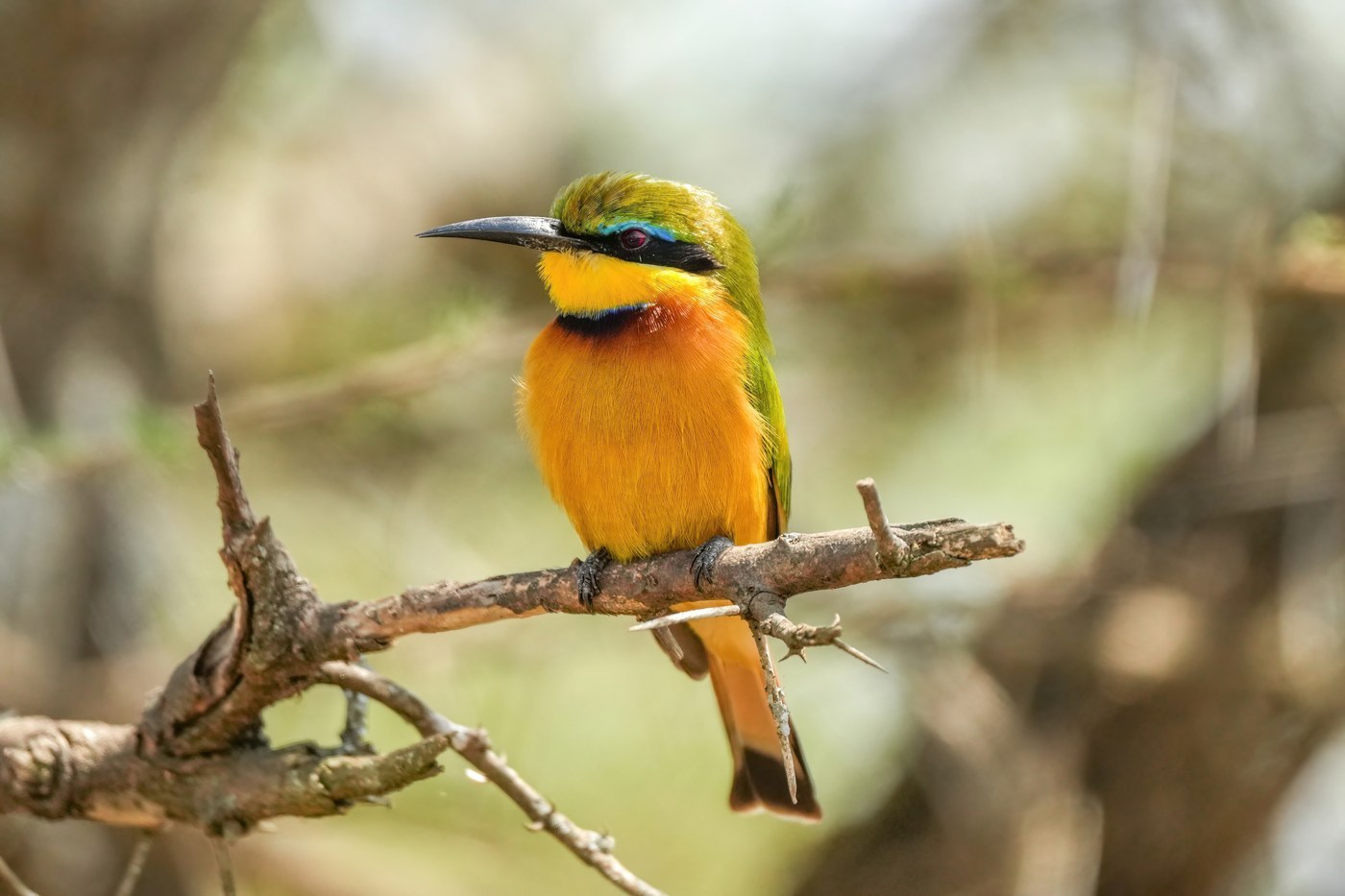
Little Bee-eater
Merops pusillus
A small, brightly colored bee-eater of African grasslands, lacking the long tail streamers of its larger relatives.
- Feather type
- Small, sleek contour feathers; short square tail
- Colours
- Green upperparts, golden-yellow throat, black breast band, chestnut wash on breast
- Bird size
- Small, sparrow-sized, ~15-17 cm
Found a feather like this?
Identify any feather from a photo, free.
Overview
Overview
The Little Bee-eater is one of the smallest bee-eaters in Africa, widely distributed across savanna and grassland habitats south of the Sahara. Unlike many of its relatives, it does not undertake long-distance migrations.
- One of the smallest bee-eater species
- Widespread and common across much of sub-Saharan Africa
- Lacks the elongated tail streamers seen in larger bee-eaters
Identifying the Feather
Feather Identification
Little Bee-eater feathers show a compact green-and-gold pattern.
- Upperparts: bright grass-green feathers, unmarked
- Throat: golden-yellow, bordered below by a narrow black breast band
- Breast: warm chestnut-orange wash below the black band
- Tail: short, square-tipped, green with a black terminal band
Its small size and short tail (without streamers) readily separate it from larger bee-eaters such as the European or Carmine Bee-eaters.
Plumage & Molt
Plumage Details
Sexes look alike, both showing green upperparts, a yellow throat, black breast band, and chestnut breast wash. Juveniles are duller, with a less defined breast band and paler throat. A single annual molt maintains plumage with minimal seasonal change.
Habitat & Range
Habitat & Range
Widely distributed across sub-Saharan Africa in savanna, grassland, open woodland, and cultivated land near water. It is largely resident, though some local movements occur in response to seasonal rainfall and insect abundance.
Behavior & Field Notes
Behavior & Field Notes
Little Bee-eaters hunt flying insects, including bees and wasps, from low perches such as shrubs or fence wires, sallying out and returning to the same perch. They nest in burrows dug into flat or sloping ground rather than steep banks. Their call is a soft, high-pitched "seep" note. Small size, short square tail, and the black breast band with chestnut wash are the key identification features.
Frequently asked questions
How does the Little Bee-eater differ from larger bee-eater species?
It is notably smaller and lacks the elongated central tail streamers found in species like the European Bee-eater.
Does the Little Bee-eater migrate?
No, it is largely resident across its sub-Saharan African range, though local movements can occur with seasonal conditions.
What feather pattern helps identify this species?
A black breast band separating a golden-yellow throat from a chestnut-washed lower breast, set against green upperparts.
Where does it typically nest?
In burrows dug into flat or gently sloping ground, rather than steep riverbanks favored by some relatives.
Little Bee-eater guides
In-depth guides for identifying and understanding Little Bee-eater.
Other feathers you may enjoy

Common Cuckoo
Flight and body feathers
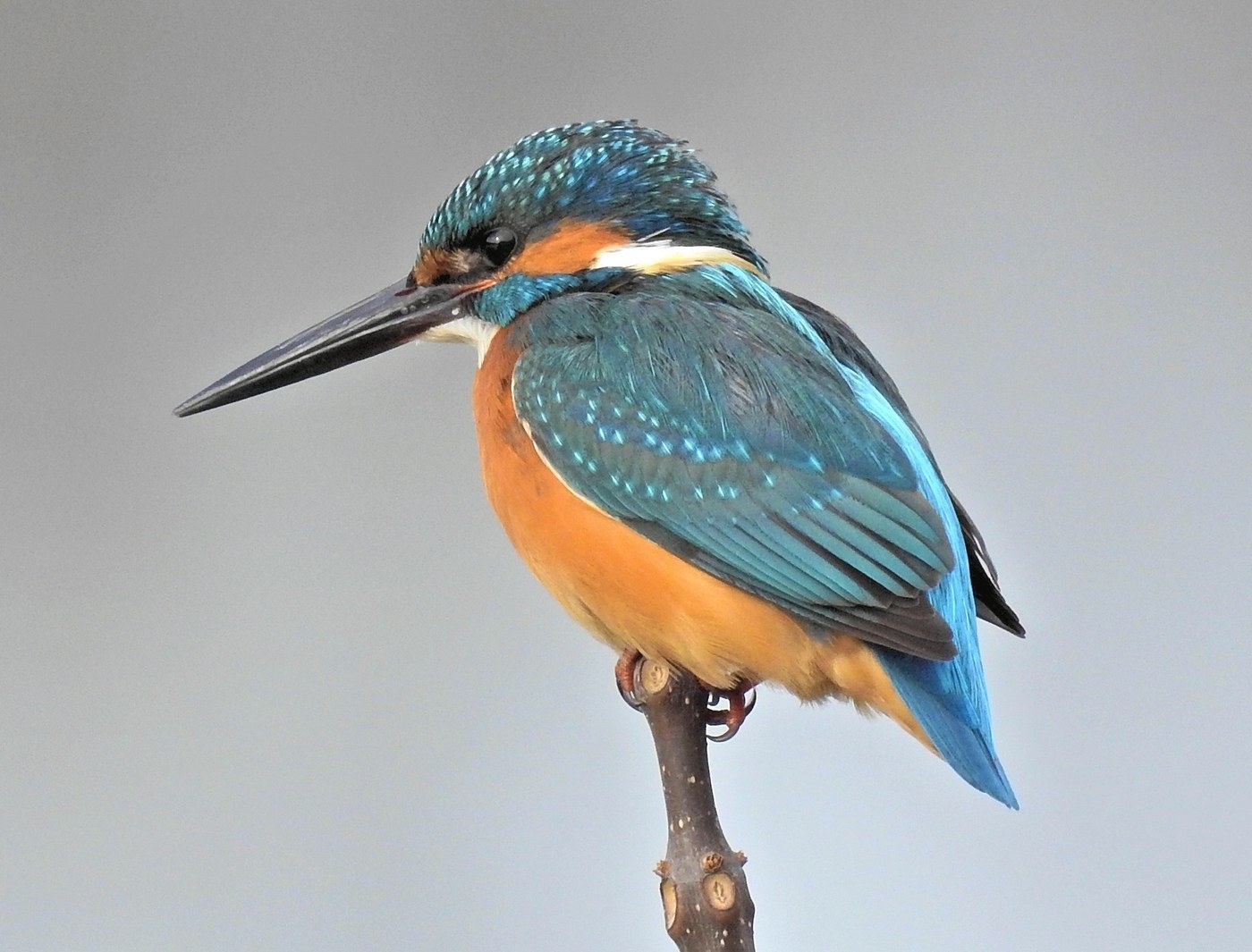
Common Kingfisher
Body (contour) and wing feathers
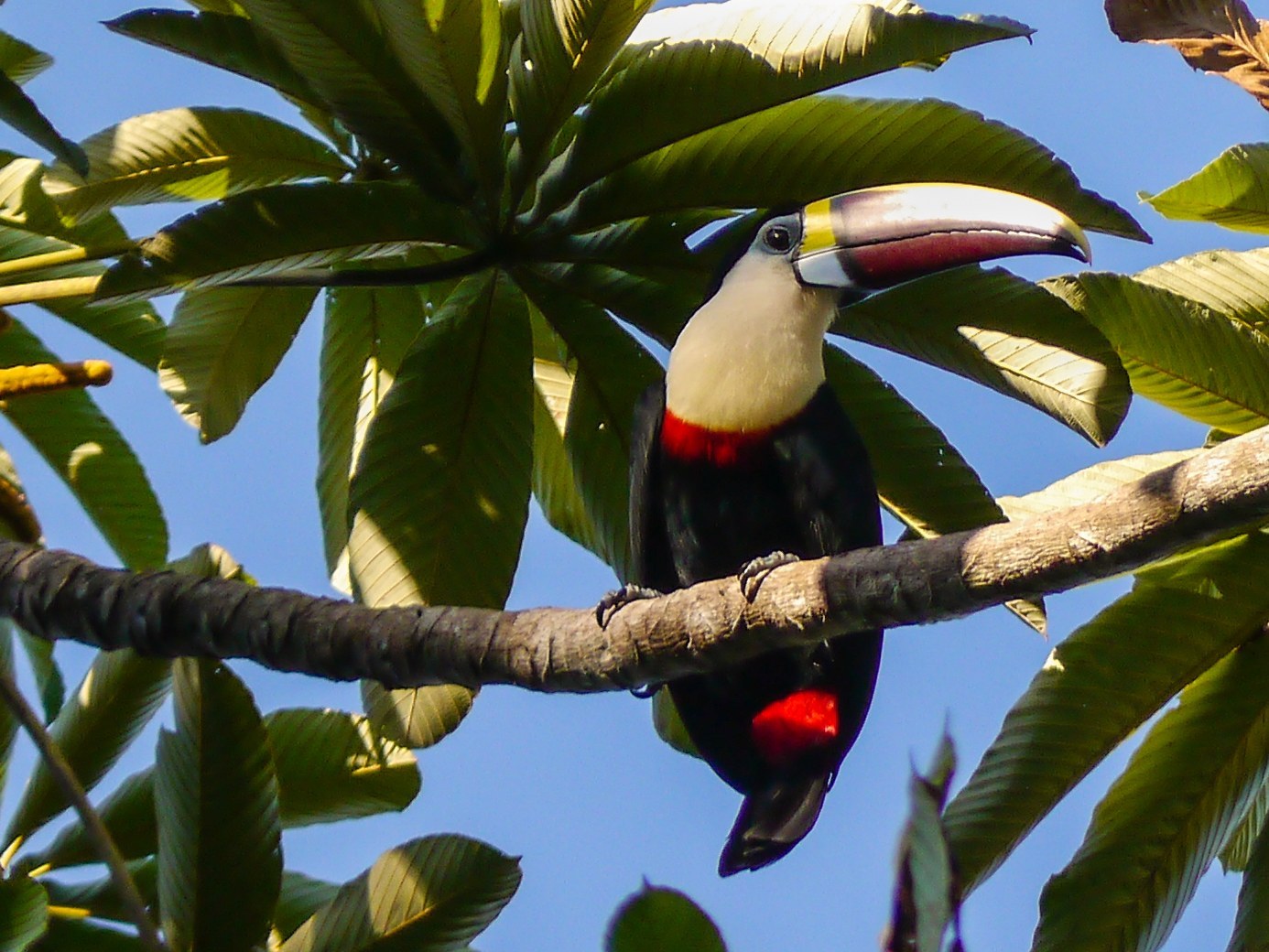
White-throated Toucan
Short rounded contour feathers, short broad wings
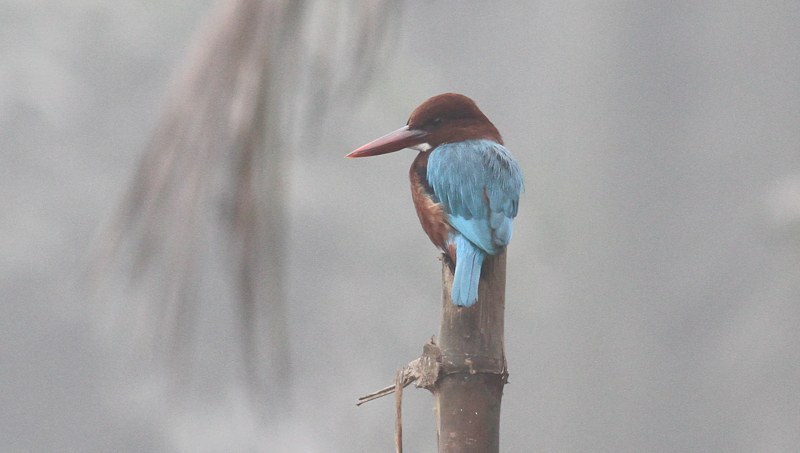
White-throated Kingfisher
Dense contour feathers; broad rounded wings

White-throated Bee-eater
Sleek, aerodynamic contour feathers; elongated central tail streamers
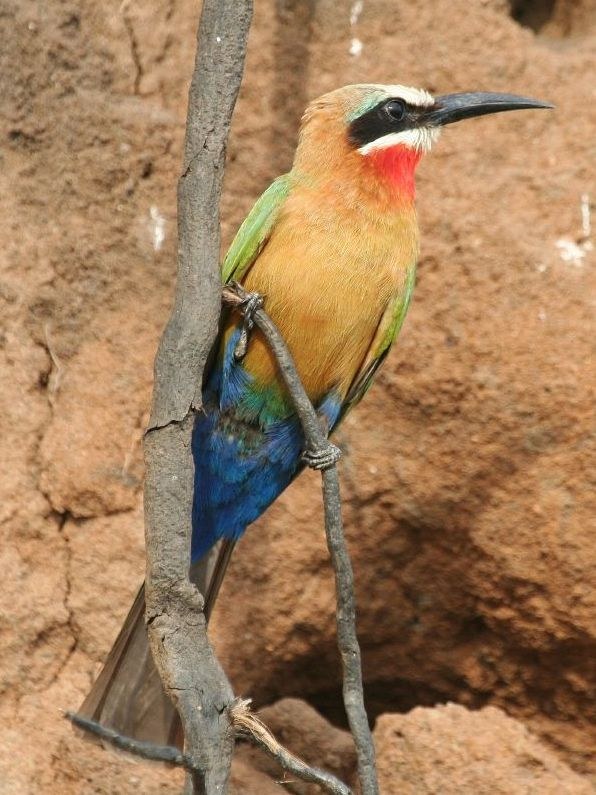
White-fronted Bee-eater
Sleek contour feathers; short tail with slight point

Southern Yellow-billed Hornbill
Slender contour feathers, moderate flight feathers
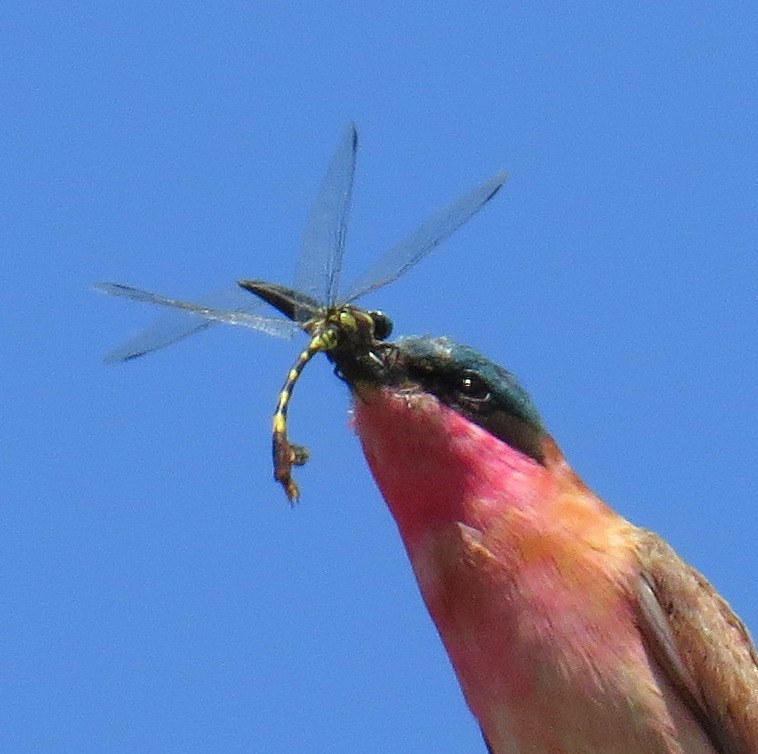
Southern Carmine Bee-eater
Sleek, pointed contour feathers; elongated central tail streamers
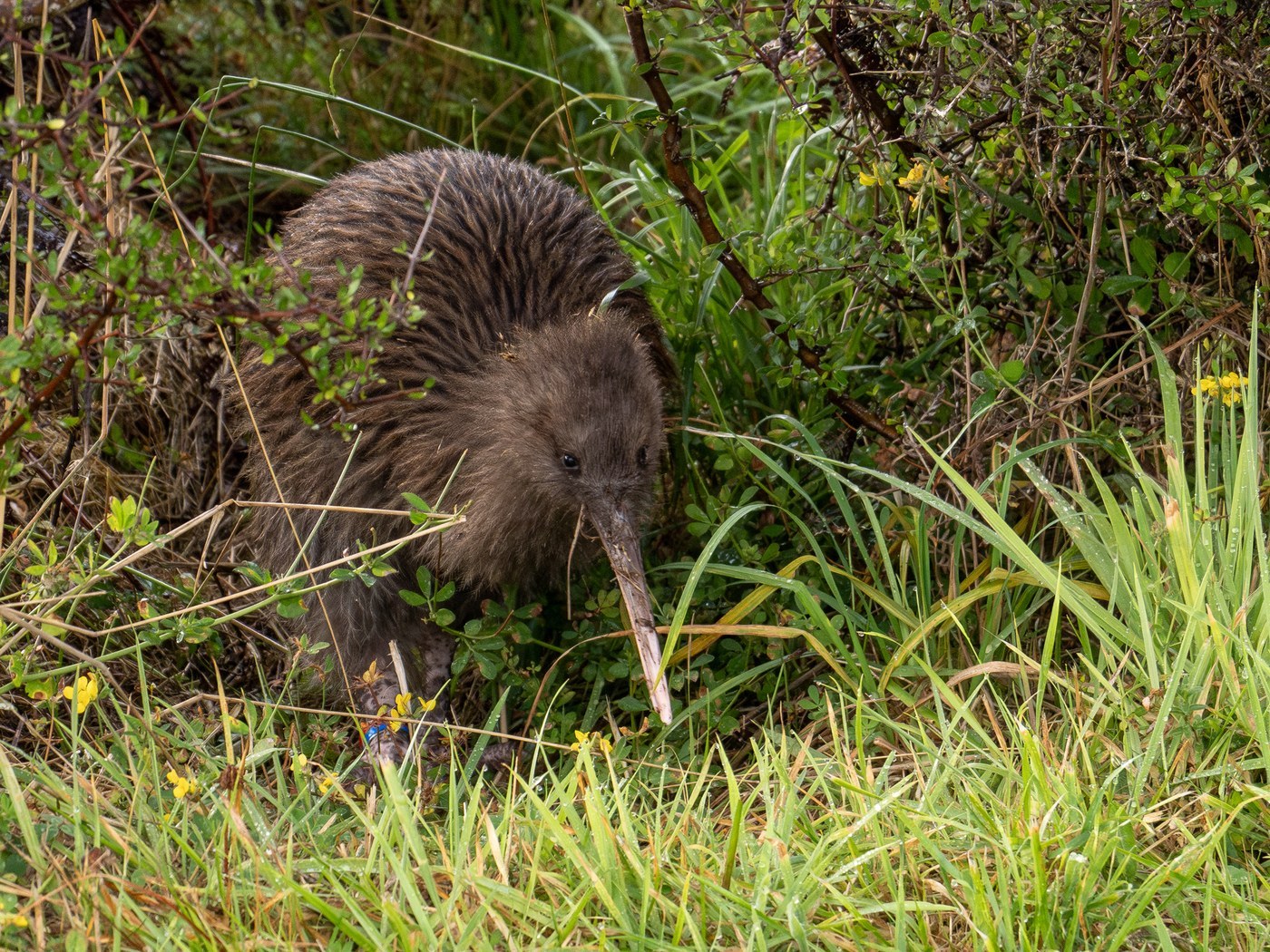
Southern Brown Kiwi
Shaggy, hair-like plumage with loose barbs lacking barbules; flightless, vestigial wings hidden beneath body feathers

Somali Ostrich
Loose, soft plumes lacking interlocking barbules

Wreathed Hornbill
Dense contour feathers, broad flight feathers

Woodland Kingfisher
Firm contour feathers; broad wing feathers