
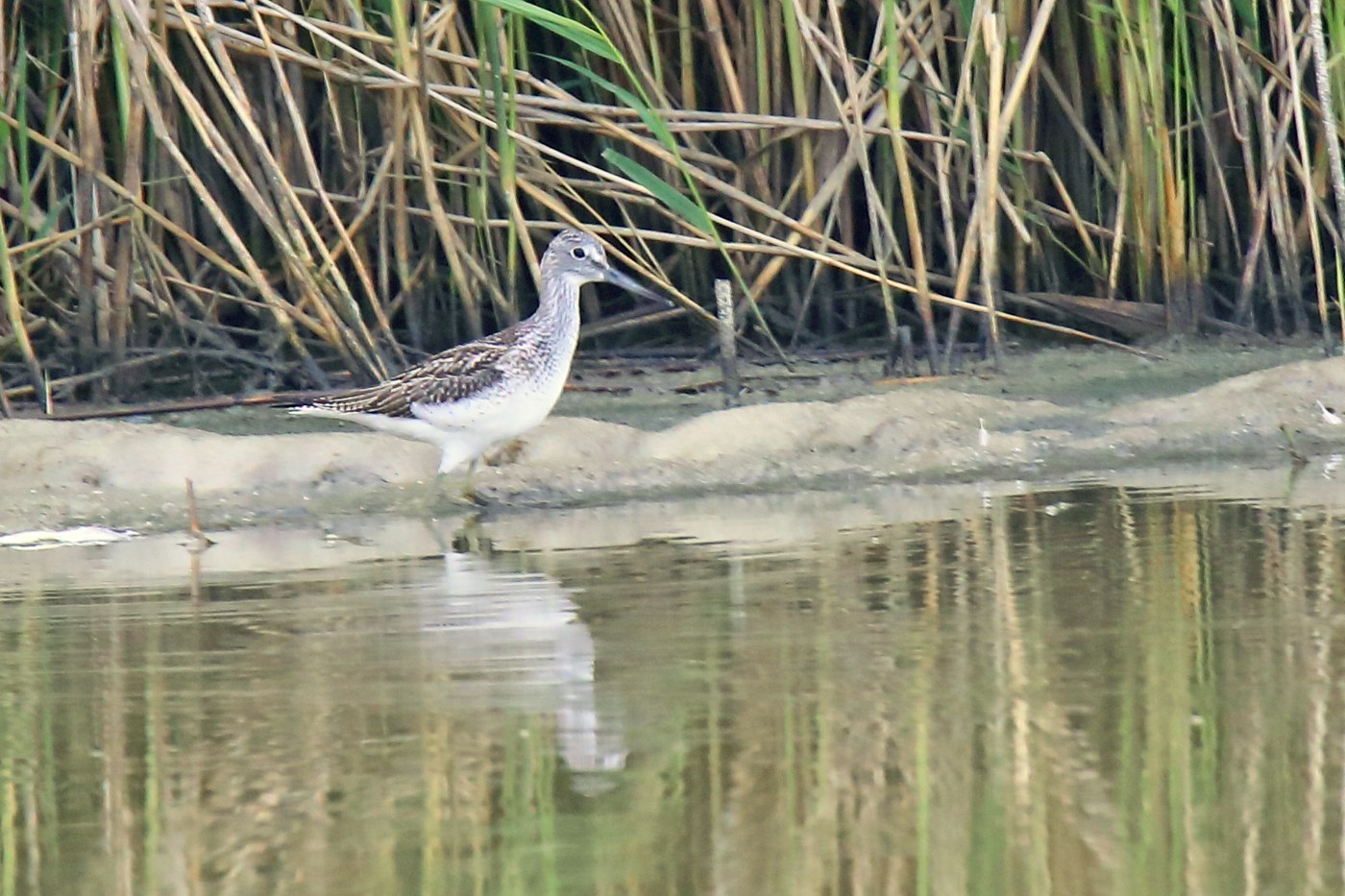
Common Greenshank
Tringa nebularia
A tall, pale gray shorebird with greenish legs and a long, slightly upturned bill, the Old World counterpart to the yellowlegs.
- Feather type
- Contour and flight feathers
- Colours
- Gray upperparts with white underparts
- Bird size
- Medium-large sandpiper, ~30-35 cm
Found a feather like this?
Identify any feather from a photo, free.
Overview
Overview
The Common Greenshank is a tall, elegant wader with pale gray upperparts, white underparts, and distinctive greenish-gray legs. Its long, slightly upturned bill and white rump and lower back are useful field marks, particularly in flight. Widespread across Europe and Asia, it fills an ecological role similar to the yellowlegs species of North America.
Greenshanks are often wary, giving a loud, ringing call when disturbed, and can be found singly or in small groups at wetlands throughout their range.
Identifying the Feather
Feather Identification
- Upperparts: Pale to medium gray feathers with dark centers, giving a streaked or mottled appearance, particularly on the scapulars and back.
- Rump and back: A conspicuous white wedge on the lower back and rump, visible in flight and a useful distant identification feature.
- Underparts: White, with light streaking on the neck and breast in breeding plumage, becoming plainer white in winter.
- Bill and legs: Long, slightly upturned gray bill; legs are greenish-gray rather than the bright yellow of the yellowlegs species.
- Compared to similar species: The white rump wedge and greenish legs separate it from the Common Redshank, which has bright orange-red legs and a different wing pattern in flight.
Plumage & Molt
Plumage Notes
Breeding adults show darker, more heavily marked upperparts and light streaking on the breast; non-breeding birds are paler and plainer gray above with clean white underparts. Sexes are similar in appearance. Juveniles show buffier fringes on the back and wing covert feathers, a pattern that is gradually replaced through the first year.
Habitat & Range
Habitat & Range
Common Greenshanks breed in subarctic bog and forest-edge wetlands across northern Europe and Asia, migrating widely to winter across Africa, southern Asia, and Australasia. They occupy a broad range of wetland habitats on migration and in winter, including estuaries, coastal mudflats, and inland marshes.
Behavior & Field Notes
Behavior & Field Notes
This species forages by wading and running through shallow water, often chasing small fish as well as picking aquatic invertebrates from the surface. It is typically wary, giving a loud, far-carrying three-note "tew-tew-tew" call when flushed, similar in style to the Greater Yellowlegs. Nesting occurs on the ground in open boreal or subarctic terrain, often near scattered trees.
Frequently asked questions
What color are Common Greenshank feathers?
Pale to medium gray upperparts with dark feather centers, a white rump wedge, and clean white underparts.
How can I identify a Greenshank feather by leg color?
While leg color itself isn't part of a feather, greenish-gray legs paired with pale gray, streaked upperpart feathers are characteristic of this species.
How is the Greenshank different from the Common Redshank in appearance?
The Greenshank has paler gray upperparts, a white rump wedge, and greenish legs, while the Redshank has browner upperparts and bright orange-red legs.
Where would I find a Common Greenshank feather?
Around estuaries, coastal mudflats, and inland marshes across Europe, Asia, Africa, and Australasia depending on season.
Common Greenshank guides
In-depth guides for identifying and understanding Common Greenshank.
Other feathers you may enjoy
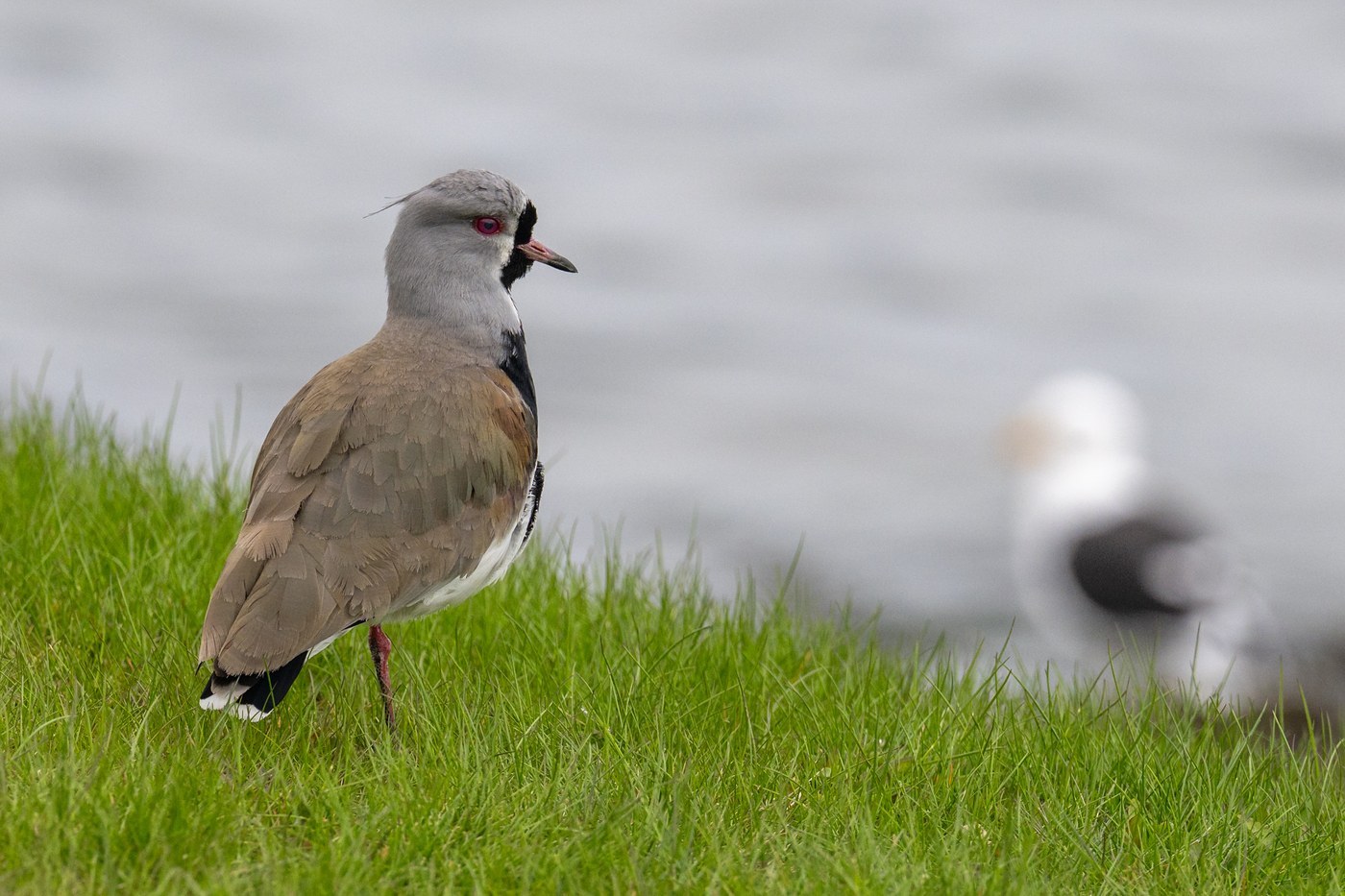
Southern Lapwing
Body, flight, and tail feathers

Jack Snipe
Body and flight feathers

Far Eastern Curlew
Body, flight, and tail feathers

Terek Sandpiper
Body and flight feathers

Wilson's Phalarope
Body and flight feathers
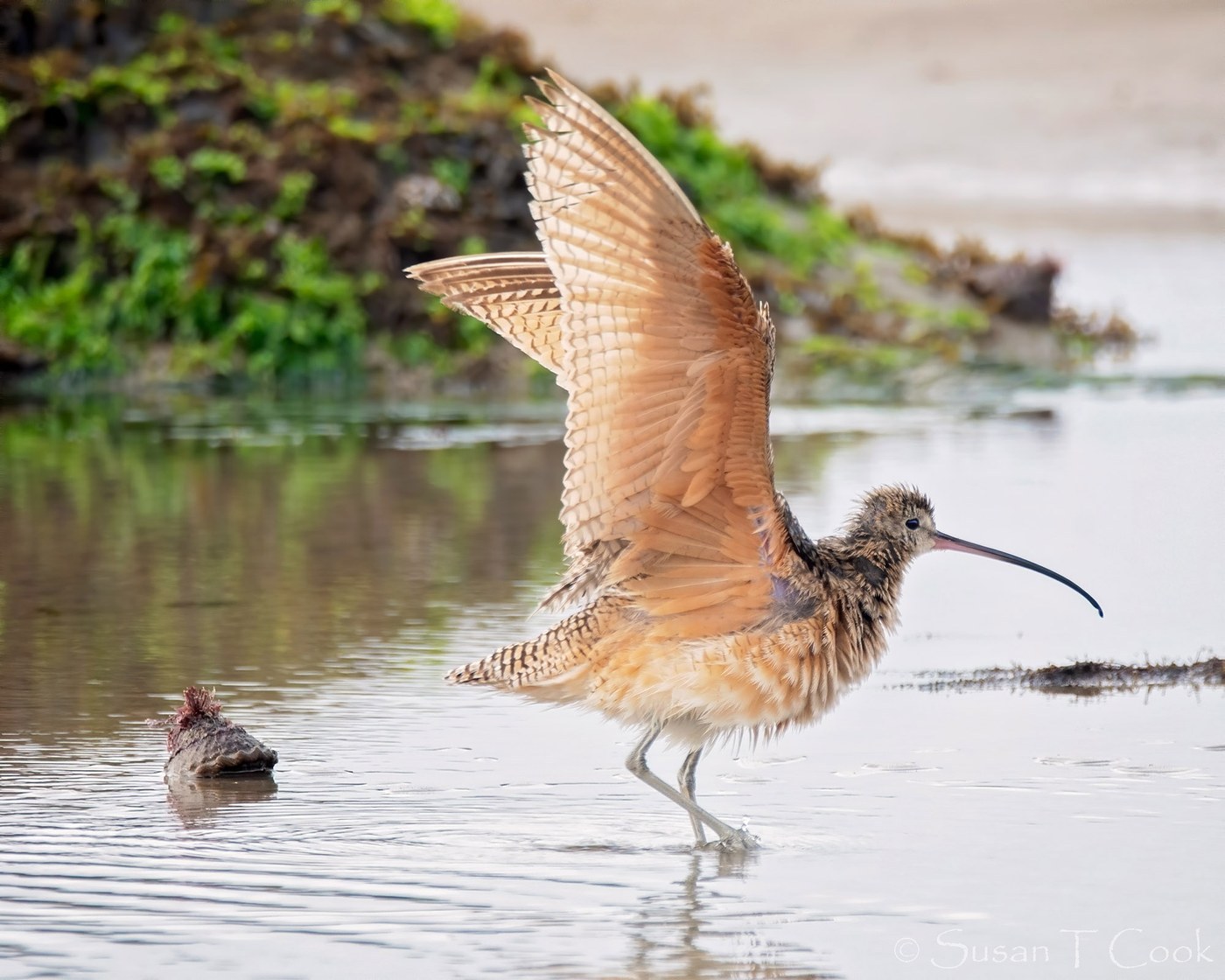
Long-billed Curlew
Body, flight, and tail feathers

Upland Sandpiper
Body, flight, and tail feathers

Red Phalarope
Body and flight feathers

Eurasian Dotterel
Body feathers
Masked Lapwing
Body, flight, and tail feathers
Eurasian Curlew
Body, flight, and tail feathers
Solitary Sandpiper
Contour and flight feathers