
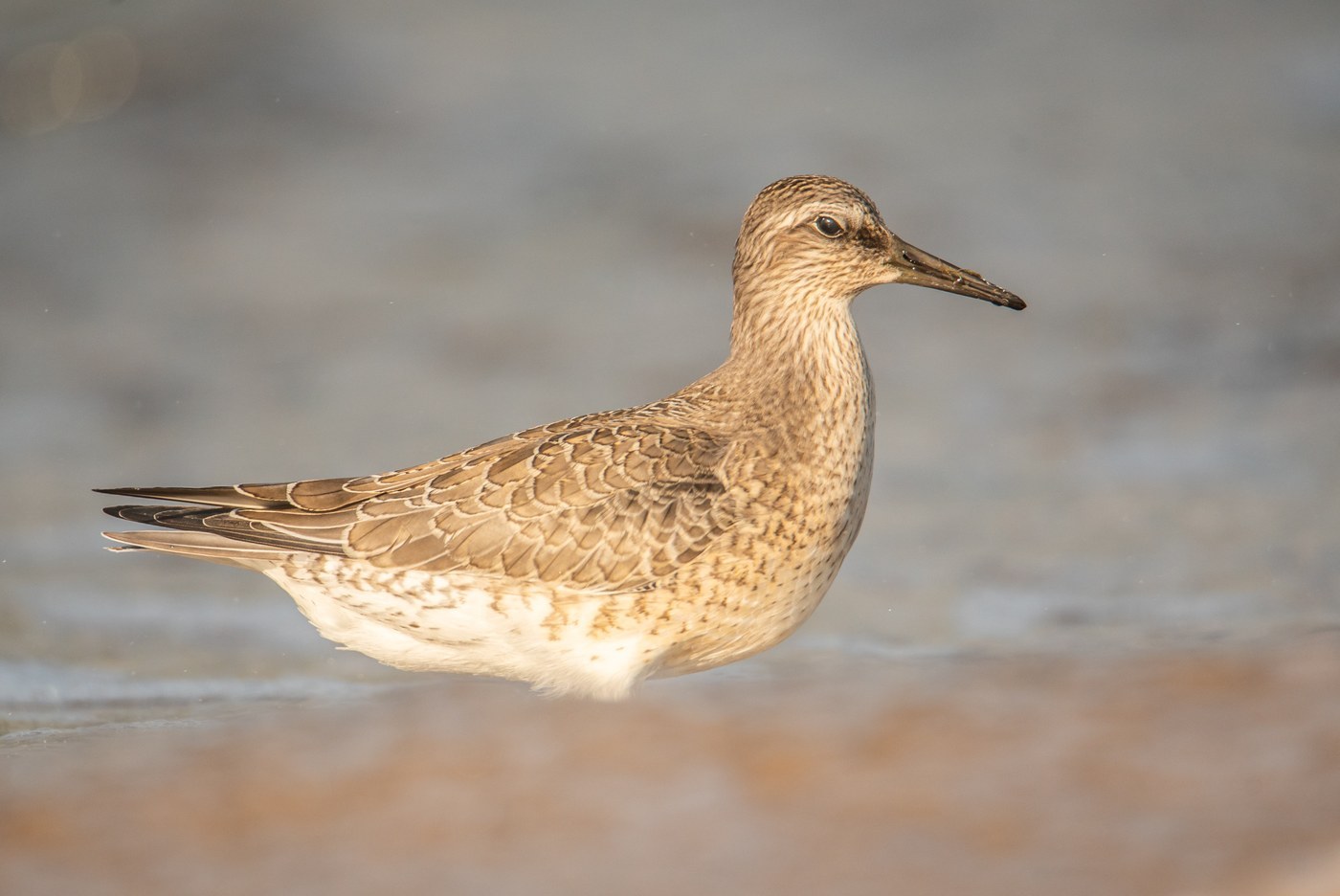
Red Knot
Calidris canutus
A stocky, medium-sized sandpiper famous for spectacular long-distance migrations, showing warm salmon-red underparts in breeding plumage that fade to plain, softly scaled gray for winter.
- Feather type
- Medium wader contour and flight feathers
- Colours
- Brick-red to salmon breeding underparts; pale scaly gray nonbreeding plumage
- Bird size
- Robin-sized, ~23-25 cm
Found a feather like this?
Identify any feather from a photo, free.
Overview
Overview
The Red Knot is a chunky, short-billed, short-legged sandpiper renowned for one of the most extreme long-distance migrations of any bird, with some populations flying nonstop for thousands of kilometers between wintering and staging areas. Its breeding plumage - a warm brick-red wash across the face and underparts - is one of the most striking transformations among shorebirds.
Feathers are most often found at major coastal staging sites where large flocks gather to refuel during migration, as well as on open wintering beaches.
Identifying the Feather
Feather Identification
- Breeding body feathers: warm salmon to brick-red tones across face, neck, and underparts, with upperpart feathers showing rufous and black mottling.
- Nonbreeding body feathers: plain pale gray above with narrow whitish fringes creating a soft, scaly look, and white below - among the plainest plumages of any large sandpiper.
- Size and shape: noticeably larger and stockier than most calidrids, with broader, more robust body feathers reflecting the bird's chunky build.
- Wing feathers: gray-brown with a faint pale wingbar, less bold than in many smaller sandpipers.
- Versus Dunlin/other calidrids: larger overall feather size and a shorter, straighter bill shape (inferred from associated remains) separate Red Knot from smaller calidrids like Dunlin or Curlew Sandpiper.
Plumage & Molt
Plumage Notes
Breeding adults of both sexes show a rich brick-red to salmon wash across the face, neck, and underparts, with mottled rufous-and-black upperparts; females can average slightly duller. Nonbreeding adults become plain scaly gray above and whitish below, losing all trace of red.
Juveniles resemble nonbreeding adults but show a neat, scaly pattern on the upperparts with pale buff fringes and fine dark subterminal marks on each feather. The complete molt to nonbreeding plumage typically occurs after migration, often at wintering grounds, while a partial molt into breeding plumage happens before spring migration.
Habitat & Range
Habitat & Range
Red Knots breed on high Arctic tundra across northern Canada, Greenland, and Siberia. They are famous long-distance migrants, staging in enormous numbers at key coastal stopover sites, and wintering along ocean coastlines across the Americas, Europe, Africa, and Australasia, with several distinct subspecies following different flyways.
Behavior & Field Notes
Behavior & Field Notes
Red Knots forage on open mudflats and sandy beaches, often probing for small mollusks and other invertebrates, and are known for timing migratory stopovers to coincide with seasonal food abundance at key staging sites. They gather in large, tightly coordinated flocks that wheel in unison over the water.
Nests are shallow tundra scrapes. The flight call is a low, muffled "knut" note, thought to be the origin of the species' name. Because of their reliance on a handful of critical stopover sites, knot feathers are often concentrated at these locations during migration windows.
Frequently asked questions
What makes Red Knot feathers distinctive in breeding plumage?
A warm brick-red to salmon wash across the face, neck, and underparts, paired with mottled rufous-and-black upperpart feathers.
What do Red Knot feathers look like in winter?
Plain, softly scaled gray above and whitish below, with no trace of the breeding season's red tones.
How can I tell Red Knot feathers from smaller sandpipers?
Red Knot feathers are noticeably larger and more robust, reflecting the bird's chunkier, medium-sized build compared to calidrids like Dunlin.
Where are Red Knot feathers most likely to be found?
At major coastal staging sites during migration and along open wintering beaches, where large flocks concentrate.
Do juvenile Red Knots look different from adults?
Yes, juveniles show a neatly scaled upperpart pattern with pale buff fringes rather than the mottled rufous tones of breeding adults.
Red Knot guides
In-depth guides for identifying and understanding Red Knot.
Other feathers you may enjoy
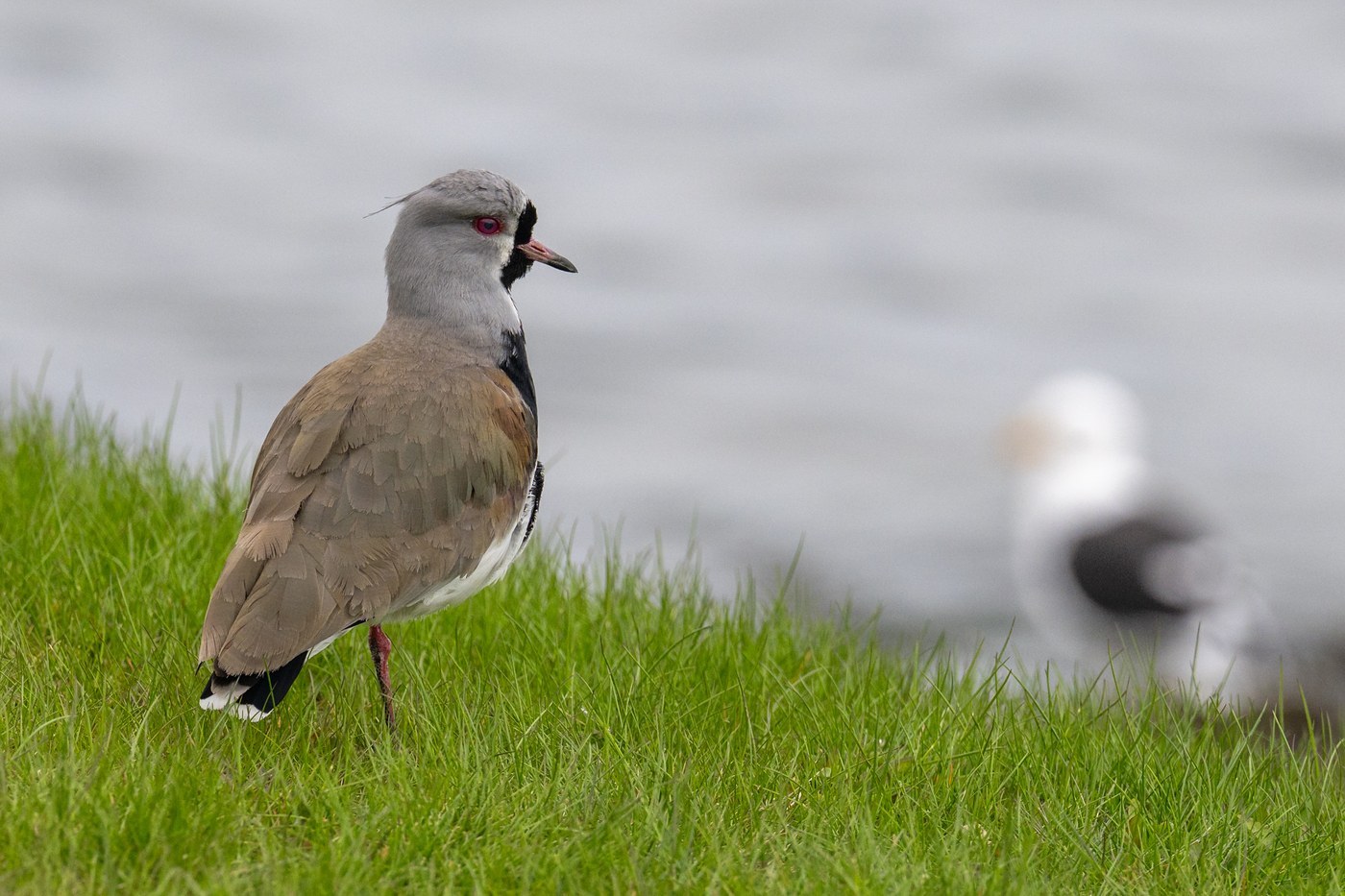
Southern Lapwing
Body, flight, and tail feathers

Jack Snipe
Body and flight feathers

Far Eastern Curlew
Body, flight, and tail feathers

Terek Sandpiper
Body and flight feathers

Wilson's Phalarope
Body and flight feathers
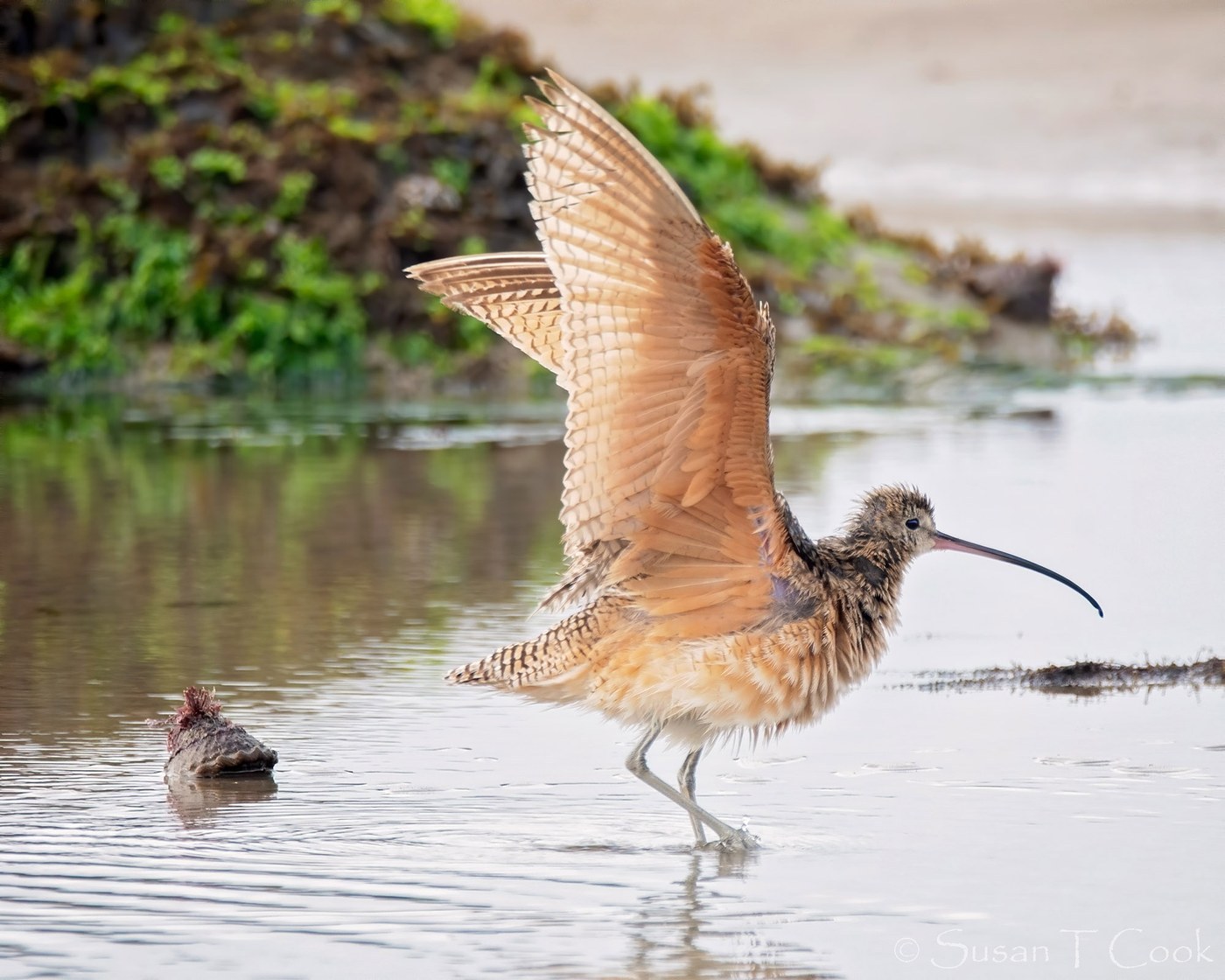
Long-billed Curlew
Body, flight, and tail feathers

Upland Sandpiper
Body, flight, and tail feathers

Red Phalarope
Body and flight feathers

Eurasian Dotterel
Body feathers
Masked Lapwing
Body, flight, and tail feathers
Eurasian Curlew
Body, flight, and tail feathers
Solitary Sandpiper
Contour and flight feathers