
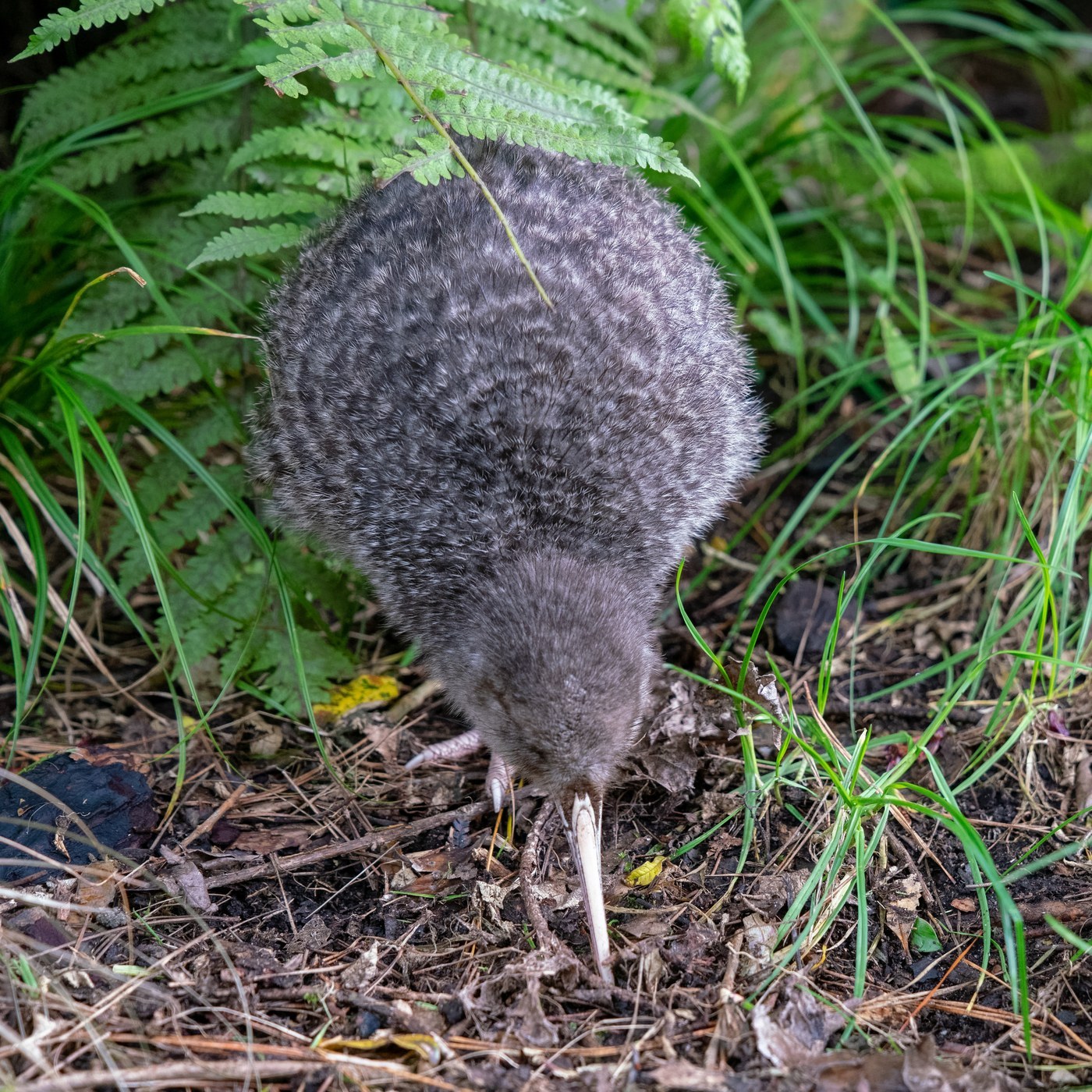
Little Spotted Kiwi
Apteryx owenii
The smallest kiwi species, this flightless bird has pale grayish, finely mottled plumage and now survives only on predator-free islands and fenced sanctuaries in New Zealand. Its long, sensitive bill helps it find invertebrate prey at night.
- Feather type
- Shaggy, hair-like plumage with fine light mottling; flightless, vestigial wings hidden beneath body feathers
- Colours
- Pale grayish plumage with fine mottled banding
- Bird size
- Smallest kiwi species, ~25 cm body length
Found a feather like this?
Identify any feather from a photo, free.
Overview
Overview
The Little Spotted Kiwi is the smallest of New Zealand's kiwi species. Once found on the mainland, it is now restricted to a handful of predator-free offshore islands and fenced mainland sanctuaries due to the impact of introduced predators. Its pale grayish plumage shows fine, light mottling, and like all kiwi it relies on a long, sensitive bill with nostrils at the tip to locate prey by scent in the dark.
Identifying the Feather
Feather Identification
- Plumage texture: Hair-like, as in all kiwi species.
- Color: Pale gray overall with fine light mottling or banding, generally paler and finer-patterned than the larger Great Spotted Kiwi.
- Wings: Vestigial and hidden beneath body feathers.
- Bill: Long and slender with nostrils at the tip.
- Versus similar kiwi: The Great Spotted Kiwi is notably larger with coarser mottling; the Little Spotted Kiwi's small overall size is a key distinguishing feature.
Plumage & Molt
Plumage Notes
Sexes are similar in color, with females somewhat larger. Chicks hatch with plumage resembling a smaller version of the adult pattern, and molt is gradual and continuous.
Habitat & Range
Habitat & Range
Once found on mainland New Zealand, the Little Spotted Kiwi is now restricted to a handful of predator-free offshore islands and fenced mainland sanctuaries due to introduced predators. It inhabits forest and scrub, is nocturnal, non-migratory, and sedentary within a home range.
Behavior & Field Notes
Behavior & Field Notes
Little Spotted Kiwis forage at night for invertebrates in leaf litter and soil, locating prey largely by smell. They are typically found in monogamous pairs and nest in burrows. The species gives a shrill nocturnal call, and conservation programs have relocated populations to predator-free sites to secure its survival.
Frequently asked questions
Why is the Little Spotted Kiwi now found only on islands?
It was eliminated from the mainland by introduced predators and now survives on predator-free offshore islands and fenced sanctuaries.
Is the Little Spotted Kiwi the smallest kiwi species?
Yes, it is the smallest of all kiwi species.
How does the Little Spotted Kiwi differ from the Great Spotted Kiwi?
It is notably smaller and shows finer, paler mottling compared to the larger, coarser-patterned Great Spotted Kiwi.
How does the Little Spotted Kiwi find its food?
It forages at night for invertebrates in leaf litter and soil, relying mainly on its sense of smell.
Little Spotted Kiwi guides
In-depth guides for identifying and understanding Little Spotted Kiwi.

Other feathers you may enjoy

Common Cuckoo
Flight and body feathers
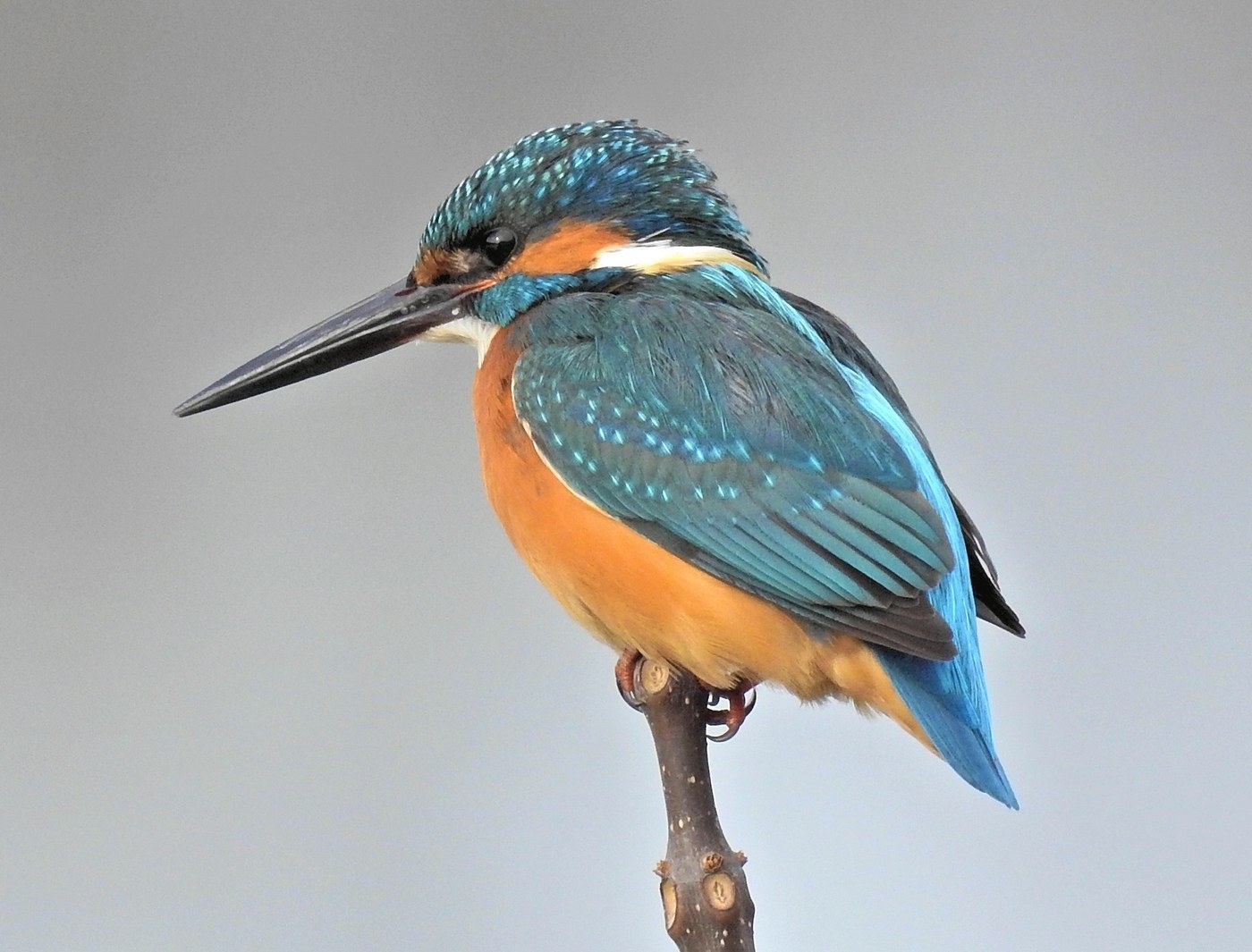
Common Kingfisher
Body (contour) and wing feathers
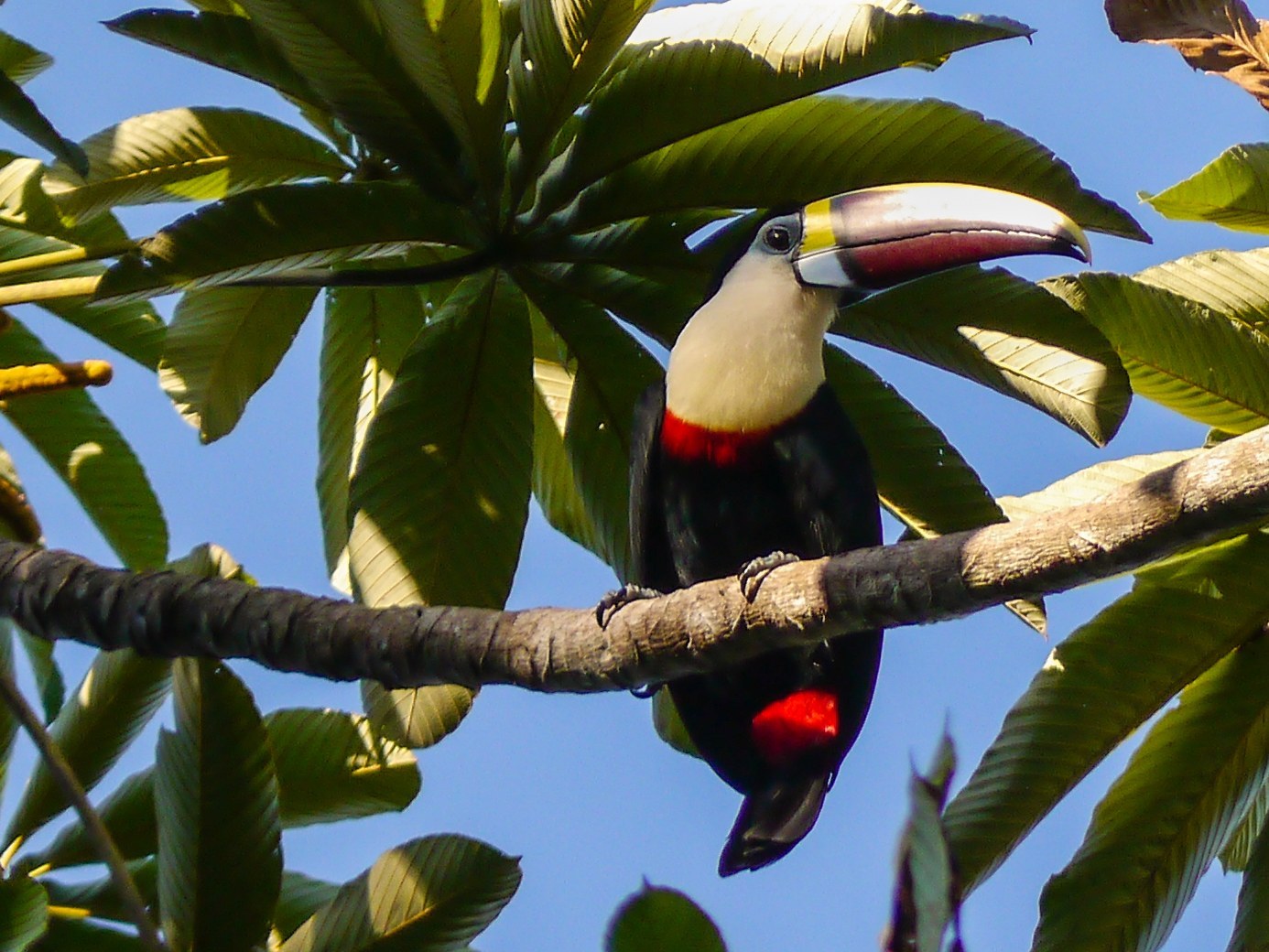
White-throated Toucan
Short rounded contour feathers, short broad wings
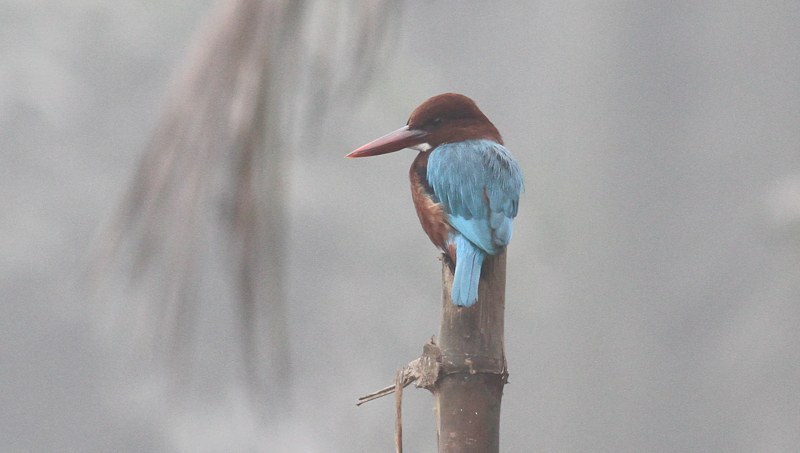
White-throated Kingfisher
Dense contour feathers; broad rounded wings

White-throated Bee-eater
Sleek, aerodynamic contour feathers; elongated central tail streamers
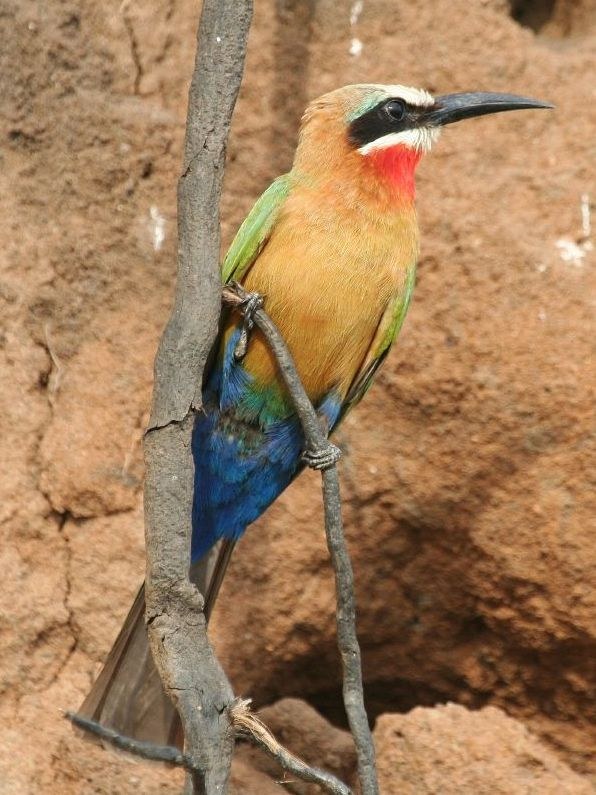
White-fronted Bee-eater
Sleek contour feathers; short tail with slight point

Southern Yellow-billed Hornbill
Slender contour feathers, moderate flight feathers
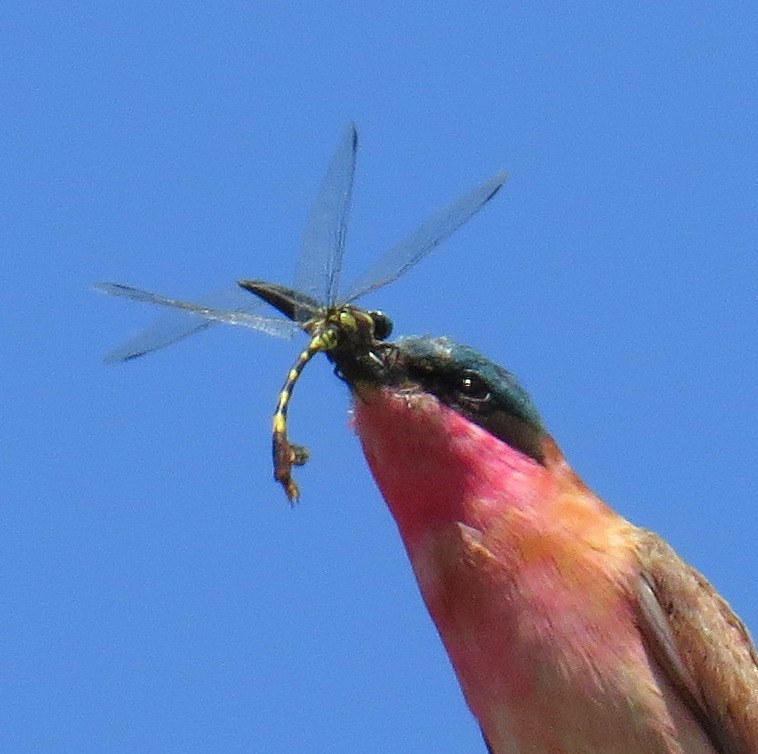
Southern Carmine Bee-eater
Sleek, pointed contour feathers; elongated central tail streamers
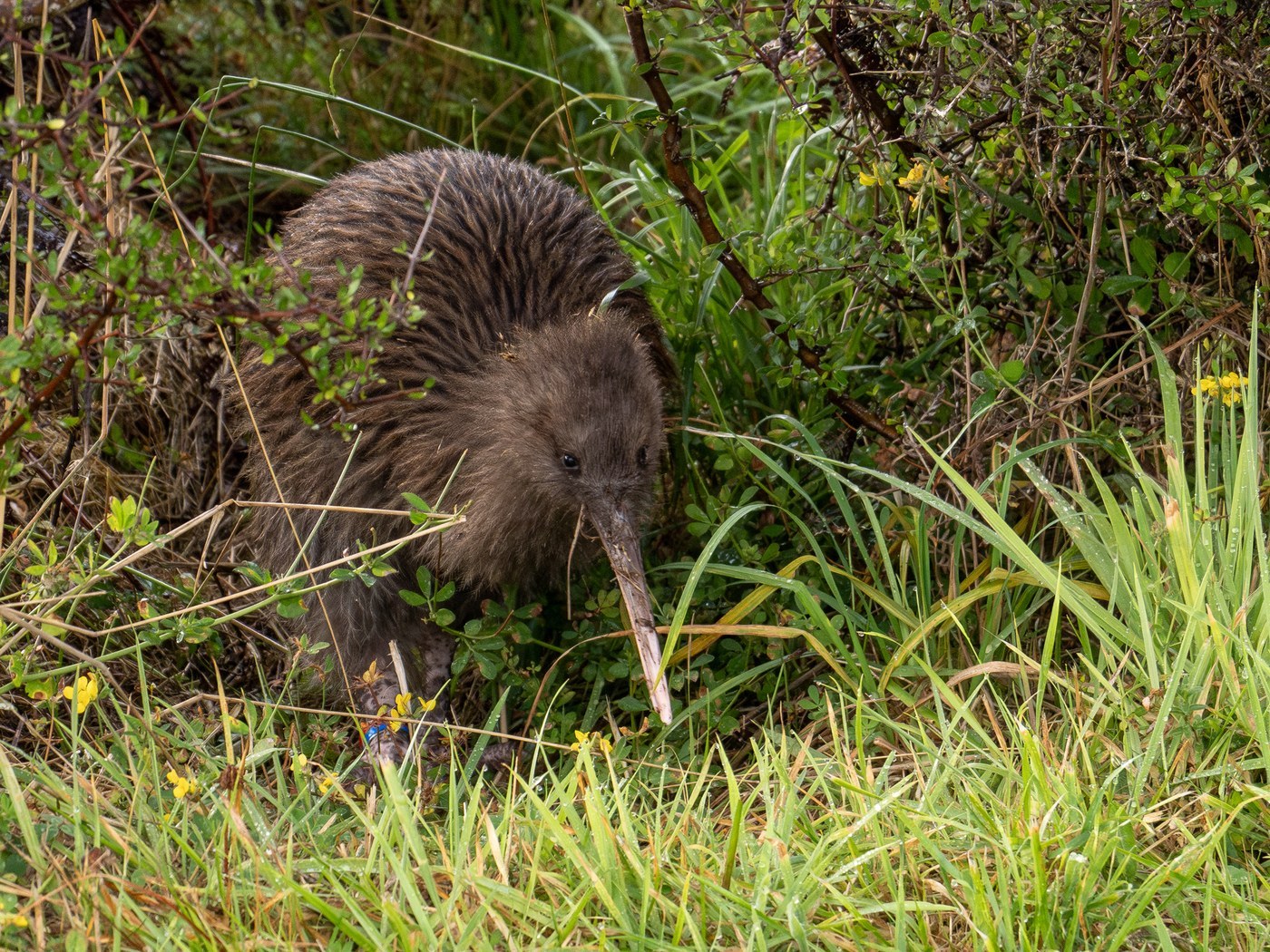
Southern Brown Kiwi
Shaggy, hair-like plumage with loose barbs lacking barbules; flightless, vestigial wings hidden beneath body feathers

Somali Ostrich
Loose, soft plumes lacking interlocking barbules

Wreathed Hornbill
Dense contour feathers, broad flight feathers

Woodland Kingfisher
Firm contour feathers; broad wing feathers